

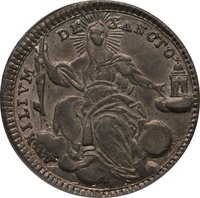
2 Giuli – Papal States
Vatican City
Context
Years: 1783–1796
Country: Vatican City 
Issuer: Papal States
Ruler: Pius VI
Currency:
(1534—1835)
Demonetized: Yes
Material
References
KM: #Click to copy to clipboard1045
Numista: #89416
Value
Bullion value: $14.14
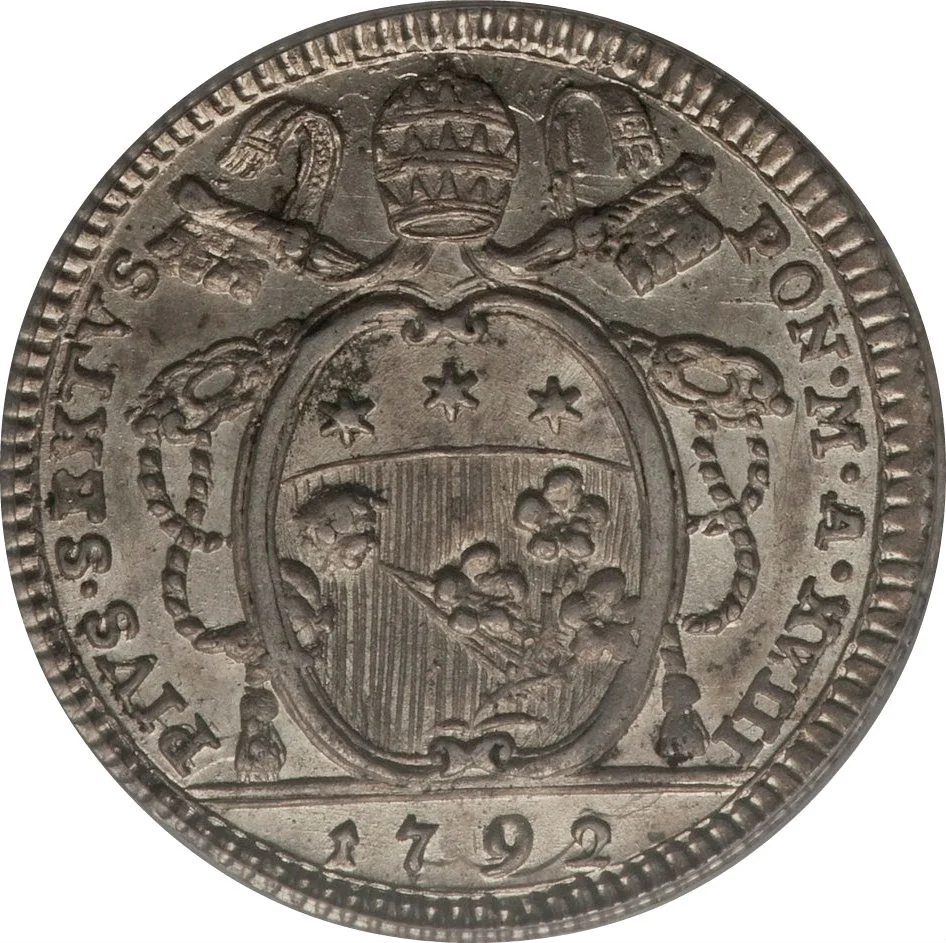
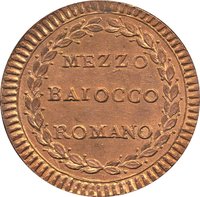
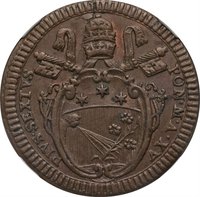
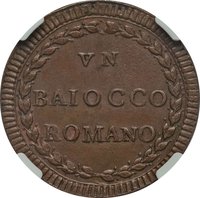
Obverse
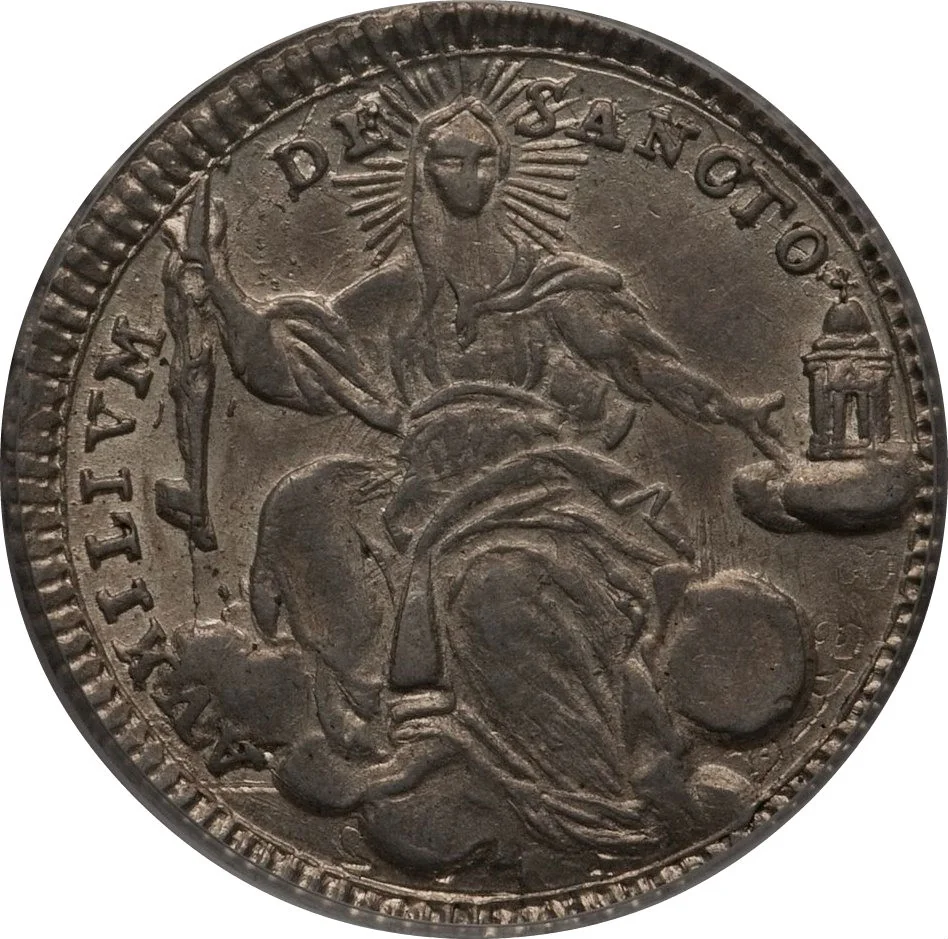
Reverse
Edge
Embossed leaves
Mints
| Name | Mark |
|---|---|
| Rome | — |
Mintings
| Year | Mint Mark | Mintage | Quality | Collection |
|---|---|---|---|---|
| 1783 | — | — | ||
| 1784 | — | — | ||
| 1786 | — | — | ||
| 1787 | — | — | ||
| 1788 | — | — | ||
| 1790 | — | — | ||
| 1792 | — | — | ||
| 1796 | — | — |
Historical background
In 1783, the Papal States, a central Italian polity under the temporal rule of the Pope, operated within a complex and fragmented monetary system typical of the ancien régime. There was no single, unified Papal currency. Instead, the state's coinage was minted in several cities, most notably in Rome and Bologna, with different denominations and metallic compositions. The system was fundamentally bimetallic, relying on a theoretical fixed exchange rate between silver-based coins like the giulio and paolo, and gold-based coins like the scudo and doppia. However, the intrinsic value of these metals fluctuated in the international market, leading to chronic instability, hoarding of one metal over the other, and frequent shortages of small-denomination coinage needed for daily transactions.
This monetary landscape was further complicated by the widespread circulation of foreign currencies, particularly from other Italian states like Tuscany and Naples, as well as Spanish and Austrian coins. These foreign coins competed with Papal issues, their acceptance often based on their precious metal content rather than official decree, undermining the Pope's monetary authority. Furthermore, the Papal States faced significant fiscal pressures, including a heavy public debt and the costs of administration, which often led to deliberate debasement of the coinage—reducing the silver or gold content in new mintings to generate seigniorage revenue for the state treasury, a practice that eroded public trust.
Pope Pius VI, reigning during this period, was aware of these economic challenges and pursued various reforms, including infrastructure projects and attempts to rationalize taxation. However, comprehensive monetary reform proved elusive. The fragmented political structure of the Papal States, with powerful local legations and a conservative bureaucracy, resisted centralized financial modernization. Consequently, the currency situation in 1783 remained a patchwork of local and foreign coins, prone to instability and inefficiency, reflecting the broader economic and administrative constraints facing the Papacy on the eve of the revolutionary upheavals that would soon sweep Europe.
This monetary landscape was further complicated by the widespread circulation of foreign currencies, particularly from other Italian states like Tuscany and Naples, as well as Spanish and Austrian coins. These foreign coins competed with Papal issues, their acceptance often based on their precious metal content rather than official decree, undermining the Pope's monetary authority. Furthermore, the Papal States faced significant fiscal pressures, including a heavy public debt and the costs of administration, which often led to deliberate debasement of the coinage—reducing the silver or gold content in new mintings to generate seigniorage revenue for the state treasury, a practice that eroded public trust.
Pope Pius VI, reigning during this period, was aware of these economic challenges and pursued various reforms, including infrastructure projects and attempts to rationalize taxation. However, comprehensive monetary reform proved elusive. The fragmented political structure of the Papal States, with powerful local legations and a conservative bureaucracy, resisted centralized financial modernization. Consequently, the currency situation in 1783 remained a patchwork of local and foreign coins, prone to instability and inefficiency, reflecting the broader economic and administrative constraints facing the Papacy on the eve of the revolutionary upheavals that would soon sweep Europe.
💎 Extremely Rare