

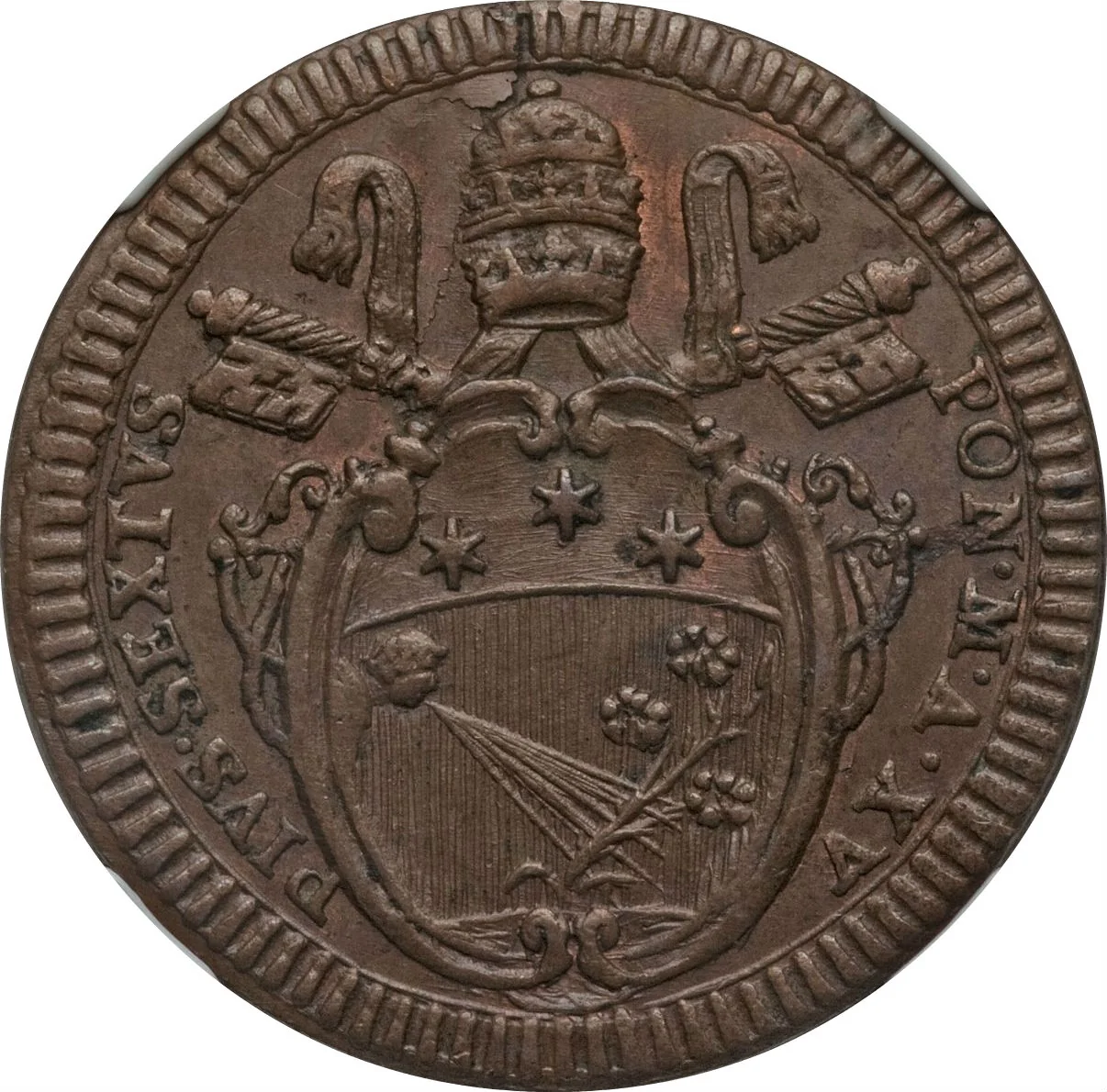
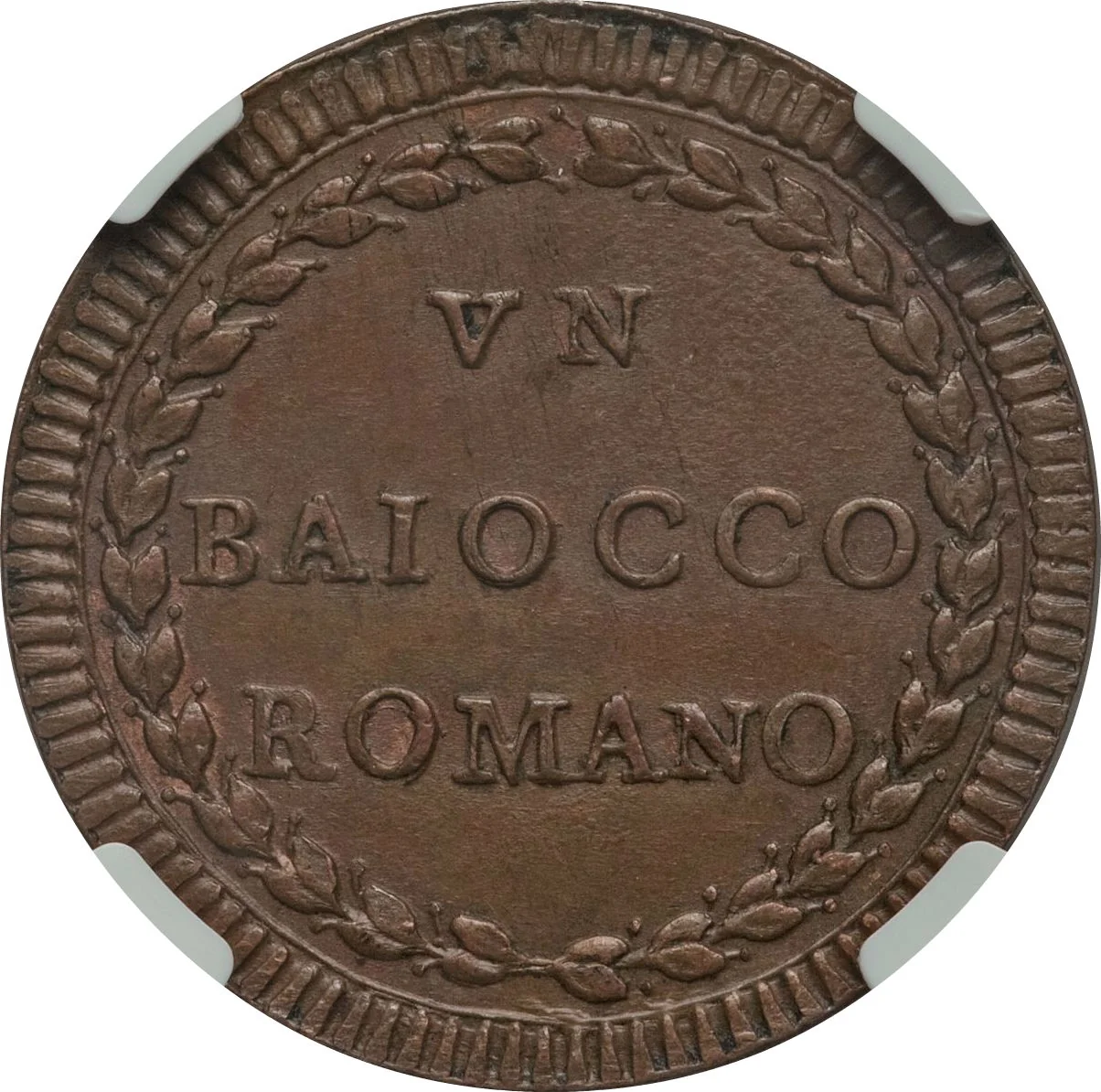
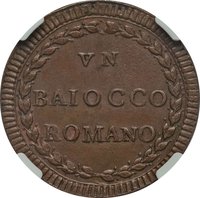
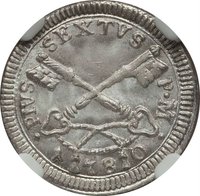
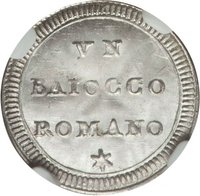
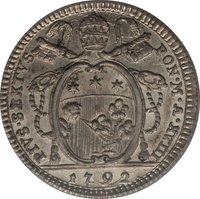
1 Baiocco – Papal States
Vatican City
Context
Years: 1782–1794
Country: Vatican City 
Issuer: Papal States
Ruler: Pius VI
Currency:
(1534—1835)
Demonetized: Yes
Material
References
KM: #Click to copy to clipboard1222
Numista: #37887
Obverse
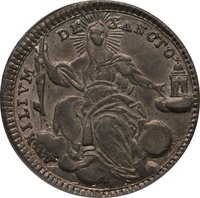
Reverse
Edge
Mints
| Name | Mark |
|---|---|
| Rome | — |
Mintings
| Year | Mint Mark | Mintage | Quality | Collection |
|---|---|---|---|---|
| 1782 | — | — | ||
| 1783 | — | — | ||
| 1785 | — | — | ||
| 1787 | — | — | ||
| 1788 | — | — | ||
| 1789 | — | — | ||
| 1791 | — | — | ||
| 1793 | — | — | ||
| 1794 | — | — |
Historical background
In 1782, the Papal States’ monetary system was a complex and fragmented relic of medieval and early modern practices, reflecting its political and geographical divisions. There was no single, unified Papal currency; instead, a multitude of different coinages circulated simultaneously. The primary unit was the Papal Scudo, divided into 100 Baiocchi, with each Baiocco further divided into 10 Quattrini. However, alongside these official coins from the Roman mint, numerous historic regional coinages from papal legations and former independent cities (like Bologna and Ravenna) remained in active use, each with varying and fluctuating exchange rates.
This monetary mosaic created significant challenges for trade and administration. The system was notoriously opaque and prone to debasement, as the purity and weight of coins could vary. Furthermore, a severe shortage of small-denomination coins (token coinage) for everyday transactions plagued the economy, causing hardship for the common populace. This scarcity was exacerbated by the state’s often precarious finances, which relied heavily on taxes, monopolies, and the sale of public offices, rather than a coherent fiscal policy supported by a sound currency.
Pope Pius VI, reigning in 1782, was aware of these monetary problems and had ambitions for economic modernization, as seen in his major land reclamation projects. However, comprehensive monetary reform remained elusive. The entrenched interests, bureaucratic inertia, and the sheer complexity of replacing centuries-old systems meant that the currency situation remained a persistent weakness. It was a tangible symbol of the Papal States’ struggle to adapt to the Enlightenment-era pressures for administrative efficiency and economic rationality, leaving its monetary system ill-prepared for the revolutionary upheavals that would emerge just a few years later.
This monetary mosaic created significant challenges for trade and administration. The system was notoriously opaque and prone to debasement, as the purity and weight of coins could vary. Furthermore, a severe shortage of small-denomination coins (token coinage) for everyday transactions plagued the economy, causing hardship for the common populace. This scarcity was exacerbated by the state’s often precarious finances, which relied heavily on taxes, monopolies, and the sale of public offices, rather than a coherent fiscal policy supported by a sound currency.
Pope Pius VI, reigning in 1782, was aware of these monetary problems and had ambitions for economic modernization, as seen in his major land reclamation projects. However, comprehensive monetary reform remained elusive. The entrenched interests, bureaucratic inertia, and the sheer complexity of replacing centuries-old systems meant that the currency situation remained a persistent weakness. It was a tangible symbol of the Papal States’ struggle to adapt to the Enlightenment-era pressures for administrative efficiency and economic rationality, leaving its monetary system ill-prepared for the revolutionary upheavals that would emerge just a few years later.
💎 Very Rare