

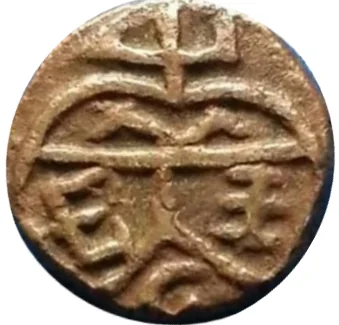
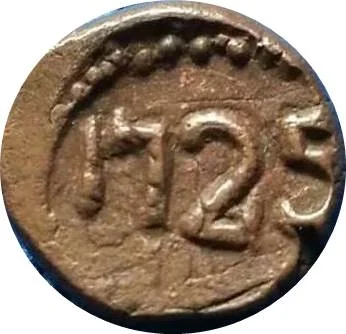
½ Paisa – Bombay Presidency
India

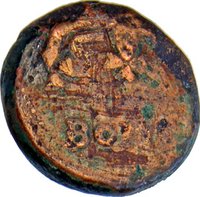
Obverse
Description:
Balemark of the United East India Company within a plain circle.
Inscription:
VEIC
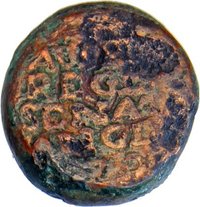
Reverse
Description:
AD date in a solid or dotted circle.
Inscription:
1725
Edge
Plain
Mintings
| Year | Mint Mark | Mintage | Quality | Collection |
|---|---|---|---|---|
| — | — | 2,000 | ||
| 1725 | — | — | ||
| 1726 | — | — | ||
| 1741 | — | — | ||
| 1753 | — | — | ||
| 1759 | — | — | ||
| 1785 | — | — |
Historical background
In 1725, the currency situation in the Bombay Presidency was complex and transitional, characterized by the circulation of multiple coinages from different political authorities. The dominant power in the region was the Mughal Empire, whose silver rupee (often the Surat rupee) served as the primary standard for high-value trade and revenue. However, the Mughal monetary system was in a state of flux following the death of Emperor Aurangzeb in 1707, leading to regional mints producing coins of varying weight and purity. Alongside Mughal rupees, Portuguese xerafins and tangas (minted in Goa) and various European gold coins like the moidore were also in active circulation, especially in coastal trade, creating a multi-layered monetary environment.
The English East India Company, which administered the Presidency, faced significant challenges in this landscape. Its own commercial transactions and the payment of its small but growing military and civil establishment required a reliable currency. While the Company attempted to assert its authority by striking copper pice and silver rupees at the Bombay mint, these coins often struggled for acceptance outside the Company's immediate settlements. The value and exchange rates between the plethora of coins were not fixed, leading to confusion, arbitrage by money-changers (shroffs), and frequent disputes in trade. The *shroffs were, in fact, indispensable intermediaries who verified the weight and purity of coins, often by "ringing" them or cutting them to assay the metal.
Ultimately, the monetary chaos of 1725 reflected Bombay's position as a rising but not yet dominant commercial hub within a fragmented political landscape. The Company's lack of sovereign control over the wider hinterland meant it could not impose a uniform currency. Instead, it was forced to operate within a system where Mughal authority was waning but not gone, European rivals were still potent, and local mercantile networks held practical power over daily financial operations. This situation would only begin to change as the Company's territorial and political power expanded later in the century, gradually allowing it to standardize currency under its own authority.
The English East India Company, which administered the Presidency, faced significant challenges in this landscape. Its own commercial transactions and the payment of its small but growing military and civil establishment required a reliable currency. While the Company attempted to assert its authority by striking copper pice and silver rupees at the Bombay mint, these coins often struggled for acceptance outside the Company's immediate settlements. The value and exchange rates between the plethora of coins were not fixed, leading to confusion, arbitrage by money-changers (shroffs), and frequent disputes in trade. The *shroffs were, in fact, indispensable intermediaries who verified the weight and purity of coins, often by "ringing" them or cutting them to assay the metal.
Ultimately, the monetary chaos of 1725 reflected Bombay's position as a rising but not yet dominant commercial hub within a fragmented political landscape. The Company's lack of sovereign control over the wider hinterland meant it could not impose a uniform currency. Instead, it was forced to operate within a system where Mughal authority was waning but not gone, European rivals were still potent, and local mercantile networks held practical power over daily financial operations. This situation would only begin to change as the Company's territorial and political power expanded later in the century, gradually allowing it to standardize currency under its own authority.
✨ Legendary