

⅕ Rupee – Bombay Presidency
India

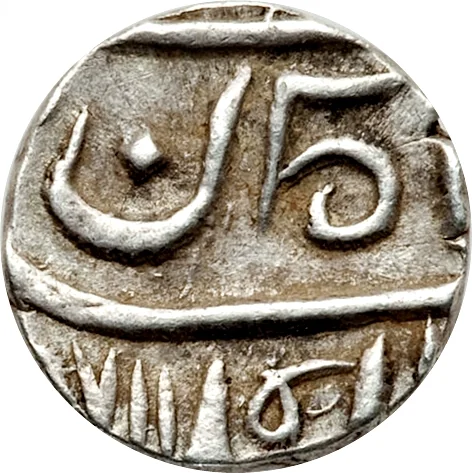
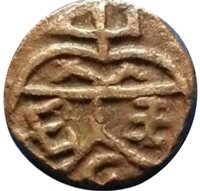
Obverse
Description:
Shah Jahan, year 5, 113X AH.
Script: Persian
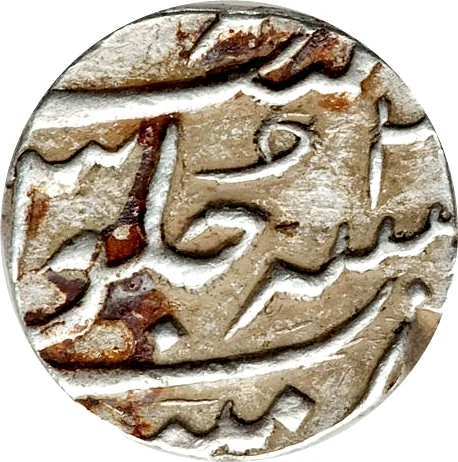
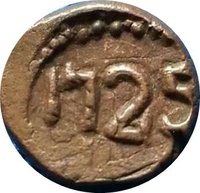
Reverse
Description:
Zarb Mumbai, Year 2, Reign of Maimanat.
Script: Persian
Edge
Plain
Mintings
| Year | Mint Mark | Mintage | Quality | Collection |
|---|---|---|---|---|
| 1720 | — | — |
Historical background
In 1720, the currency situation within the Bombay Presidency was complex and transitional, reflecting its position as a fledgling colonial outpost under the English East India Company. The monetary landscape was not unified but a mosaic of different systems. The most prominent circulating medium was the silver rupee, primarily the Mughal Empire's standard coin, which dominated regional trade. Alongside these, various European gold coins (like Portuguese moidores and Venetian sequins), local copper pice, and even cowrie shells for small transactions all coexisted, creating a challenging environment for commerce due to fluctuating exchange rates and variable purity.
The Company administration faced significant difficulties due to this lack of a standardized currency under its own control. Trade and the payment of its garrison and workforce were hampered by the constant need to assay and convert currencies, leading to losses from arbitrage and forgery. Crucially, the Presidency relied heavily on importing silver bullion and Mughal rupees from Surat and other centres to fuel its trade, especially in cotton and textiles, making it vulnerable to external supply and the monetary policies of the declining Mughal Empire.
Recognizing these problems, 1720 fell within a period of active monetary experimentation by the Company. Just a few years prior, in 1717, the Bombay Mint had been established, and efforts were underway to produce Company-struck rupees that could compete with Mughal coins in both weight and fineness to gain public trust. Therefore, the year represents a pivotal moment of striving for monetary sovereignty—attempting to move from a passive acceptance of a heterogeneous currency system toward establishing a stable, Company-issued currency that would facilitate its commercial and political ambitions in Western India.
The Company administration faced significant difficulties due to this lack of a standardized currency under its own control. Trade and the payment of its garrison and workforce were hampered by the constant need to assay and convert currencies, leading to losses from arbitrage and forgery. Crucially, the Presidency relied heavily on importing silver bullion and Mughal rupees from Surat and other centres to fuel its trade, especially in cotton and textiles, making it vulnerable to external supply and the monetary policies of the declining Mughal Empire.
Recognizing these problems, 1720 fell within a period of active monetary experimentation by the Company. Just a few years prior, in 1717, the Bombay Mint had been established, and efforts were underway to produce Company-struck rupees that could compete with Mughal coins in both weight and fineness to gain public trust. Therefore, the year represents a pivotal moment of striving for monetary sovereignty—attempting to move from a passive acceptance of a heterogeneous currency system toward establishing a stable, Company-issued currency that would facilitate its commercial and political ambitions in Western India.
✨ Legendary