

peça – Portugal
Add to wishlist
Standard circulation coins
Series: Bust
Portugal
Obverse
Description:
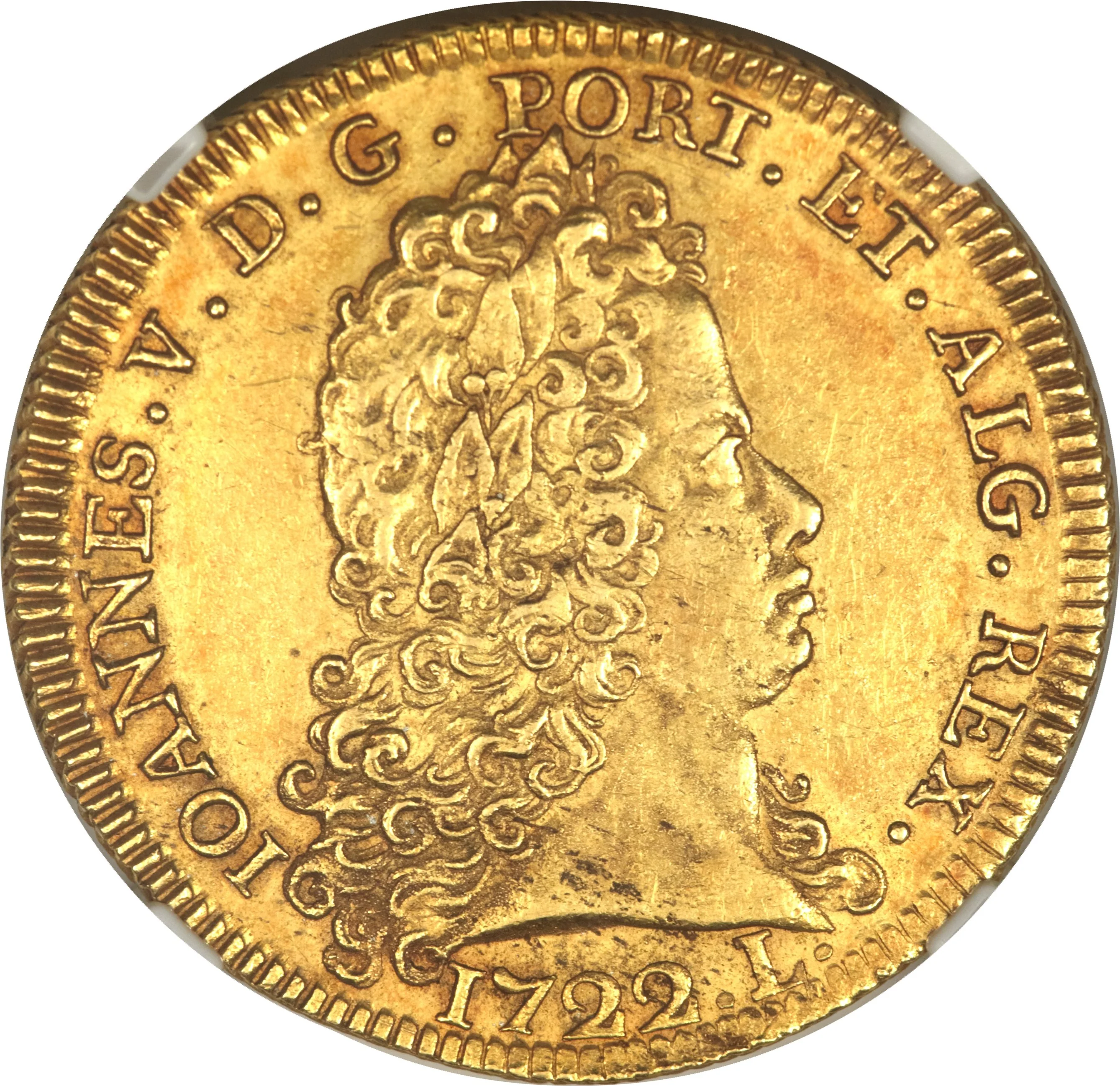
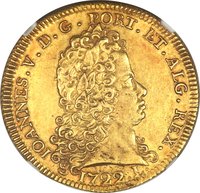
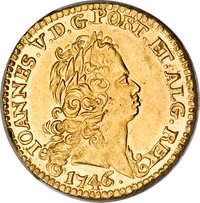
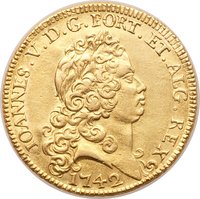
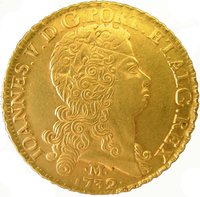
Laureate bust right. Date and mint mark below.
Inscription:
IOANNES.V.D.G.PORT.ET.ALG.REX
1722.L.
1722.L.
Script: Latin
Reverse
Edge
Rope shaped
Categories
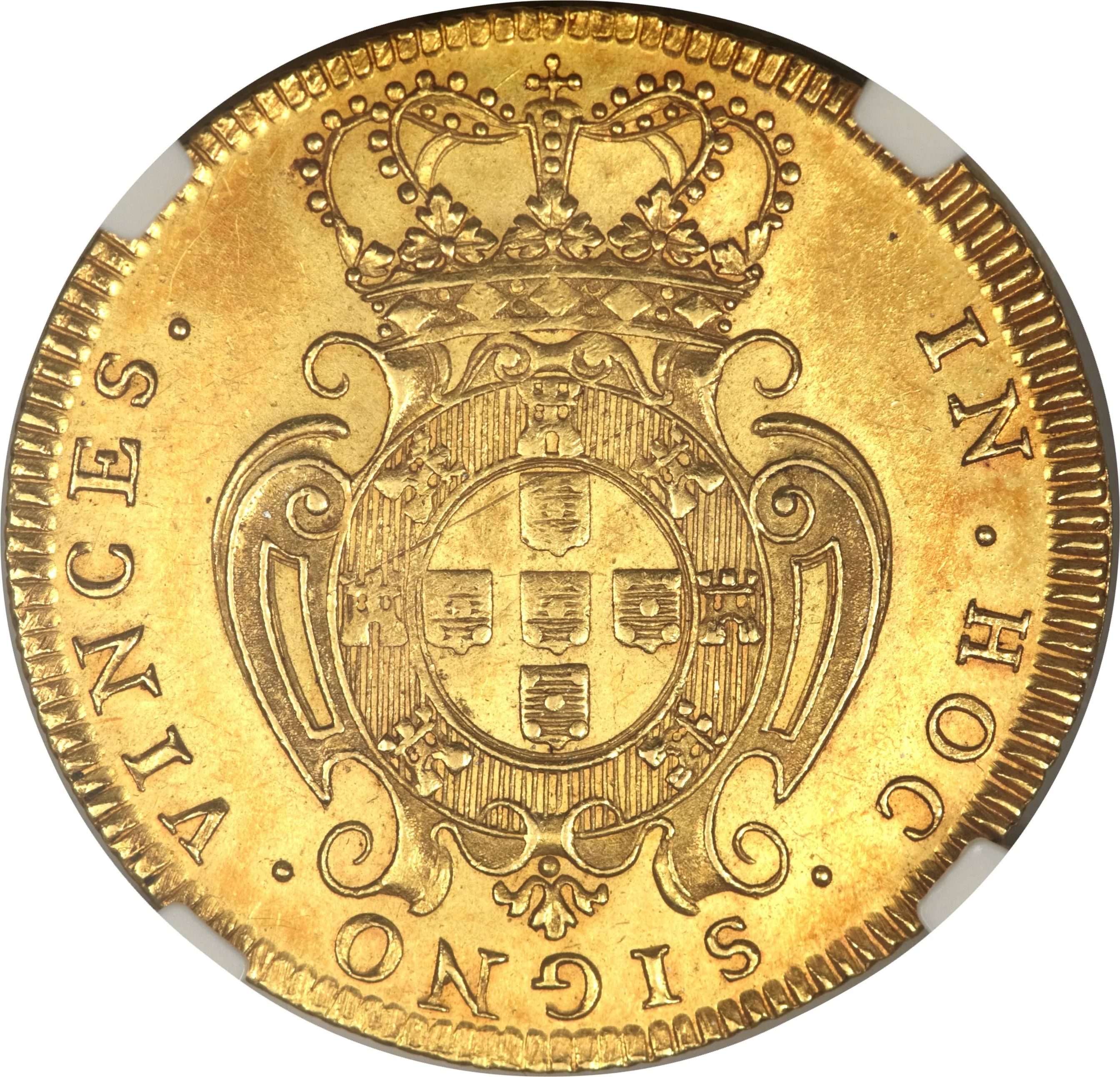
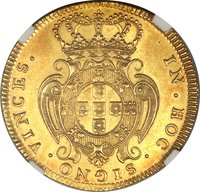
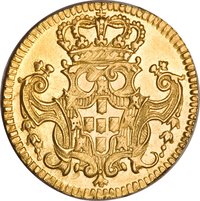
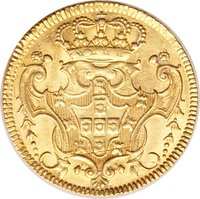
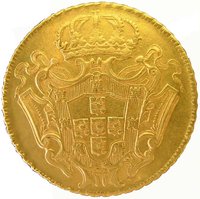
| Symbols> Coat of Arms |
Mints
| Name | Mark |
|---|---|
| Imprensa Nacional - Casa da Moeda | L |
Mintings
| Year | Mint Mark | Mintage | Quality | Collection |
|---|---|---|---|---|
| 1722 | L | — |
Historical background
In 1722, Portugal's currency situation was one of profound instability and debasement, a direct legacy of King João V's extravagant spending and the economic policies of the preceding decades. The discovery of gold in Brazil (starting in the 1690s) had flooded the treasury with wealth, but rather than stabilizing the currency, it financed massive expenditures on palaces, the arts, and the royal court, while also funding a chronic trade deficit with England. To meet domestic shortfalls, the crown repeatedly resorted to debasing the coinage, notably through the 1688 "moeda nova" (new money) and subsequent issues, which reduced the silver content of coins while officially maintaining their face value. This created a chaotic monetary environment with multiple coin types in circulation, each with different intrinsic values, leading to widespread hoarding of older, purer coins and a deep public distrust in the currency.
The core of the problem was a severe shortage of usable specie within Portugal itself. While Brazilian gold arrived in Lisbon, much of it was immediately shipped to England to pay for imported manufactured goods and textiles, leaving the domestic economy starved of sound money. The coins that remained in circulation were often of poor quality, and the frequent monetary manipulations led to price inflation, as merchants adjusted prices to account for the diminished metal content. The state's attempts to fix exchange rates between old and new coins by decree were largely ineffective, creating a disconnect between the official and market value of money and hampering both trade and tax collection.
Consequently, by 1722, the Portuguese economy operated under a dysfunctional dual system: a theoretical official currency for accounting and a practical market value for coins based on their weight and metal content. This period of monetary confusion would eventually lead to a major reform. In 1722, King João V's government was likely in the preparatory stages of addressing this crisis, which culminated in the significant monetary reform of 1732. That reform aimed to restore confidence by introducing new, high-quality gold moedas and standardizing the coinage, finally drawing a line under the chaotic period of which 1722 was a symptomatic year.
The core of the problem was a severe shortage of usable specie within Portugal itself. While Brazilian gold arrived in Lisbon, much of it was immediately shipped to England to pay for imported manufactured goods and textiles, leaving the domestic economy starved of sound money. The coins that remained in circulation were often of poor quality, and the frequent monetary manipulations led to price inflation, as merchants adjusted prices to account for the diminished metal content. The state's attempts to fix exchange rates between old and new coins by decree were largely ineffective, creating a disconnect between the official and market value of money and hampering both trade and tax collection.
Consequently, by 1722, the Portuguese economy operated under a dysfunctional dual system: a theoretical official currency for accounting and a practical market value for coins based on their weight and metal content. This period of monetary confusion would eventually lead to a major reform. In 1722, King João V's government was likely in the preparatory stages of addressing this crisis, which culminated in the significant monetary reform of 1732. That reform aimed to restore confidence by introducing new, high-quality gold moedas and standardizing the coinage, finally drawing a line under the chaotic period of which 1722 was a symptomatic year.
Series: Bust
✨ Legendary