

¼ Kreuzer – County of Tyrol
Austria

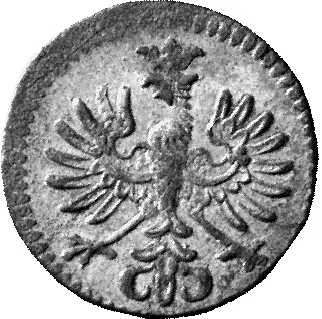
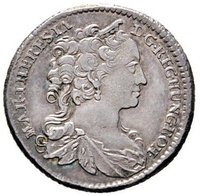
Obverse
Description:
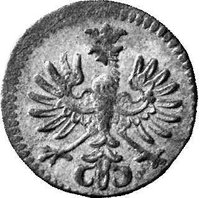
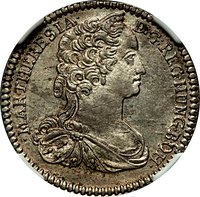
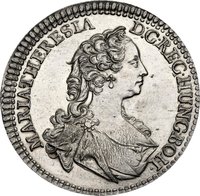
Tyrolean eagle, crowned, facing left.
Script: Latin
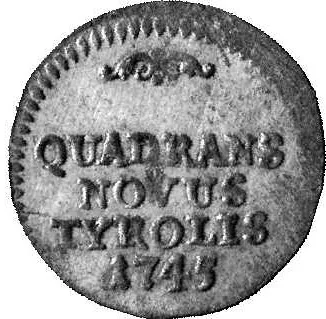
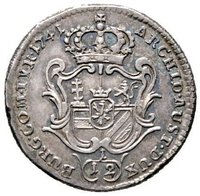
Reverse
Description:
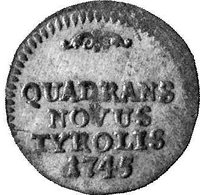
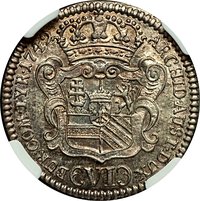
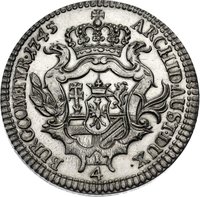
Value, date, and lettering beneath an arabesque.
Inscription:
QUADRANS
NOVUS
TYROLIS
1745
NOVUS
TYROLIS
1745
Script: Latin
Edge
Plain
Mints
| Name | Mark |
|---|---|
| Hall | — |
Mintings
| Year | Mint Mark | Mintage | Quality | Collection |
|---|---|---|---|---|
| 1742 | — | — | ||
| 1743 | — | — | ||
| 1744 | — | — | ||
| 1745 | — | — | ||
| 1746 | — | — | ||
| 1747 | — | — |
Historical background
In 1742, the County of Tyrol, a Habsburg crown land, was grappling with severe monetary instability as a direct consequence of the War of the Austrian Succession (1740-1748). The conflict placed enormous financial strain on the Habsburg Monarchy, leading the central government in Vienna to dramatically increase the debasement of coinage. The state mint in Hall, near Innsbruck, was ordered to produce vast quantities of low-value Kreuzer coins from heavily alloyed silver, a practice known as Kipper- und Wipperzeit, which flooded the local economy with depreciated currency.
This deliberate devaluation caused rapid inflation and a collapse in public trust. Older, high-quality silver coins like the Reichsthaler were hoarded by the population or taken out of circulation by speculators, leaving only the poor new coins in everyday use. This led to a chaotic situation where prices for essential goods soared, and trade was disrupted as merchants became wary of accepting the unstable currency. The situation was particularly acute in Tyrol due to its important transit trade routes, where the reliability of coinage was crucial.
Local Tyrolean authorities and estates protested vigorously against Vienna's policies, arguing that the currency crisis was devastating the region's economy and the livelihoods of its people. However, their appeals had limited effect amidst the wartime emergency. The crisis of 1742 was not an isolated event but a sharp peak in a longer period of monetary turbulence, highlighting the tension between the Habsburg central government's fiscal demands for war and the economic stability of its individual territories.
This deliberate devaluation caused rapid inflation and a collapse in public trust. Older, high-quality silver coins like the Reichsthaler were hoarded by the population or taken out of circulation by speculators, leaving only the poor new coins in everyday use. This led to a chaotic situation where prices for essential goods soared, and trade was disrupted as merchants became wary of accepting the unstable currency. The situation was particularly acute in Tyrol due to its important transit trade routes, where the reliability of coinage was crucial.
Local Tyrolean authorities and estates protested vigorously against Vienna's policies, arguing that the currency crisis was devastating the region's economy and the livelihoods of its people. However, their appeals had limited effect amidst the wartime emergency. The crisis of 1742 was not an isolated event but a sharp peak in a longer period of monetary turbulence, highlighting the tension between the Habsburg central government's fiscal demands for war and the economic stability of its individual territories.
💎 Extremely Rare