

1 Rupee – Afghanistan
Afghanistan
Context
Material
References
KM: #Click to copy to clipboard103
Numista: #87485
Value
Bullion value: $32.54
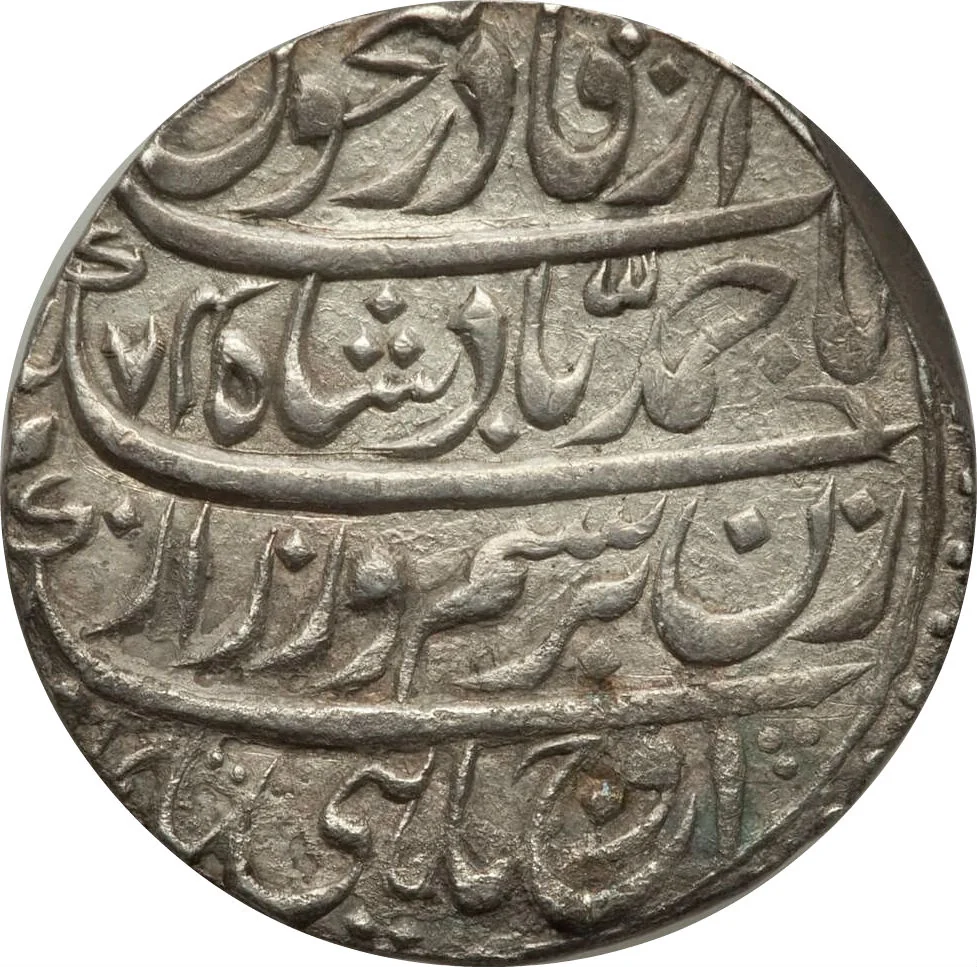
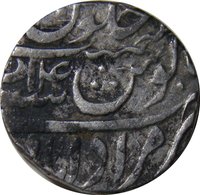
Obverse
Description:
Carved words.
Script: Arabic
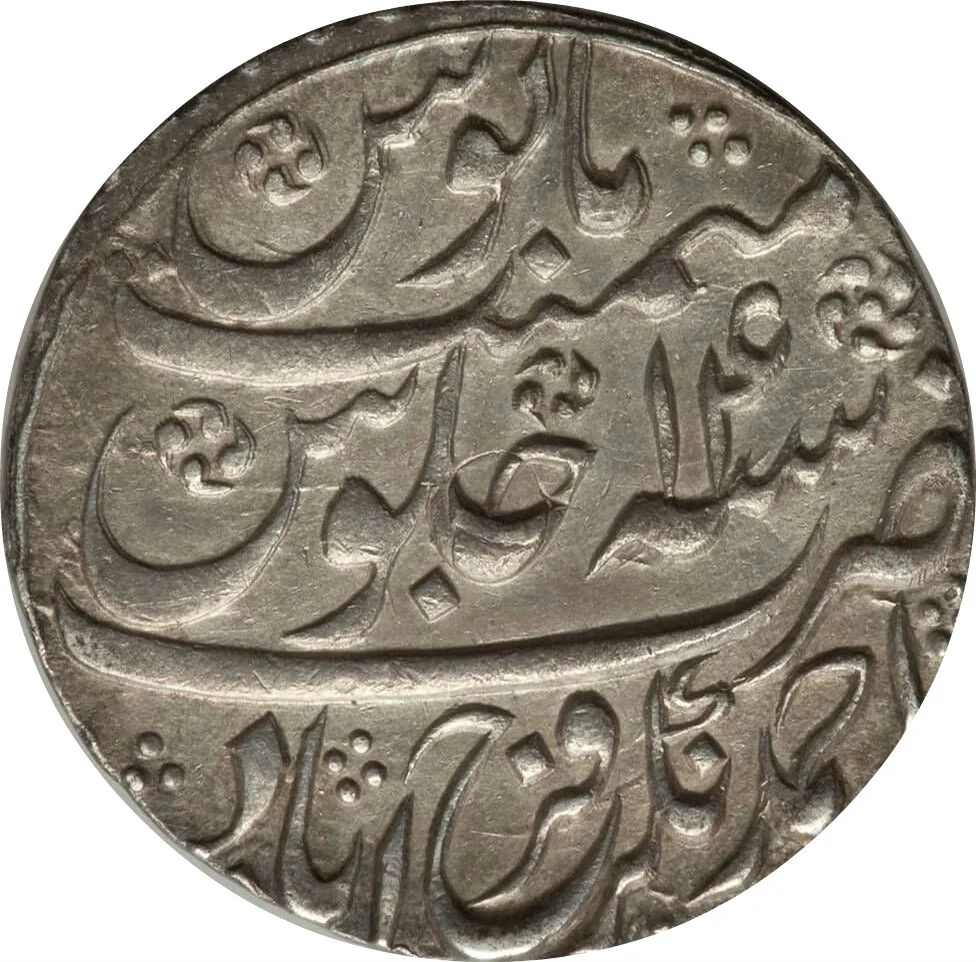
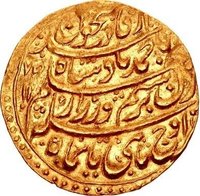
Reverse
Description:
Carved words.
Script: Arabic
Edge
Mintings
| Year | Mint Mark | Mintage | Quality | Collection |
|---|---|---|---|---|
| 1761 | — | — | ||
| 1763 | — | — |
Historical background
In 1761, the currency situation in Afghanistan was characterized by fragmentation and transition, reflecting the broader political instability of the period. The region was not a unified state but a contested collection of principalities, with the Durrani Empire, founded by Ahmad Shah Durrani in 1747, being the dominant power. The monetary system was a complex mosaic, with various silver rupees from neighboring Mughal India and Safavid Persia circulating alongside local and regional coinages. The primary unit was the silver rupee, but its weight, purity, and value could vary significantly depending on its origin, leading to a cumbersome environment for trade.
Ahmad Shah Durrani was actively working to impose monetary order as part of state-building. He continued minting coins in the name of the weakening Mughal Emperor, a convention that lent legitimacy and ensured wider acceptance across the Indian subcontinent. His mints in cities like Kabul, Kandahar, and Lahore produced silver rupees (often similar to the Mughal Naderi or Sikka rupee) and gold mohurs. However, his control was not absolute, and local khans and tribal leaders in more remote areas likely issued their own crude coinage or continued to use older, clipped, and foreign coins, perpetuating a decentralized monetary landscape.
This period was therefore one of competing currencies, where the state's newly minted coins circulated uneasily alongside a legacy of older and foreign specie. The system was fundamentally commodity-based, with coins valued by their intrinsic metal content rather than fiat. The instability of the currency mirrored the geopolitical reality: while the Durrani Empire sought consolidation, its control over the complex economic and tribal networks of the region remained incomplete, leaving the monetary system in a state of flux between imperial ambition and local tradition.
Ahmad Shah Durrani was actively working to impose monetary order as part of state-building. He continued minting coins in the name of the weakening Mughal Emperor, a convention that lent legitimacy and ensured wider acceptance across the Indian subcontinent. His mints in cities like Kabul, Kandahar, and Lahore produced silver rupees (often similar to the Mughal Naderi or Sikka rupee) and gold mohurs. However, his control was not absolute, and local khans and tribal leaders in more remote areas likely issued their own crude coinage or continued to use older, clipped, and foreign coins, perpetuating a decentralized monetary landscape.
This period was therefore one of competing currencies, where the state's newly minted coins circulated uneasily alongside a legacy of older and foreign specie. The system was fundamentally commodity-based, with coins valued by their intrinsic metal content rather than fiat. The instability of the currency mirrored the geopolitical reality: while the Durrani Empire sought consolidation, its control over the complex economic and tribal networks of the region remained incomplete, leaving the monetary system in a state of flux between imperial ambition and local tradition.
✨ Legendary