

1 Rupee – Afghanistan
Afghanistan
Context
Material
Diameter: 21.97 mm
Weight: 11.3 g
Silver weight: 11.30 g
Shape: Irregular round
Composition: Silver
Magnetic: No
References
KM: #Click to copy to clipboard683
Numista: #75416
Value
Bullion value: $32.83
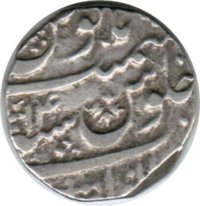
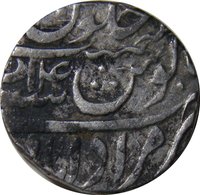
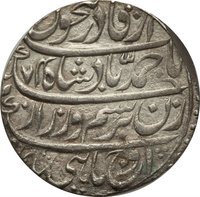
Obverse
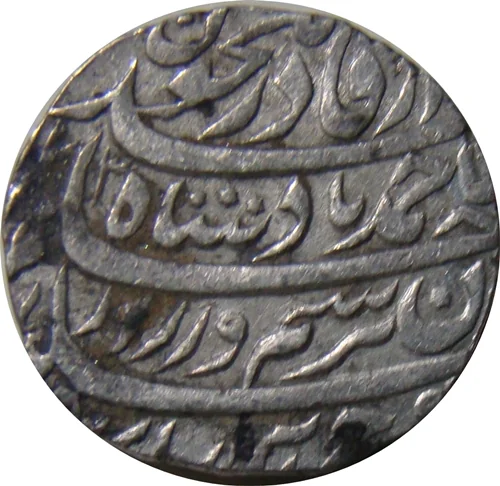
Description:
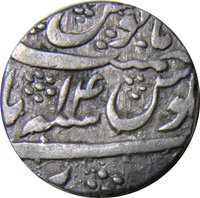
"Mahi ta bamah" is a Durrani couplet.
Script: Arabic
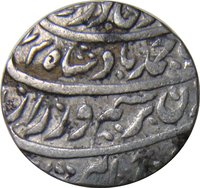
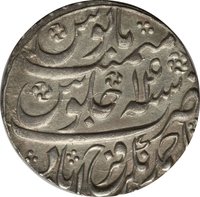
Reverse
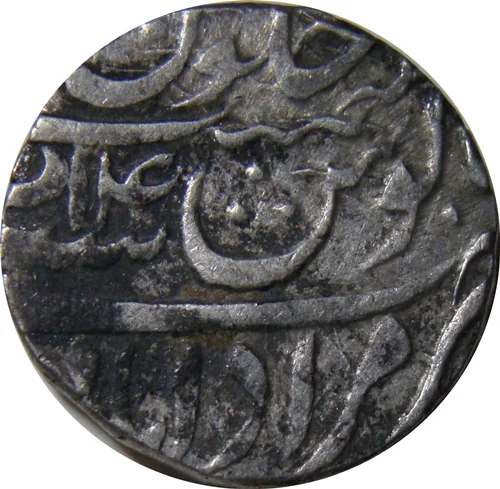
Description:
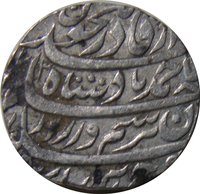
Julus strikes with a healthy hand.
Script: Arabic
Edge
Mintings
| Year | Mint Mark | Mintage | Quality | Collection |
|---|---|---|---|---|
| 1760 | — | — | ||
| 1761 | — | — |
Historical background
In 1760, the currency situation in Afghanistan was characterized by fragmentation and transition, reflecting the region's turbulent political landscape. Following the collapse of the Safavid and Mughal empires, the Durrani Empire, founded by Ahmad Shah Durrani in 1747, was consolidating its control over a vast territory stretching from eastern Persia to northern India. The monetary system was not yet unified under a single imperial standard. Instead, circulation was a complex mix of older, worn Mughal silver rupees (from mints like Kabul and Lahore), Safavid silver abbasis and mahmudis, and various regional and local copper coins. The primary monetary metal was silver, with gold used mainly for high-value transactions and hoarding.
Ahmad Shah Durrani initiated the crucial step of establishing a distinct Durrani coinage to assert sovereignty and facilitate trade and taxation. His early mints, particularly in Kabul and Kandahar, produced silver rupees that often imitated the weight and style of the widely accepted Mughal rupees to ensure their acceptance. These coins bore his name and titles in Persian script, replacing those of the Mughal emperor. However, the production volume of these new Durrani rupees in 1760 was still growing, meaning older coins remained the backbone of everyday commerce. The coinage also served a political purpose, acting as portable propaganda to broadcast the legitimacy and reach of the new empire across its diverse territories.
The economy underpinning this currency was heavily reliant on transit trade, agrarian revenue, and the immense plunder and tribute extracted from military campaigns into India, most notably the sack of Delhi in 1757. This influx of Indian silver and gold provided the essential bullion for minting new coins. Consequently, the stability and supply of currency in 1760 were directly tied to the success of the Durrani military and the health of long-distance trade routes. In remote areas, barter and payment in kind persisted, highlighting that the monetary economy, while advanced in urban centers, was not yet fully penetrative across the empire's rugged geography.
Ahmad Shah Durrani initiated the crucial step of establishing a distinct Durrani coinage to assert sovereignty and facilitate trade and taxation. His early mints, particularly in Kabul and Kandahar, produced silver rupees that often imitated the weight and style of the widely accepted Mughal rupees to ensure their acceptance. These coins bore his name and titles in Persian script, replacing those of the Mughal emperor. However, the production volume of these new Durrani rupees in 1760 was still growing, meaning older coins remained the backbone of everyday commerce. The coinage also served a political purpose, acting as portable propaganda to broadcast the legitimacy and reach of the new empire across its diverse territories.
The economy underpinning this currency was heavily reliant on transit trade, agrarian revenue, and the immense plunder and tribute extracted from military campaigns into India, most notably the sack of Delhi in 1757. This influx of Indian silver and gold provided the essential bullion for minting new coins. Consequently, the stability and supply of currency in 1760 were directly tied to the success of the Durrani military and the health of long-distance trade routes. In remote areas, barter and payment in kind persisted, highlighting that the monetary economy, while advanced in urban centers, was not yet fully penetrative across the empire's rugged geography.
💎 Extremely Rare