

5 ducats – Hungary
Add to wishlist
Hungary
Obverse
Description:
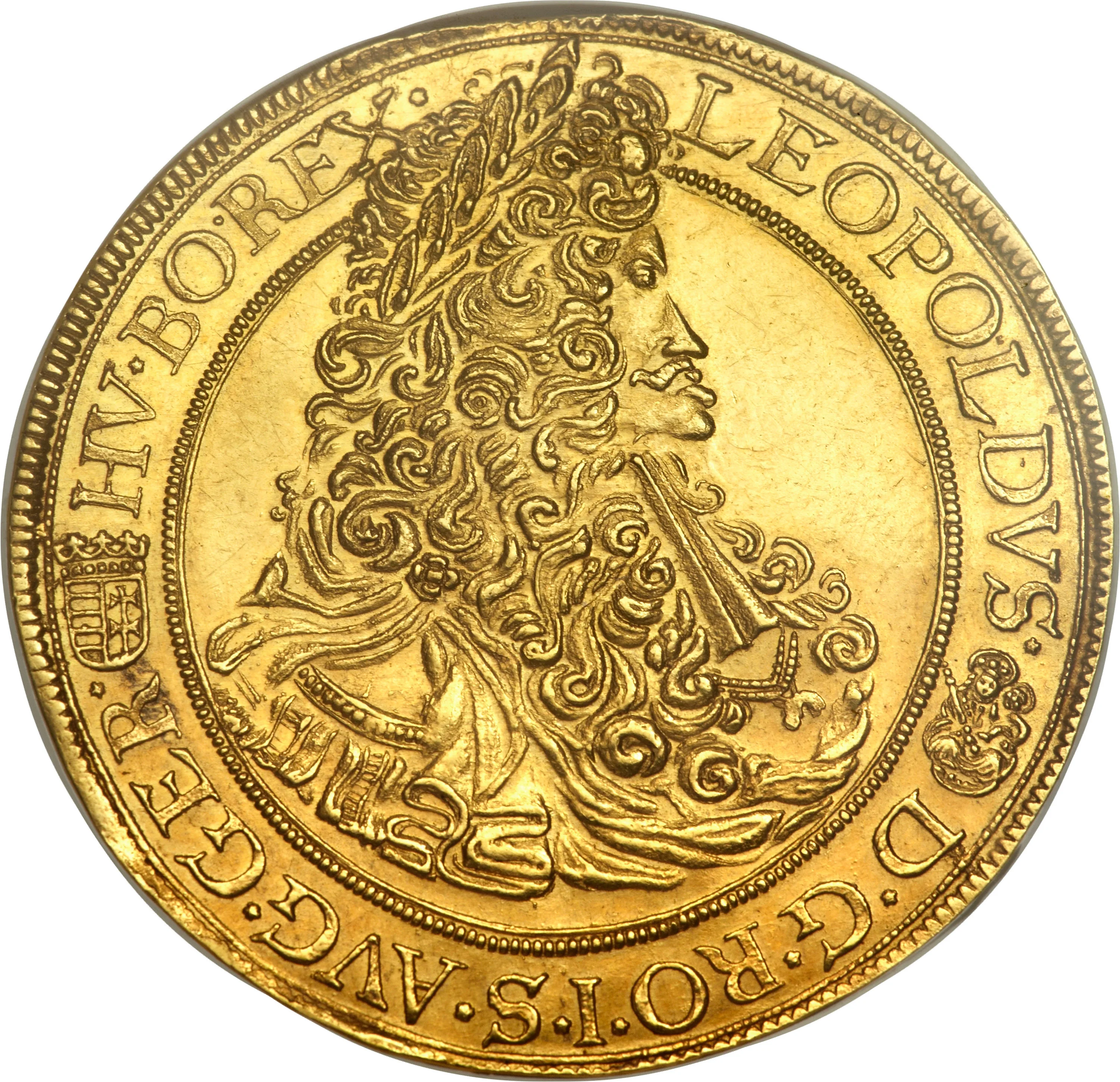
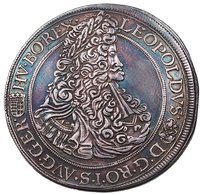
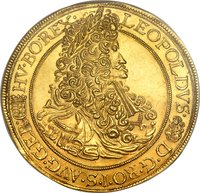
Laureate bust right in heavy curly wig, breaking inner pearl circle. Crowned double Hungarian coat of arms and Madonna with Child within inscription.
Inscription:
LEOPOLDVS · D · G · RO · I · S · AVG · GER · HV · BO · REX ·
Script: Latin
Reverse
Description:
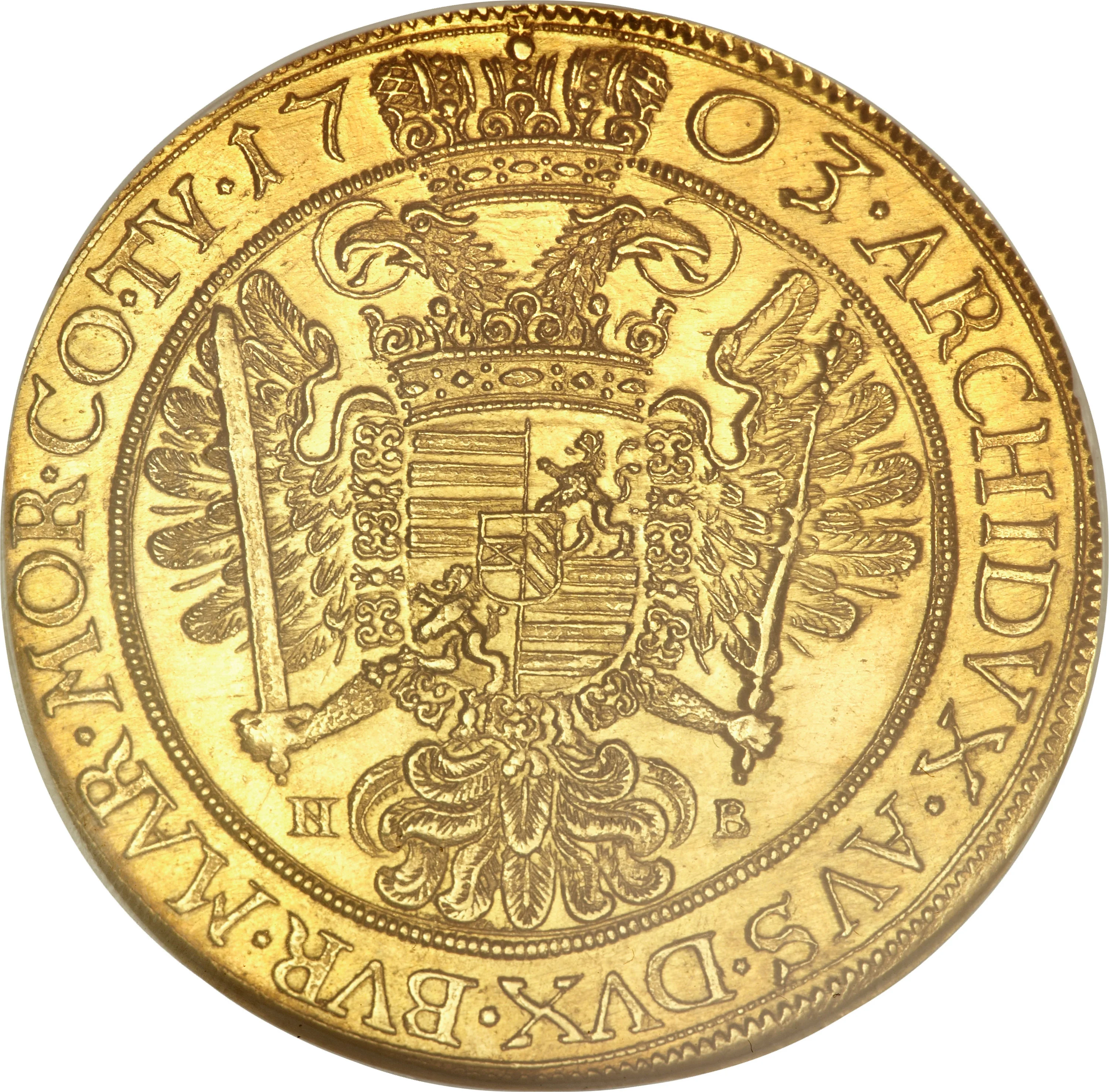
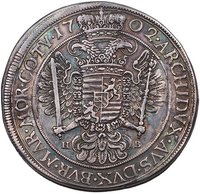
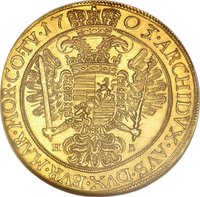
Imperial eagle in circle, crown above date, 'N B' by tail. U-shaped cartouche with quartered Árpádian/Bohemian arms. Central shield with uncrowned Austrian and Burgundian arms.
Inscription:
1703 · ARCHIDVX · AVS · DVX · BVR · MAR · MOR · CO · TY ·
N B
N B
Script: Latin
Edge
Mints
| Name | Mark |
|---|---|
| Baia Mare | NB |
Historical background
In 1702, Hungary’s currency situation was deeply unstable and a direct consequence of its political turmoil. The country was divided, with the Habsburg monarchy controlling Royal Hungary, the Ottoman Empire holding the central regions, and Prince Ferenc Rákóczi II leading a burgeoning War of Independence (1703-1711) against Habsburg rule. This fragmentation meant there was no unified monetary authority, leading to a chaotic circulation of various coins from different mints and empires, which severely disrupted trade and the economy.
The primary currency in Habsburg-controlled areas was the silver thaler (or Tallér), but its value and quality were under constant pressure. To finance continuous warfare against both the Ottomans and, increasingly, Rákóczi’s kuruc forces, the Vienna court frequently resorted to debasement—reducing the precious metal content in coins minted in places like Nagybánya (today Baia Mare, Romania). This practice eroded public trust, caused price inflation, and created a gap between the official face value of coins and their actual intrinsic metal worth, encouraging hoarding of older, purer coins.
Furthermore, the ongoing military conflict and economic strain led to widespread use of substandard, often counterfeit, and heavily worn foreign coins in daily transactions. The lack of a reliable, standard currency exacerbated the hardships of the population, crippled long-distance commerce, and reflected the broader struggle for control of the Hungarian kingdom. This monetary crisis was not merely an economic issue but a stark symptom of the devastating wars and power struggles that defined the era in Hungary.
The primary currency in Habsburg-controlled areas was the silver thaler (or Tallér), but its value and quality were under constant pressure. To finance continuous warfare against both the Ottomans and, increasingly, Rákóczi’s kuruc forces, the Vienna court frequently resorted to debasement—reducing the precious metal content in coins minted in places like Nagybánya (today Baia Mare, Romania). This practice eroded public trust, caused price inflation, and created a gap between the official face value of coins and their actual intrinsic metal worth, encouraging hoarding of older, purer coins.
Furthermore, the ongoing military conflict and economic strain led to widespread use of substandard, often counterfeit, and heavily worn foreign coins in daily transactions. The lack of a reliable, standard currency exacerbated the hardships of the population, crippled long-distance commerce, and reflected the broader struggle for control of the Hungarian kingdom. This monetary crisis was not merely an economic issue but a stark symptom of the devastating wars and power struggles that defined the era in Hungary.

✨ Legendary