

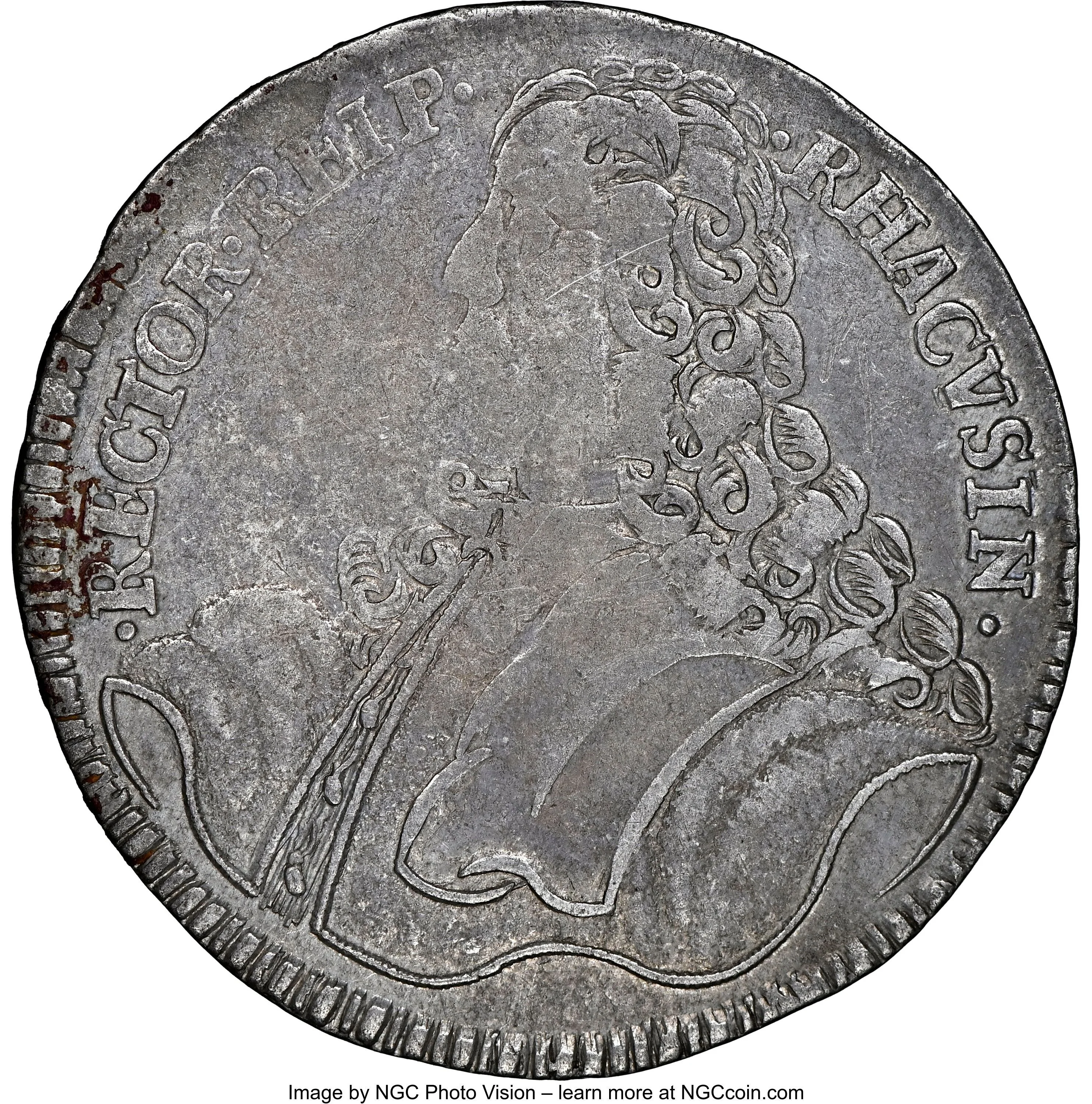
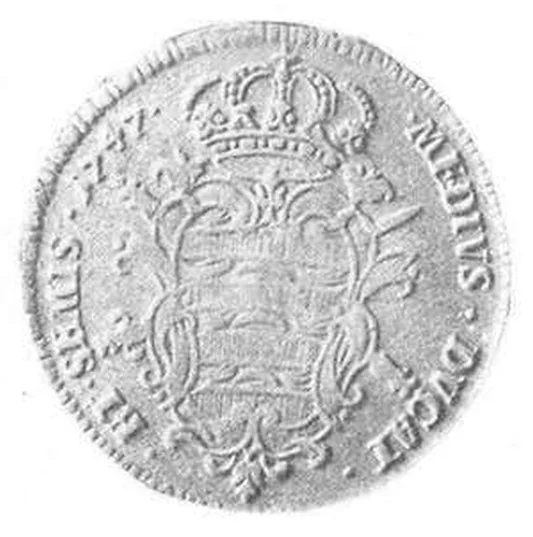
½ tallero – Republic of Ragusa
Add to wishlist
Croatia
Context
Years: 1747–1748
Country: Croatia
Issuer: Republic of Ragusa
Period:
(1294—1803)
Currency:
(1294—1803)
Subdivision: ½ tallero = 30 Grosetti
Demonetized: Yes
Material
References
KM: #
Numista: #86523
Value
Bullion value: $35.67
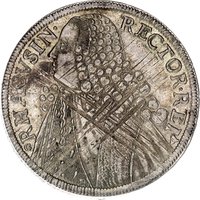
Obverse
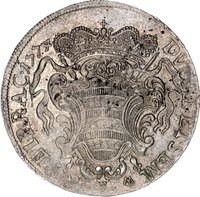
Reverse
Description:
Crowned baroque Ragusan coat of arms.
Inscription:
・MEDIVS・DVCAT・ET・SEMIS・1748・
Script: Latin
Edge
Mintings
| Year | Mint Mark | Mintage | Quality | Collection |
|---|---|---|---|---|
| 1747 | — | — | ||
| 1748 | — | — |
Historical background
In 1747, the Republic of Ragusa (modern-day Dubrovnik) operated within a complex and challenging monetary environment, characteristic of its status as a small, neutral maritime state caught between powerful empires. The republic did not mint its own gold or silver coins, as its limited resources and the political dominance of its neighbours made this impractical. Instead, its official currency system was based on the Ragusan perpera, a unit of account used for bookkeeping, state finances, and larger contracts, which was pegged to the Venetian gold ducat. For everyday transactions, however, a multitude of physical foreign coins circulated, creating a de facto multi-currency system.
The most prominent circulating coins were those of Ragusa's powerful maritime rival and economic partner, the Venetian Republic, particularly the lira and soldo. Alongside these, Austrian thalers, Ottoman piastres (kuruş), and Spanish silver pieces of eight were all common, brought by extensive trade across the Mediterranean and the Balkans. This proliferation of foreign specie led to frequent issues of valuation, exchange rate fluctuations, and the problem of worn or clipped coins, which the Senate struggled to regulate through official proclamations fixing exchange rates against the perpera.
This monetary landscape reflected Ragusa's broader geopolitical and economic reality. The reliance on foreign coinage underscored the republic's commercial vitality but also its vulnerability, as its economy was subject to the monetary policies and bullion flows of larger states. The system, while flexible for merchants engaged in international trade, was cumbersome and prone to instability, mirroring the delicate balance Ragusa maintained to preserve its independence amidst the Ottoman Empire's suzerainty and the Habsburg and Venetian spheres of influence.
The most prominent circulating coins were those of Ragusa's powerful maritime rival and economic partner, the Venetian Republic, particularly the lira and soldo. Alongside these, Austrian thalers, Ottoman piastres (kuruş), and Spanish silver pieces of eight were all common, brought by extensive trade across the Mediterranean and the Balkans. This proliferation of foreign specie led to frequent issues of valuation, exchange rate fluctuations, and the problem of worn or clipped coins, which the Senate struggled to regulate through official proclamations fixing exchange rates against the perpera.
This monetary landscape reflected Ragusa's broader geopolitical and economic reality. The reliance on foreign coinage underscored the republic's commercial vitality but also its vulnerability, as its economy was subject to the monetary policies and bullion flows of larger states. The system, while flexible for merchants engaged in international trade, was cumbersome and prone to instability, mirroring the delicate balance Ragusa maintained to preserve its independence amidst the Ottoman Empire's suzerainty and the Habsburg and Venetian spheres of influence.
✨ Legendary