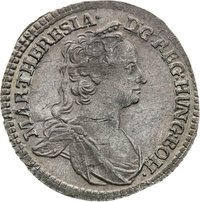
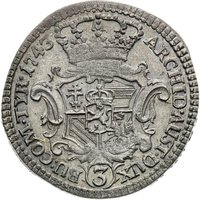
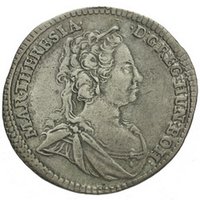
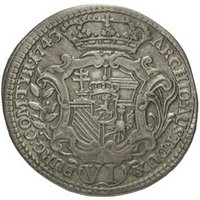
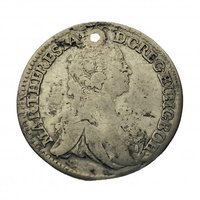
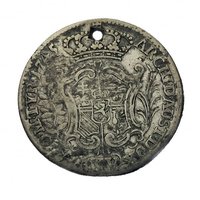
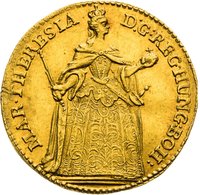
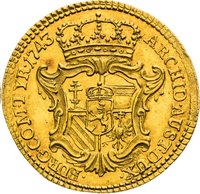
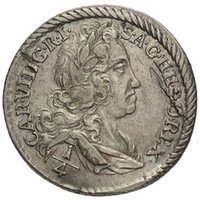
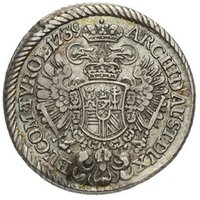
In 1743, the Kingdom of Bohemia found itself in a complex monetary situation, deeply entangled in the wider financial strains of the Habsburg Monarchy during the War of the Austrian Succession (1740-1748). The conflict, which saw Bohemia itself become a major battlefield invaded by Prussian and allied forces, placed an enormous fiscal burden on the state. To fund the war effort, the Habsburg court in Vienna had significantly increased the minting of low-quality coinage, particularly small
kreuzer denominations, leading to a classic problem of debasement. This meant the coins in circulation had a face value higher than their intrinsic metal content, causing inflation and a loss of public trust in the currency.
The Bohemian lands operated within a bimetallic system based on the
gulden (florin) and the
kreuzer, with the famous silver
thaler also playing a key role for larger transactions. However, the wartime debasement created a severe disparity. Older, high-quality silver coins, such as the
Konventionsthaler (which would be formally standardized a few years later in 1753), were hoarded by the population, following Gresham's Law that "bad money drives out good." This hoarding further reduced the supply of reliable specie, crippling commerce and making it difficult for the authorities to collect taxes in sound money, thereby exacerbating the state's financial crisis.
Furthermore, the monetary landscape was fragmented. While Vienna dictated central policy, the practical circulation was complicated by the presence of not only debased Habsburg coinage but also older regional issues, counterfeits, and currencies from neighboring states like Saxony and Prussia that flowed in with occupying armies. This confusion hindered economic recovery in the war-ravaged kingdom. The situation in 1743 thus represented a low point, a chaotic prelude to the major monetary reforms that Empress Maria Theresa would be forced to implement after the war, most notably the establishment of the unified
Conventionsthaler system to bring stability back to the Habsburg lands, including Bohemia.