

1 liard – Spanish Netherlands
Add to wishlist
Netherlands
Context
Years: 1690–1696
Country: Netherlands
Issuer: Spanish Netherlands
Ruler: Charles II
Currency:
(1506—1713)
Demonetized: Yes
Material
References
KM: #
Numista: #8591
Obverse
Description:
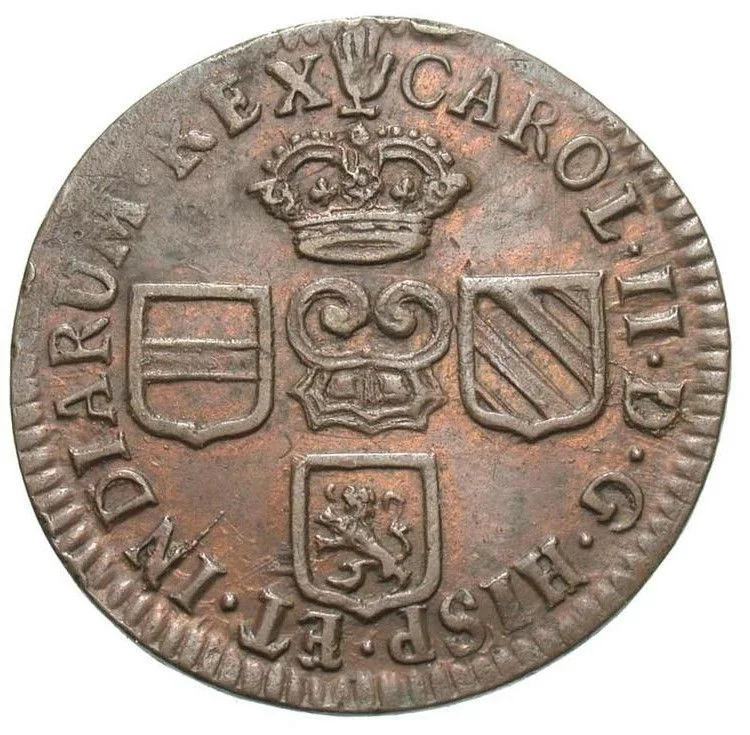
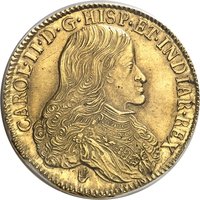
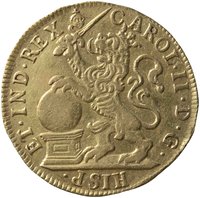
Firesteel crowned, encircled by shields of Austria, Burgundy, and Brabant; mintmark above crown.
Inscription:
CAROL. II. DG HISP. ET. INDIAR. REX.
Script: Latin
Reverse
Description:
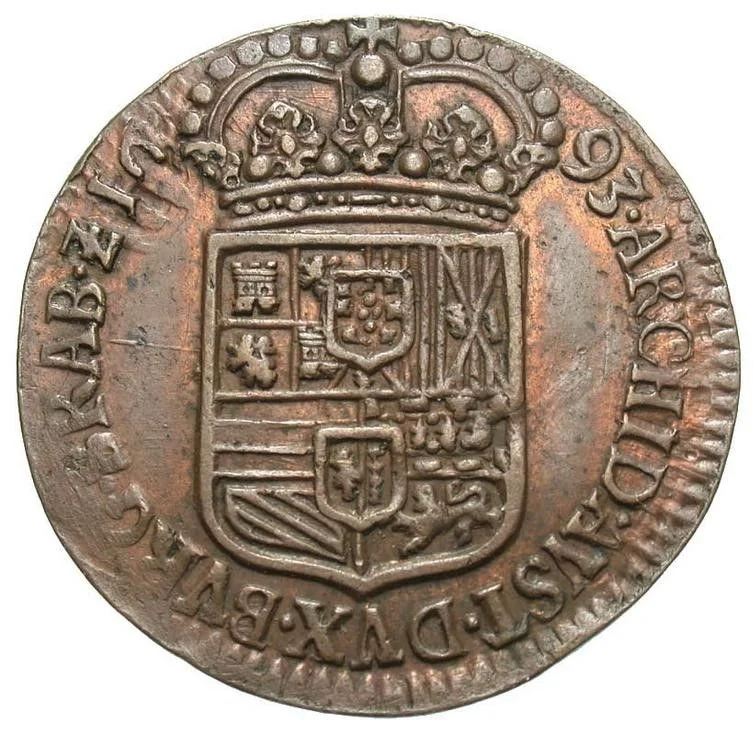
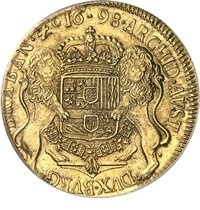
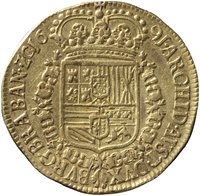
Spanish arms with eight crowns, date flanking legend.
Inscription:
ARCH. AVS. DVX. BVRG. BRAB Z
Script: Latin
Edge
Mints
| Name | Mark |
|---|---|
| Antwerp | — |
| Royal Mint of Belgium | — |
Mintings
| Year | Mint Mark | Mintage | Quality | Collection |
|---|---|---|---|---|
| 1690 | — | — | ||
| 1691 | — | — | ||
| 1692 | — | — | ||
| 1693 | — | — | ||
| 1695 | — | — | ||
| 1696 | — | — |
Historical background
By 1690, the Spanish Netherlands (approximately modern-day Belgium and Luxembourg) was embroiled in the Nine Years' War (1688-1697), a conflict that placed the region on the front line between Louis XIV's France and the Grand Alliance. This constant warfare devastated the local economy, disrupting trade and agriculture, and placed an immense fiscal strain on the government in Brussels. The need to fund military campaigns and fortifications led to severe financial pressures, which directly destabilized the monetary system.
The currency situation was chaotic, characterized by severe debasement and circulation of multiple coinages. To raise funds, the authorities frequently reduced the silver content in newly minted coins (like the patagon or ducaton), while older, full-weight coins were hoarded or melted down for their intrinsic value—a classic example of Gresham's Law. Furthermore, the region was flooded with foreign currencies, particularly French louis d'or and Dutch guilders, which circulated alongside local issues, creating a confusing and unreliable exchange environment that hampered commerce.
This monetary chaos had dire consequences. Prices became volatile and unpredictable, crippling daily transactions and long-term business planning. Public trust in the currency collapsed, and the government's repeated attempts to fix official exchange rates for the myriad of coins proved futile. Thus, in 1690, the currency of the Spanish Netherlands was less a symbol of sovereign authority and more a symptom of a war-torn territory in deep economic distress, with its stability entirely dependent on the uncertain outcome of the wider European conflict.
The currency situation was chaotic, characterized by severe debasement and circulation of multiple coinages. To raise funds, the authorities frequently reduced the silver content in newly minted coins (like the patagon or ducaton), while older, full-weight coins were hoarded or melted down for their intrinsic value—a classic example of Gresham's Law. Furthermore, the region was flooded with foreign currencies, particularly French louis d'or and Dutch guilders, which circulated alongside local issues, creating a confusing and unreliable exchange environment that hampered commerce.
This monetary chaos had dire consequences. Prices became volatile and unpredictable, crippling daily transactions and long-term business planning. Public trust in the currency collapsed, and the government's repeated attempts to fix official exchange rates for the myriad of coins proved futile. Thus, in 1690, the currency of the Spanish Netherlands was less a symbol of sovereign authority and more a symptom of a war-torn territory in deep economic distress, with its stability entirely dependent on the uncertain outcome of the wider European conflict.
🌟 Uncommon