

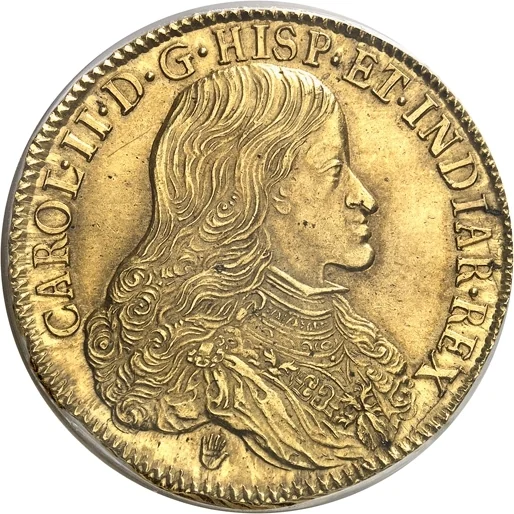
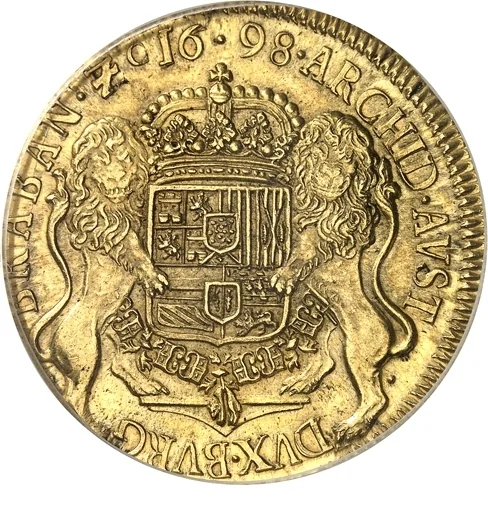
8 Sovereigns – Spanish Netherlands
Netherlands
Context
Years: 1689–1698
Country: Netherlands 
Issuer: Spanish Netherlands
Ruler: Charles II
Currency:
(1506—1713)
Demonetized: Yes
Material
References
KM: #Click to copy to clipboard117.1/2
Numista: #297163
Value
Bullion value: $6961.30
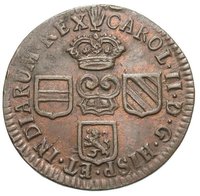
Obverse
Description:
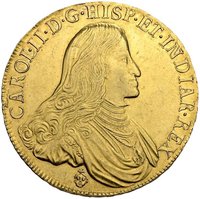
Bareheaded bust right, mintmark beneath.
Inscription:
CAROL • II • D • G • HISP • ET • INDIAR • REX
Script: Latin
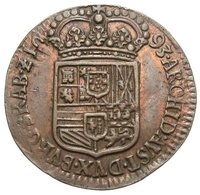
Reverse
Description:
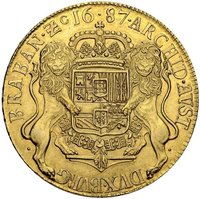
Arms crowned and collared with the Golden Fleece, lion-flanked.
Inscription:
ARCHID • AVST • DVX • BURG BRABANT
Script: Latin
Edge
Mints
| Name | Mark |
|---|---|
| Antwerp | Hand |
| Royal Mint of Belgium | Head |
Mintings
| Year | Mint Mark | Mintage | Quality | Collection |
|---|---|---|---|---|
| 1689 | — | — | ||
| 1692 | — | — | ||
| 1693 | — | — | ||
| 1694 | — | — | ||
| 1698 | — | — |
Historical background
In 1689, the Spanish Netherlands (approximately modern-day Belgium and Luxembourg) was in a state of monetary crisis and profound complexity. The region was a patchwork of different principalities, each historically clinging to its own minting rights and currency standards. This resulted in a chaotic circulation of domestic and foreign coins, including Flemish pounds, Brabant guilders, and a flood of debased and counterfeit pieces from neighboring states. The official currency, the patagon or rixdollar, saw its silver content and value fluctuate wildly, undermining both daily commerce and state finances.
This instability was exacerbated by the ongoing Nine Years' War (1688-1697), in which the Spanish Netherlands served as the primary battlefield between Louis XIV's France and the Grand Alliance. The immense cost of maintaining armies and fortifications led the government in Brussels to repeatedly authorize emergency debasements of the coinage. By lowering the silver content in newly minted coins, authorities aimed to create more money from the same bullion reserves, a short-term fiscal fix that further eroded public trust and accelerated inflation, as people hoarded older, purer coins.
Consequently, the monetary system was characterized by confusion, arbitrage, and economic strain. Merchants and money-changers wielded significant power, navigating a labyrinth of exchange rates, while ordinary citizens suffered from rising prices and uncertain wages. The situation highlighted the Spanish crown's diminishing control and the urgent need for a uniform, stable currency—a reform that would only begin to materialize under later Austrian Habsburg rule. The currency chaos of 1689 thus reflected both the enduring medieval fragmentation of the economy and the severe pressures of continental warfare.
This instability was exacerbated by the ongoing Nine Years' War (1688-1697), in which the Spanish Netherlands served as the primary battlefield between Louis XIV's France and the Grand Alliance. The immense cost of maintaining armies and fortifications led the government in Brussels to repeatedly authorize emergency debasements of the coinage. By lowering the silver content in newly minted coins, authorities aimed to create more money from the same bullion reserves, a short-term fiscal fix that further eroded public trust and accelerated inflation, as people hoarded older, purer coins.
Consequently, the monetary system was characterized by confusion, arbitrage, and economic strain. Merchants and money-changers wielded significant power, navigating a labyrinth of exchange rates, while ordinary citizens suffered from rising prices and uncertain wages. The situation highlighted the Spanish crown's diminishing control and the urgent need for a uniform, stable currency—a reform that would only begin to materialize under later Austrian Habsburg rule. The currency chaos of 1689 thus reflected both the enduring medieval fragmentation of the economy and the severe pressures of continental warfare.
✨ Legendary