

1 Sovereign – Spanish Netherlands
Netherlands
Context
Year: 1691
Country: Netherlands 
Issuer: Spanish Netherlands
Ruler: Charles II
Currency:
(1506—1713)
Demonetized: Yes
Total mintage: 2,222
Material
References
KM: #Click to copy to clipboard80.2
Numista: #394524
Value
Bullion value: $928.25
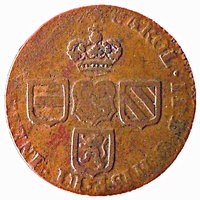
Obverse
Description:
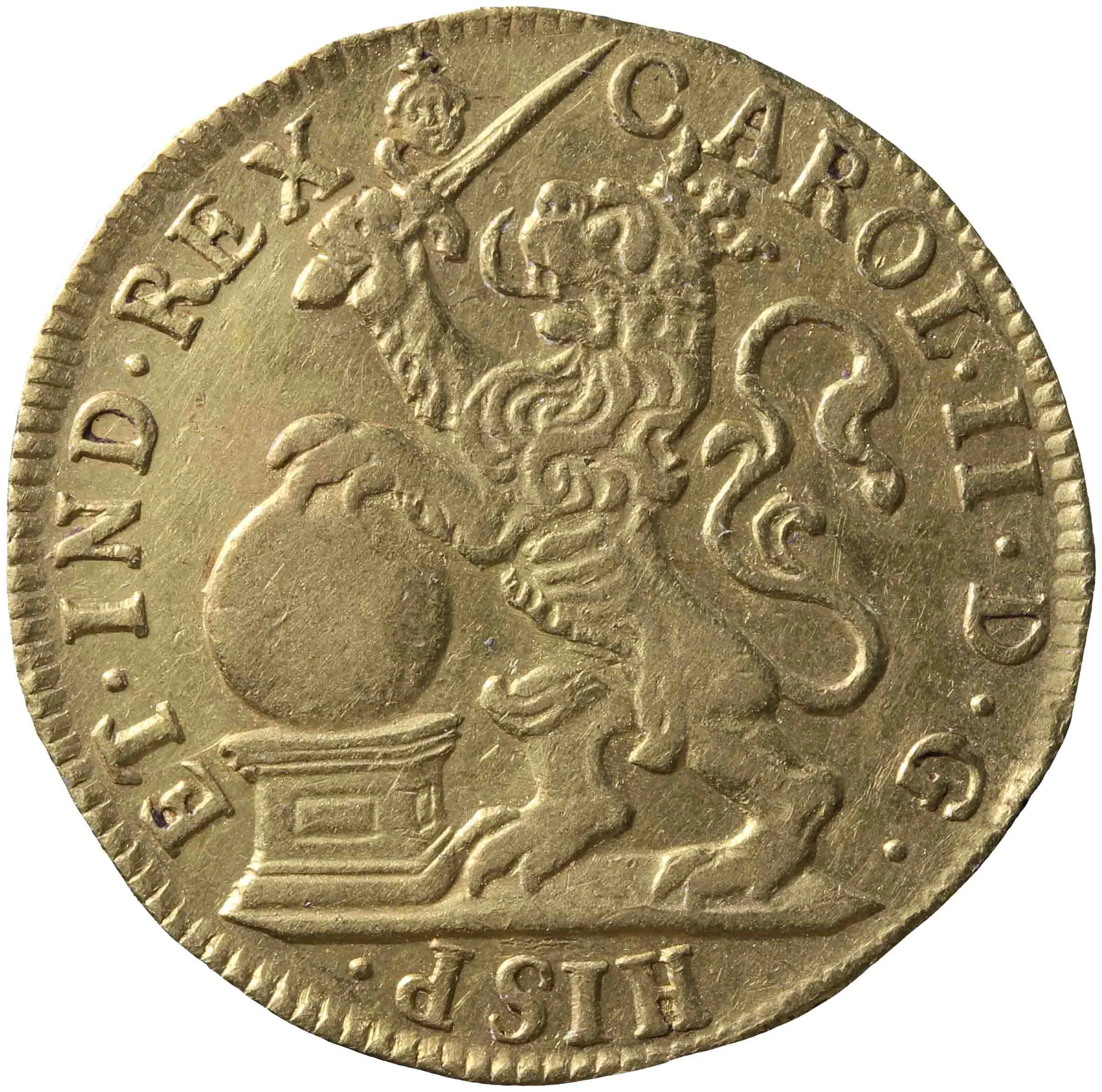
Crowned lion left, holding sword and globe; mint mark above.
Inscription:
CAROL • II • D • G • HISP • ET • IND • REX
Script: Latin
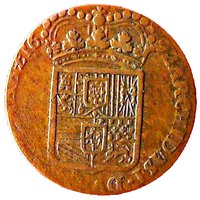
Reverse
Description:
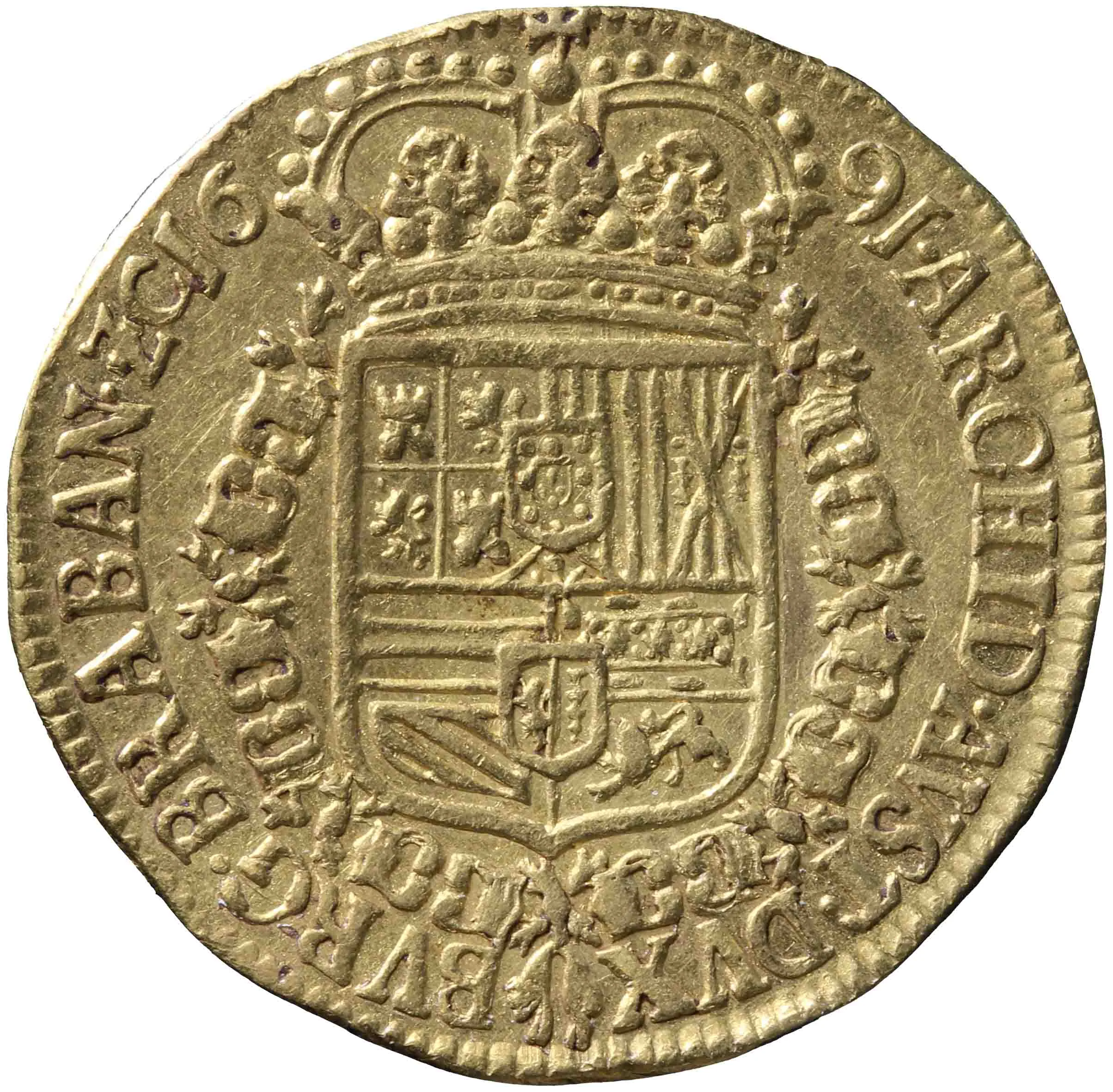
Crowned arms divides top date, encircled by Golden Fleece collar.
Inscription:
ARCHID • AVST • DVX • BVRG • BRABAN • Zc • 16 91
Script: Latin
Edge
Mints
| Name | Mark |
|---|---|
| Royal Mint of Belgium | Head |
Mintings
| Year | Mint Mark | Mintage | Quality | Collection |
|---|---|---|---|---|
| 1691 | — | 2,222 |
Historical background
In 1691, the Spanish Netherlands found itself in a precarious monetary situation, a direct consequence of the ongoing Nine Years' War (1688-1697). The region, a battleground between the forces of Louis XIV of France and the Grand Alliance led by William III of England, suffered from severe economic strain. The cost of maintaining armies, fortifications, and the general disruption of trade and agriculture placed an immense fiscal burden on the government. This led to repeated debasements of the coinage, as the authorities reduced the precious metal content in coins to stretch their finances and fund the war effort, thereby eroding public trust in the currency.
The circulating medium was a chaotic mixture of old, full-weight coins, newly minted debased issues, and a plethora of foreign currencies from neighboring states. This created a classic instance of Gresham's Law, where "bad money drives out good." Hoarders and merchants would selectively remove older, higher-silver coins from circulation for melting or export, leaving the poorer-quality coins as the primary means of everyday exchange. This drove up prices, created uncertainty in commerce, and made financial transactions fraught with difficulty, as the value of a coin depended heavily on its mint, age, and physical condition.
Authorities in Brussels attempted to manage the crisis through official ordinances that periodically set new exchange rates (tarieven) for the myriad of coins in an effort to fix their value. However, these decrees were largely reactive and often ineffective against market forces. The 1691 monetary landscape was thus one of instability and confusion, where the state's fiscal desperation directly undermined the reliability of the very currency needed to sustain its economy and war effort, exacerbating the hardship on the local population.
The circulating medium was a chaotic mixture of old, full-weight coins, newly minted debased issues, and a plethora of foreign currencies from neighboring states. This created a classic instance of Gresham's Law, where "bad money drives out good." Hoarders and merchants would selectively remove older, higher-silver coins from circulation for melting or export, leaving the poorer-quality coins as the primary means of everyday exchange. This drove up prices, created uncertainty in commerce, and made financial transactions fraught with difficulty, as the value of a coin depended heavily on its mint, age, and physical condition.
Authorities in Brussels attempted to manage the crisis through official ordinances that periodically set new exchange rates (tarieven) for the myriad of coins in an effort to fix their value. However, these decrees were largely reactive and often ineffective against market forces. The 1691 monetary landscape was thus one of instability and confusion, where the state's fiscal desperation directly undermined the reliability of the very currency needed to sustain its economy and war effort, exacerbating the hardship on the local population.
✨ Legendary