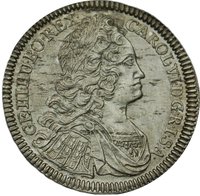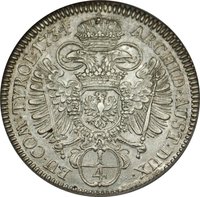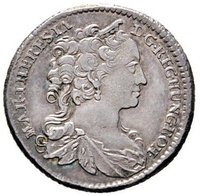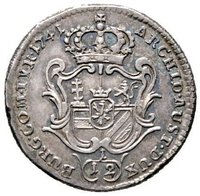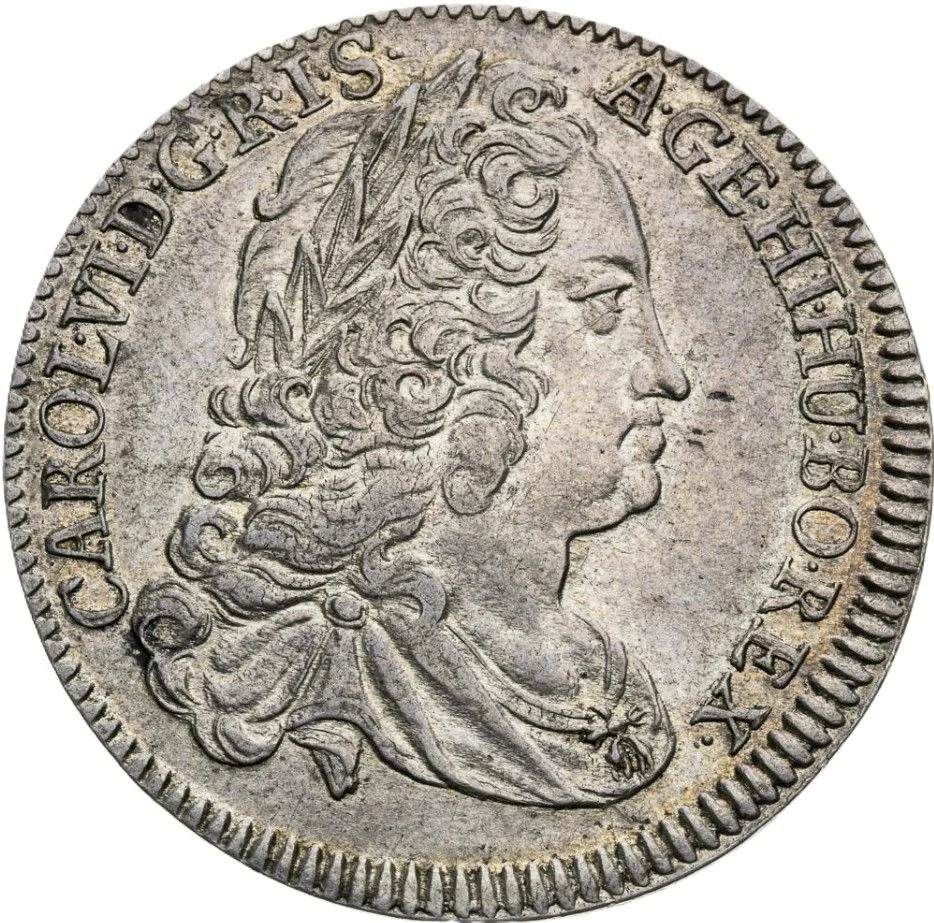
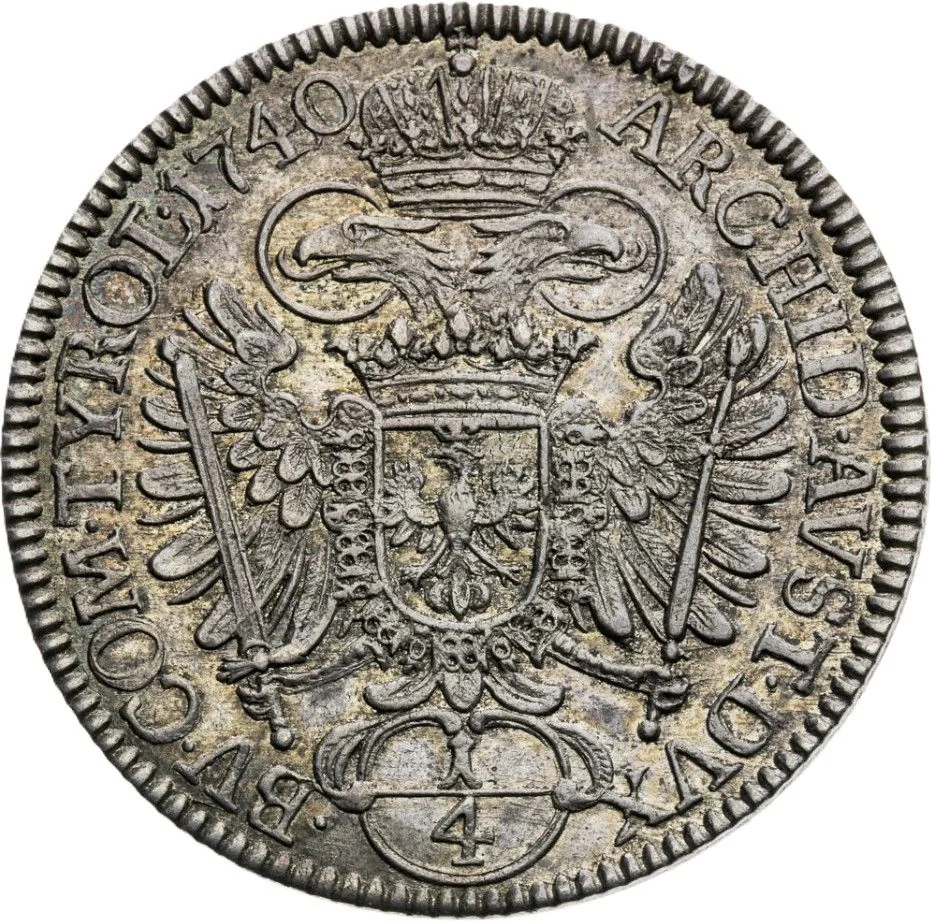
In 1740, the currency situation in the County of Tyrol was complex and fragmented, reflecting both its geographic position and its political status within the Habsburg Monarchy. Tyrol did not have a uniform, exclusive coinage of its own. Instead, it operated within the broader Austrian monetary system, where the standard unit was the Conventionsthaler (or
Konventionstaler). However, due to Tyrol's key location on major trade routes between the German lands and Italy, a multitude of foreign coins—particularly from the various South German states and northern Italian territories—circulated freely alongside official Habsburg issues. This created a constant challenge of exchange rates and valuation.
The local economy relied heavily on smaller silver and billon (debased silver) coins for everyday transactions. The most important of these for Tyrol was the
Kreuzer, with 60 Kreuzer making up one Conventionsthaler. There were also
Groschen and
Pfennig units. A persistent problem was the wear and clipping of coins, as well as the influx of inferior foreign small change, which led to a discrepancy between the official face value of money and its actual metallic content. This erosion of trust in small currency hampered local trade and daily commerce.
This monetary landscape existed under the authority of the Habsburg ruler, Maria Theresa, who had just ascended the throne in 1740. The financial demands of the impending War of the Austrian Succession would soon place immense strain on the entire monarchy's treasury, leading to broader monetary reforms in the following decades. For Tyrol in 1740, however, the system remained a precarious and heterogeneous mix of official and unofficial coins, requiring merchants and authorities alike to be expert assayers of value in a crowded and inconsistent monetary field.