

1 Rupee – Bengal Presidency
India
Context

Material
References
KM: #Click to copy to clipboard8.2
Numista: #85179
Value
Bullion value: $33.73
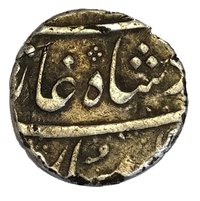
Obverse
Description:
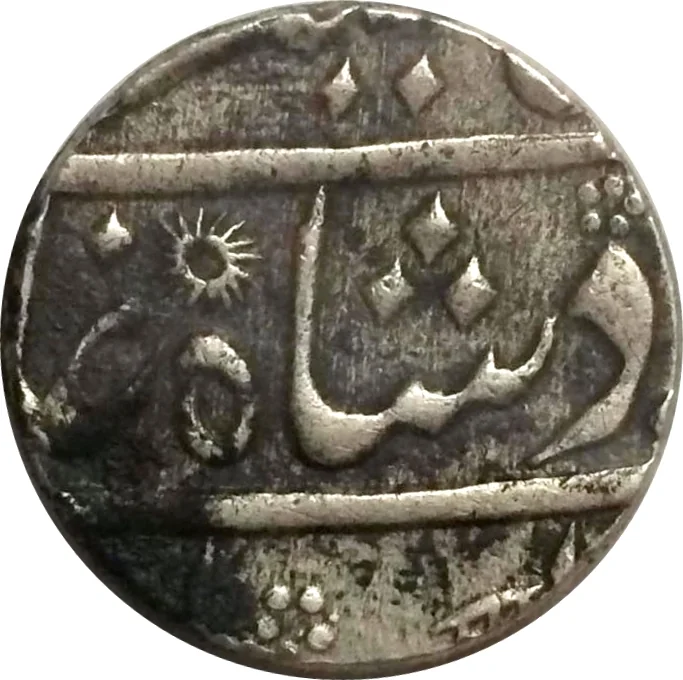
Coins of Emperor Alamgir.
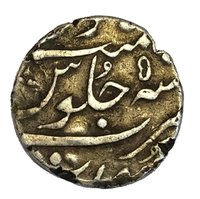
Reverse
Description:
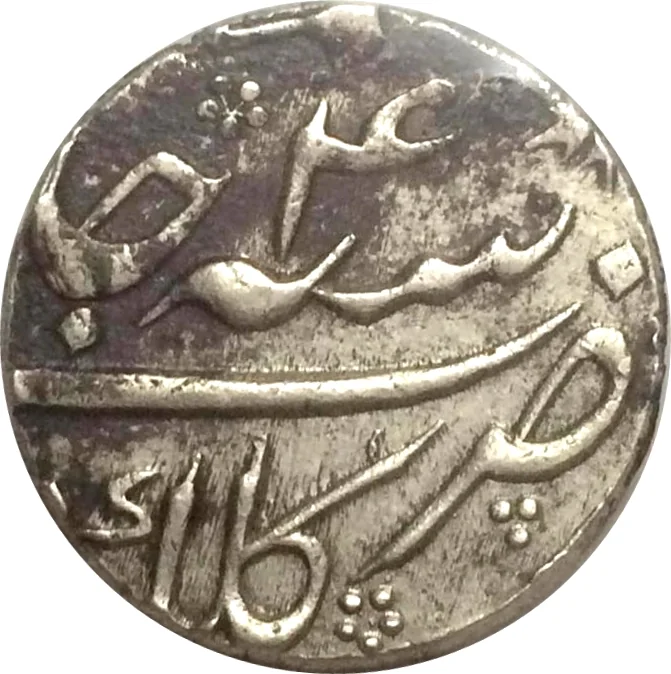
Zarb Kalkatta, RY, julus maimanat manus.
Inscription:
۴
Edge
Plain
Mintings
| Year | Mint Mark | Mintage | Quality | Collection |
|---|---|---|---|---|
| 1758 | — | — | ||
| — | — | — | ||
| 1759 | — | — | ||
| 1760 | — | — |
Historical background
In 1758, the currency situation in the Bengal Presidency was chaotic and transitional, reflecting the broader political upheaval following the Battle of Plassey in 1757. The nominal Mughal authority still provided the framework, with the silver rupee (often the Arcot or Sicca rupee) as the primary standard. However, the actual monetary landscape was a fragmented patchwork of various local and foreign coins—including Mughal, Maratha, and European issues—circulating at fluctuating values. This disorder was exacerbated by the widespread practice of clipping and adulterating coins, which eroded public trust and complicated commerce for the English East India Company, now the dominant political power.
The Company itself was in a precarious financial position, having drained its silver reserves to finance its military campaigns. To meet its enormous expenses for troops, fortifications, and gifts to secure political loyalty, it increasingly resorted to minting its own coins at the Murshidabad and Calcutta mints. However, it lacked sufficient bullion, leading to a reliance on recoining existing, often debased, currency from its land revenue collections. This created a vicious cycle where the Company’s financial demands contributed to the very monetary instability that hampered its trade and administration.
Ultimately, the currency crisis of 1758 was a direct symptom of the shift from Mughal to Company rule. Robert Clive, as the de facto ruler, recognized that stabilizing the currency was essential for consolidating power and ensuring predictable revenue. While a comprehensive reform would not be achieved until the Bengal Currency Act of 1793, the years immediately following 1758 saw the Company taking its first tentative steps to assert control over the mints and establish a more uniform rupee, laying the groundwork for its future fiscal dominance on the subcontinent.
The Company itself was in a precarious financial position, having drained its silver reserves to finance its military campaigns. To meet its enormous expenses for troops, fortifications, and gifts to secure political loyalty, it increasingly resorted to minting its own coins at the Murshidabad and Calcutta mints. However, it lacked sufficient bullion, leading to a reliance on recoining existing, often debased, currency from its land revenue collections. This created a vicious cycle where the Company’s financial demands contributed to the very monetary instability that hampered its trade and administration.
Ultimately, the currency crisis of 1758 was a direct symptom of the shift from Mughal to Company rule. Robert Clive, as the de facto ruler, recognized that stabilizing the currency was essential for consolidating power and ensuring predictable revenue. While a comprehensive reform would not be achieved until the Bengal Currency Act of 1793, the years immediately following 1758 saw the Company taking its first tentative steps to assert control over the mints and establish a more uniform rupee, laying the groundwork for its future fiscal dominance on the subcontinent.
✨ Legendary