

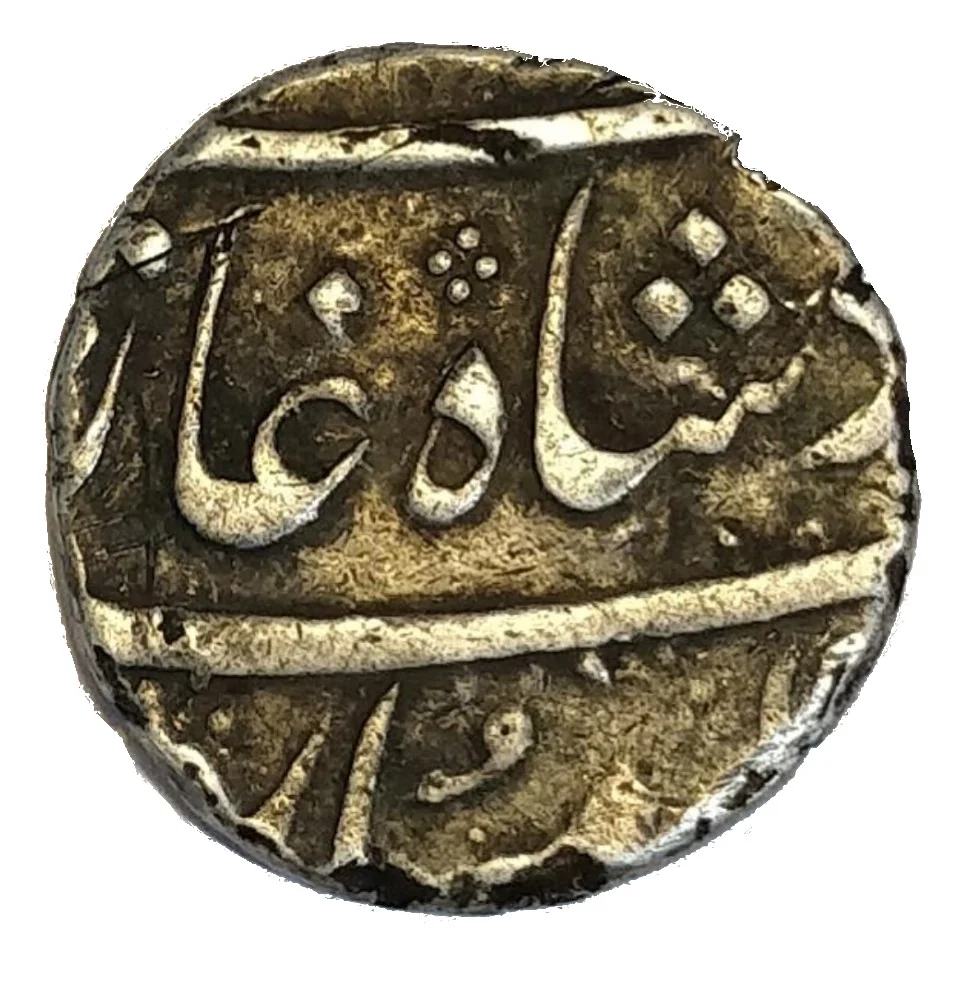
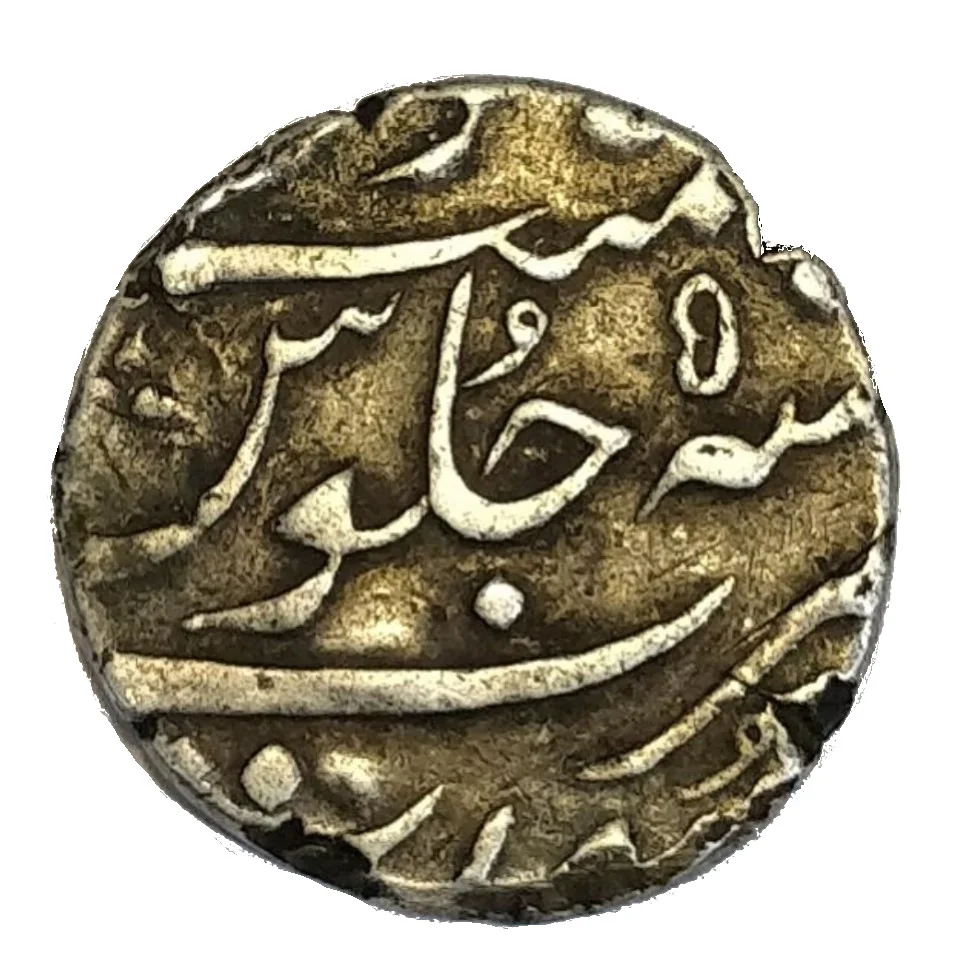
1 Rupee – Bengal Presidency
India
Context

Material
References
KM: #Click to copy to clipboard475.4
Numista: #197693
Value
Bullion value: $32.83
Obverse
Description:
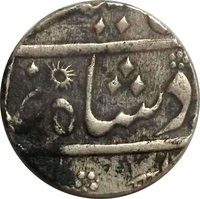
Sikka of Shah Jahan.
Reverse
Description:
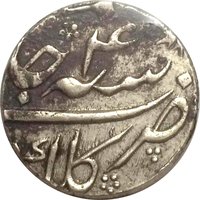
Struck at Surat in the 5th regnal year of Maimanat Manus.
Edge
Plain
Mintings
| Year | Mint Mark | Mintage | Quality | Collection |
|---|---|---|---|---|
| — | — | — |
Historical background
In 1759, the Bengal Presidency's currency system was a complex and fragmented landscape, reflecting its transition from Mughal sovereignty to emerging British East India Company dominance following the Battle of Plassey (1757). The primary circulating medium was the silver rupee, but its value and purity were not uniform. The most authoritative coin was the sicca rupee, newly minted at the Mughal imperial mint in Murshidabad, which carried a premium over older, worn rupees (sanat rupees). Alongside these, a plethora of foreign coins—including Arcot rupees from the south, Persian mohurs, and European gold pagodas—circulated, creating a chaotic exchange environment that complicated trade and revenue collection.
This monetary instability was exacerbated by the Company's growing political power but lack of full fiscal control. While the Diwani (right to collect revenue) would not be granted until 1765, the Company and its private European officials were already deeply involved in manipulating the currency for profit. A common and disruptive practice was "culling," where individuals would selectively remove newly minted, full-weight sicca rupees from circulation to melt them down and recoin them for a profit, thereby degrading the overall currency pool. This led to chronic shortages of reliable coinage and created significant friction in the economy.
Consequently, the year 1759 sits within a period of mounting financial strain. The Bengal economy, though prosperous, was strained by the Company's massive wealth extraction and the dual system of governance where the Nawab (Mir Jafar) retained nominal authority while the Company pulled the strings. The chaotic currency situation directly hampered the Company's own ability to secure predictable revenue for its trade and military operations, setting the stage for more direct intervention and the eventual standardization of the rupee under Company control in the decades to follow.
This monetary instability was exacerbated by the Company's growing political power but lack of full fiscal control. While the Diwani (right to collect revenue) would not be granted until 1765, the Company and its private European officials were already deeply involved in manipulating the currency for profit. A common and disruptive practice was "culling," where individuals would selectively remove newly minted, full-weight sicca rupees from circulation to melt them down and recoin them for a profit, thereby degrading the overall currency pool. This led to chronic shortages of reliable coinage and created significant friction in the economy.
Consequently, the year 1759 sits within a period of mounting financial strain. The Bengal economy, though prosperous, was strained by the Company's massive wealth extraction and the dual system of governance where the Nawab (Mir Jafar) retained nominal authority while the Company pulled the strings. The chaotic currency situation directly hampered the Company's own ability to secure predictable revenue for its trade and military operations, setting the stage for more direct intervention and the eventual standardization of the rupee under Company control in the decades to follow.
✨ Legendary