

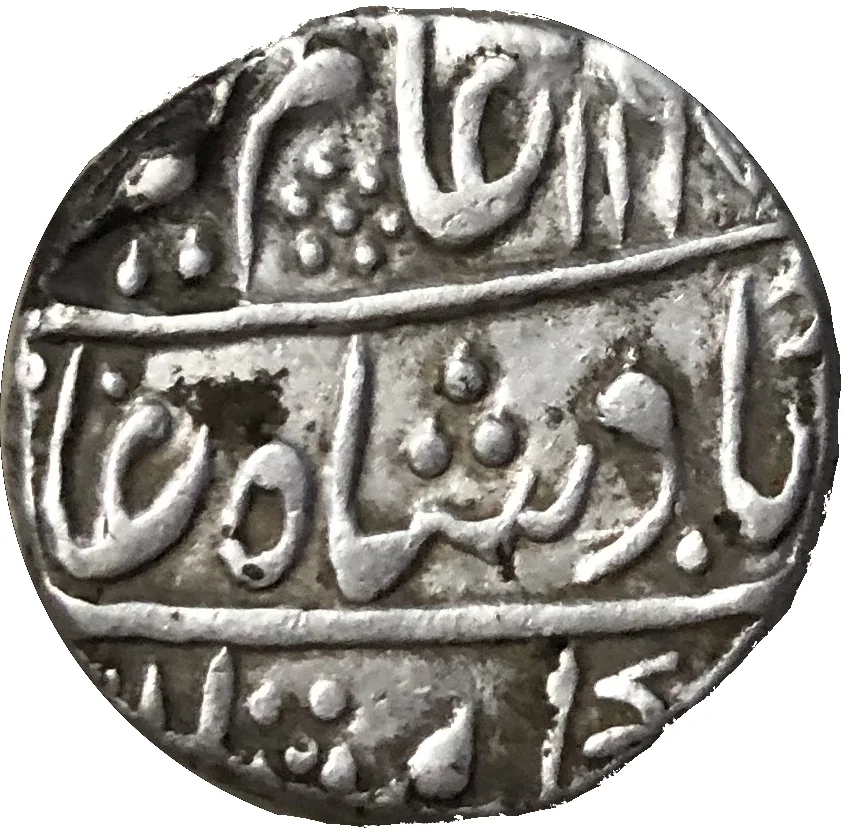

Obverse
Description:
Emperor's Name (AH Date)
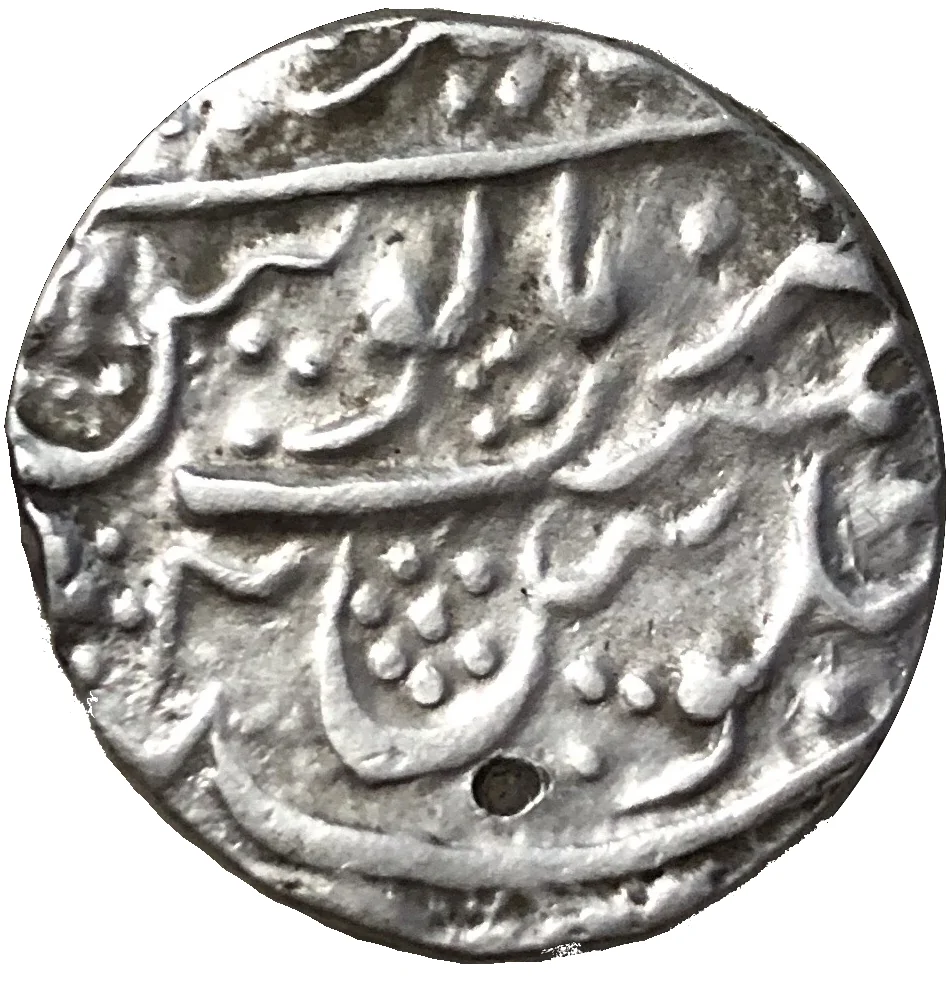
Reverse
Description:
RY Date & Mint
Edge
Mintings
| Year | Mint Mark | Mintage | Quality | Collection |
|---|---|---|---|---|
| 1754 | — | — |
Historical background
In 1754, the Bengal Presidency's currency system was a complex and fragmented landscape, reflecting its transition from Mughal authority to growing European, particularly British, influence. The primary circulating medium was the silver rupee, with the dominant unit being the Sicca Rupee, newly minted at the Calcutta mint. However, its value was unstable and contested against a plethora of older rupees, like the Sonat and Farrukhabad issues, which circulated at varying discounts due to wear and tear. Alongside these, a vast quantity of gold mohurs, copper dam for small transactions, and even cowrie shells in rural areas created a multi-tiered monetary environment prone to confusion and arbitrage.
This complexity was exacerbated by the political context. While the Nawab of Bengal, Alivardi Khan, held nominal sovereignty, the British East India Company, based in Fort William, Calcutta, was aggressively expanding its commercial and military power following the acquisition of the zamindari (land revenue rights) of the 24 Parganas in 1752. The Company operated its own mint and sought to standardize currency in its favour, often insisting on payments in the newer, heavier Sicca Rupee. This created constant friction with local merchants and bankers (shroffs), who assessed and exchanged coins based on intrinsic weight and purity, leading to intricate discounting practices known as batta.
Ultimately, the currency situation in 1754 was one of competing sovereignties and economic interests on the brink of dramatic change. The existing Mughal system was decaying, while the Company was not yet a territorial ruler with the power to impose uniformity. This monetary instability was a significant point of commercial contention and would become a critical tool for the British East India Company to consolidate its economic control, a process that would accelerate just a year later with the Battle of Plassey in 1757 and the subsequent assumption of the diwani (revenue collection rights) in 1765.
This complexity was exacerbated by the political context. While the Nawab of Bengal, Alivardi Khan, held nominal sovereignty, the British East India Company, based in Fort William, Calcutta, was aggressively expanding its commercial and military power following the acquisition of the zamindari (land revenue rights) of the 24 Parganas in 1752. The Company operated its own mint and sought to standardize currency in its favour, often insisting on payments in the newer, heavier Sicca Rupee. This created constant friction with local merchants and bankers (shroffs), who assessed and exchanged coins based on intrinsic weight and purity, leading to intricate discounting practices known as batta.
Ultimately, the currency situation in 1754 was one of competing sovereignties and economic interests on the brink of dramatic change. The existing Mughal system was decaying, while the Company was not yet a territorial ruler with the power to impose uniformity. This monetary instability was a significant point of commercial contention and would become a critical tool for the British East India Company to consolidate its economic control, a process that would accelerate just a year later with the Battle of Plassey in 1757 and the subsequent assumption of the diwani (revenue collection rights) in 1765.
✨ Legendary