Logo Title
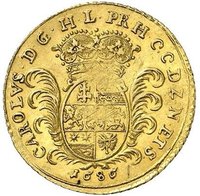
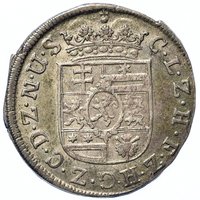
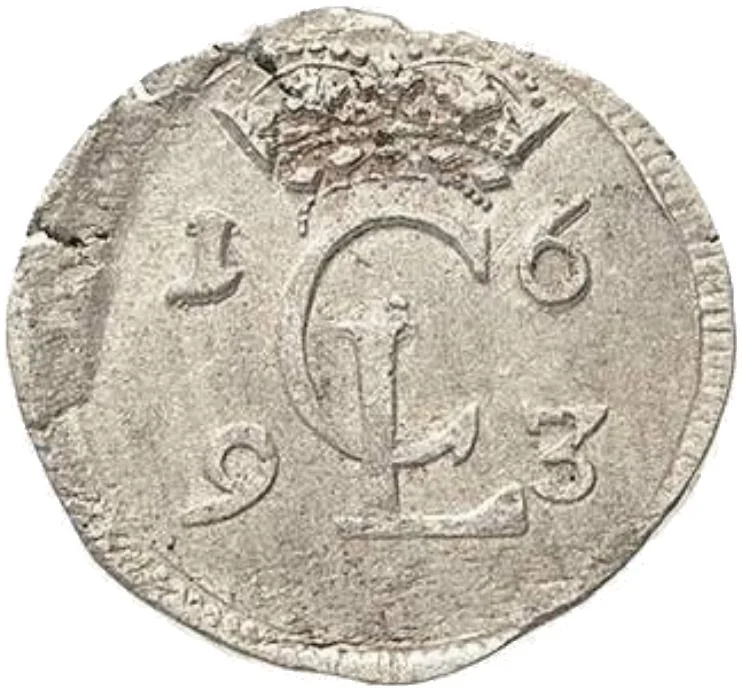
obverse
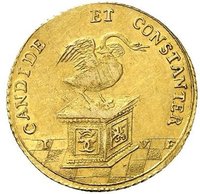
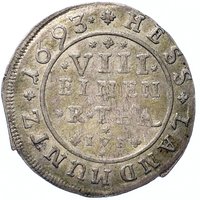
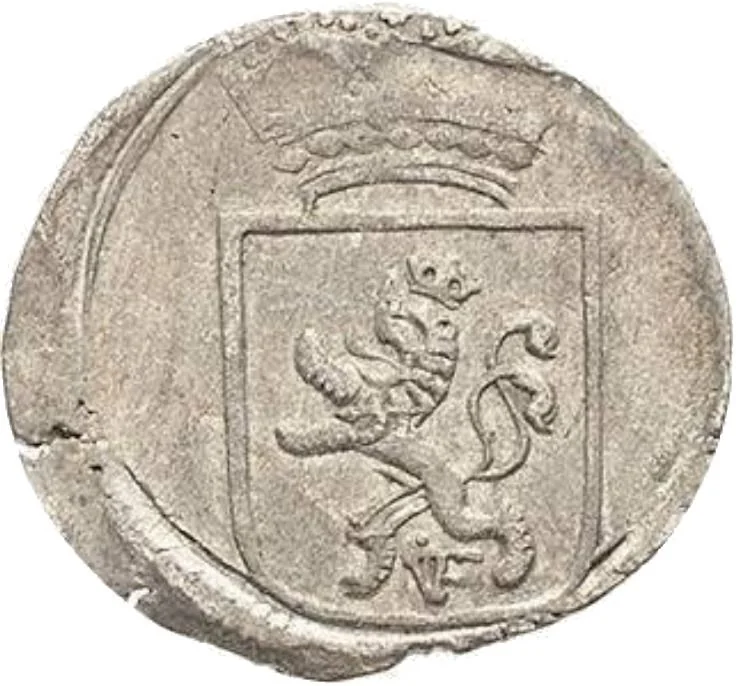
reverse
Leipziger Münzhandlung und Auktion Manfred Höhn

1 Albus – Landgraviate of Hesse-Cassel

Context
Years: 1691–1693
Ruler: Charles I
Currency:
Demonetized: Yes
Material
Diameter: 19 mm
Weight: 1.5 g
Silver weight: 1.50 g
Thickness: 0.5 mm
Shape: Round
Composition: Silver
Magnetic: No
References
KM: #Click to copy to clipboard331
Numista: #85041
Value
Bullion value: $4.24

Obverse

Description:
CL champion, dates beside.
Inscription:
CL

1693
Script: Latin

Reverse

Description:
Lion on a crowned shield.

Edge

Plain

Mints

NameMark
Kassel

Mintings

YearMint MarkMintageQualityCollection
1691
1692
1693

Historical background

In 1691, the currency situation in the Landgraviate of Hesse-Cassel was complex and strained, a legacy of the Thirty Years' War and subsequent conflicts. The landgraviate, like many German states, operated within the Holy Roman Empire's fractured monetary system, where numerous territories minted their own coins. This led to a circulation of diverse and often debased currencies, including the Taler (thaler), Gulden, and Kreuzer, whose values fluctuated against each other and against the Empire's official but largely theoretical currency standards. The primary challenge was a chronic shortage of high-value, full-weight specie, as good coin was often hoarded or exported, leaving a circulating medium of uneven and unreliable quality.

This monetary instability was exacerbated by the financial demands of Landgrave Charles I, who maintained a large standing army for both defense and profit through the practice of Soldatenhandel (leasing troops to foreign powers). To fund his military and court expenditures, the mint in Kassel was periodically engaged in Kipper- und Wipperzeit-style practices, deliberately debasing the coinage by reducing the precious metal content to create short-term profit from seigniorage. This further eroded public trust in Hesse-Cassel's currency, spurred inflation in local transactions, and complicated trade with neighboring states, which naturally discounted the weaker coins.

Consequently, the year 1691 fell within a period of ongoing monetary adjustment and pressure. While attempts were made to adhere to imperial regulations like the Zinnaische Münzfuß (1667) and later the Leipziger Münzfuß (1690), practical enforcement was difficult. The state's economy was thus caught between the necessity of funding its militarized polity and the need for a stable monetary system to facilitate taxation and commerce, resulting in a fragile and often chaotic currency environment for its merchants and subjects.
💎 Extremely Rare