Logo Title
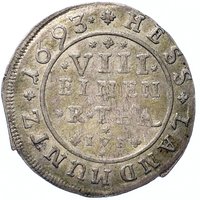
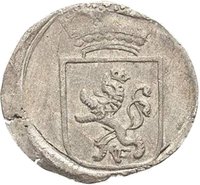
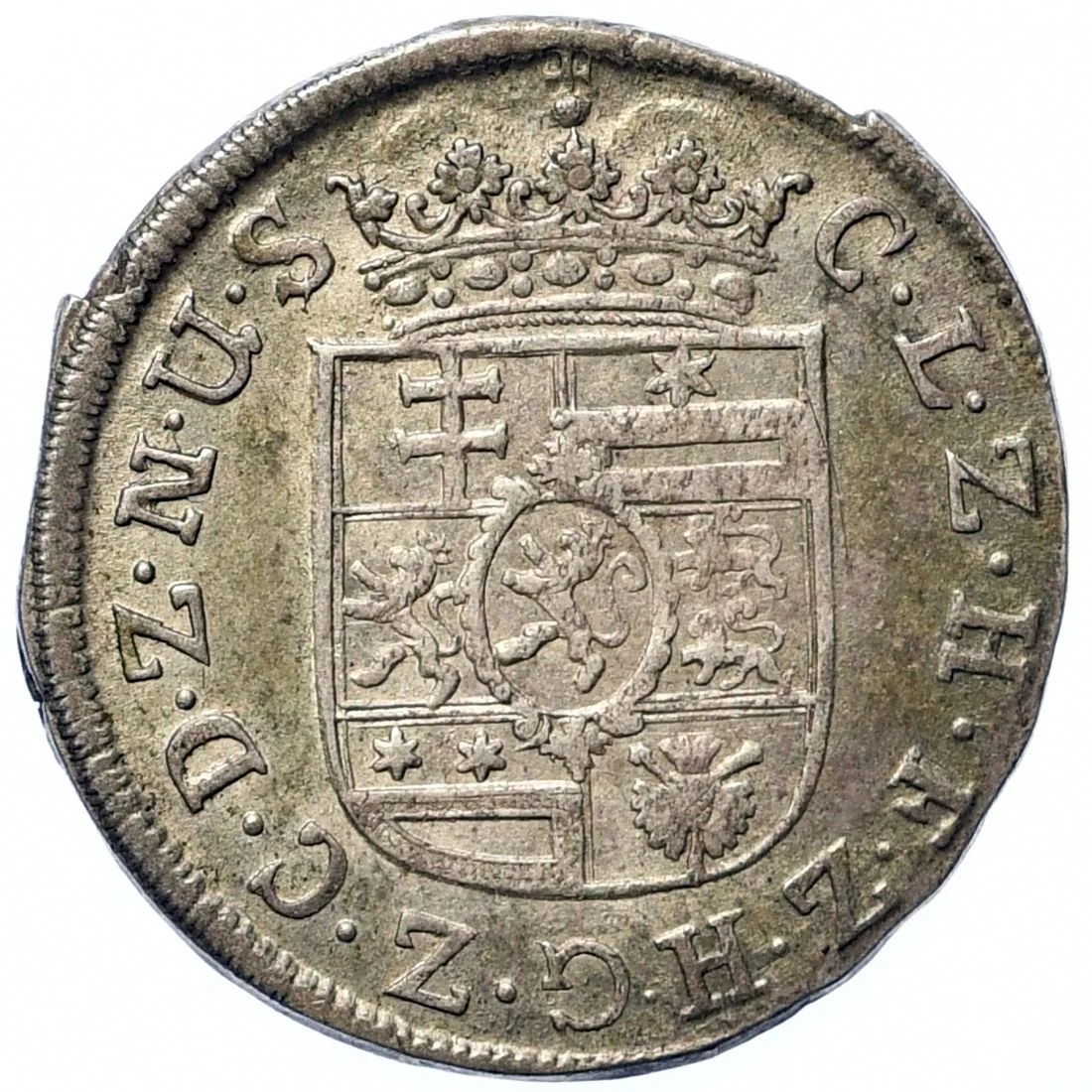
obverse
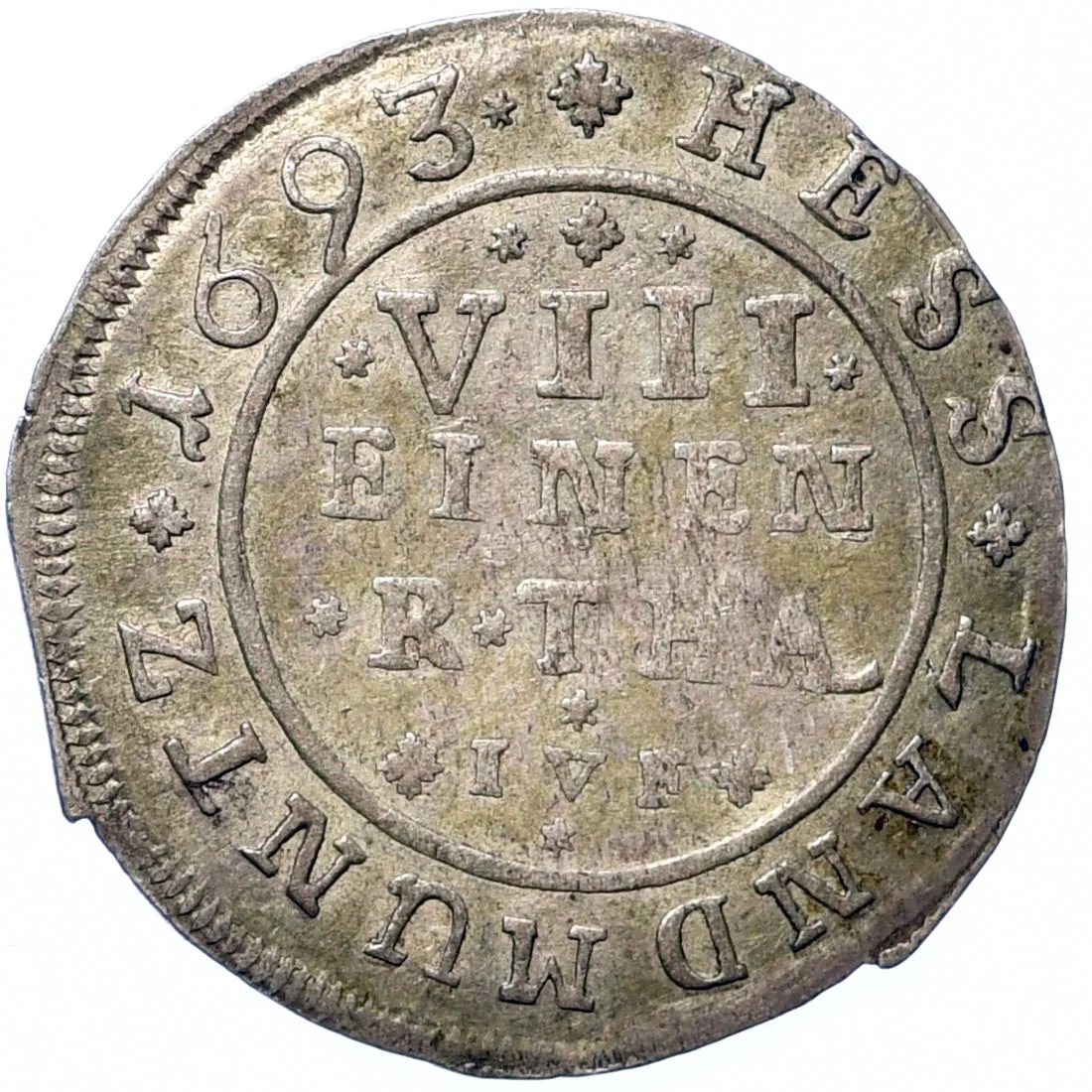
reverse
escoins CC BY-NC-SA

⅛ Thaler – Landgraviate of Hesse-Cassel

Context
Year: 1693
Ruler: Charles I
Currency:
Demonetized: Yes
Material
Diameter: 27 mm
Weight: 4.19 g
Silver weight: 4.19 g
Shape: Round
Composition: Silver
Magnetic: No
Alignment: Coin alignment
Obverse
OBVERSE ↑
flip
Reverse
REVERSE ↓
References
KM: #Click to copy to clipboard336
Numista: #321726
Value
Bullion value: $11.85

Obverse

Description:
Hessian arms on a Spanish shield topped with a princely crown and orb. A four-petalled rose appears above and below the central oval escutcheon.
Inscription:
C · L · Z · H · F · Z · H · G · Z · C · D · Z · N · U · S
Script: Latin

Reverse

Inscription:
** HESS * LAND MUNTZ * 1693

***

* VIII *

EINEN

* R * THAL

*

* IVF *

*
Script: Latin

Edge
Mints

NameMark
Kassel

Mintings

YearMint MarkMintageQualityCollection
1693

Historical background

In 1693, the Landgraviate of Hesse-Cassel found itself in a precarious monetary situation, a direct consequence of the broader economic turmoil of the late 17th century. The Thirty Years' War had ended decades prior, but its destructive legacy lingered, compounded by Hesse-Cassel's continued involvement in European conflicts, most notably the ongoing Nine Years' War (1688-1697). These military engagements placed an immense fiscal strain on the state, forcing Landgrave Charles I to finance large standing armies through heavy borrowing and, critically, the systematic debasement of the coinage. The state mint became a crucial source of revenue, systematically reducing the precious metal content in coins while maintaining their face value, a practice that generated short-term profit but eroded economic stability.

This deliberate debasement led to a classic "bad money drives out good" scenario, as described by Gresham's Law. Older, higher-value coins were hoarded or melted down, while the new, inferior coins flooded the market, causing rampant inflation and a loss of public trust in the currency. The situation was further complicated by the fragmented nature of the Holy Roman Empire, where numerous neighboring states also engaged in competitive debasement, leading to a bewildering circulation of foreign and domestic coins of varying worth. This monetary chaos disrupted trade, harmed creditors, and placed a heavy burden on the peasantry and those on fixed incomes, who saw their purchasing power dramatically decline.

Consequently, by 1693, Hesse-Cassel was grappling with a severe currency crisis characterized by a depreciating and unreliable circulating medium. The landgrave's fiscal policies, aimed at funding military ambitions, had severely undermined the very economic foundation of the state. This environment of monetary instability would eventually push his successor, Landgrave Charles I's son and future Landgrave Charles I of Hesse-Cassel (who ruled as Charles I from 1670-1730), to pursue significant monetary reforms after the war's conclusion, seeking to restore confidence through standardized coinage and stricter minting controls.
Legendary