

½ duit – Netherlands East Indies
Add to wishlist
Indonesia
Context
Years: 1788–1790
Country: Indonesia
Issuer: Netherlands East Indies
Period:
(1602—1800)
Currency:
(1726—1854)
Demonetized: Yes
Material
References
KM: #
Numista: #84180
Obverse
Description:
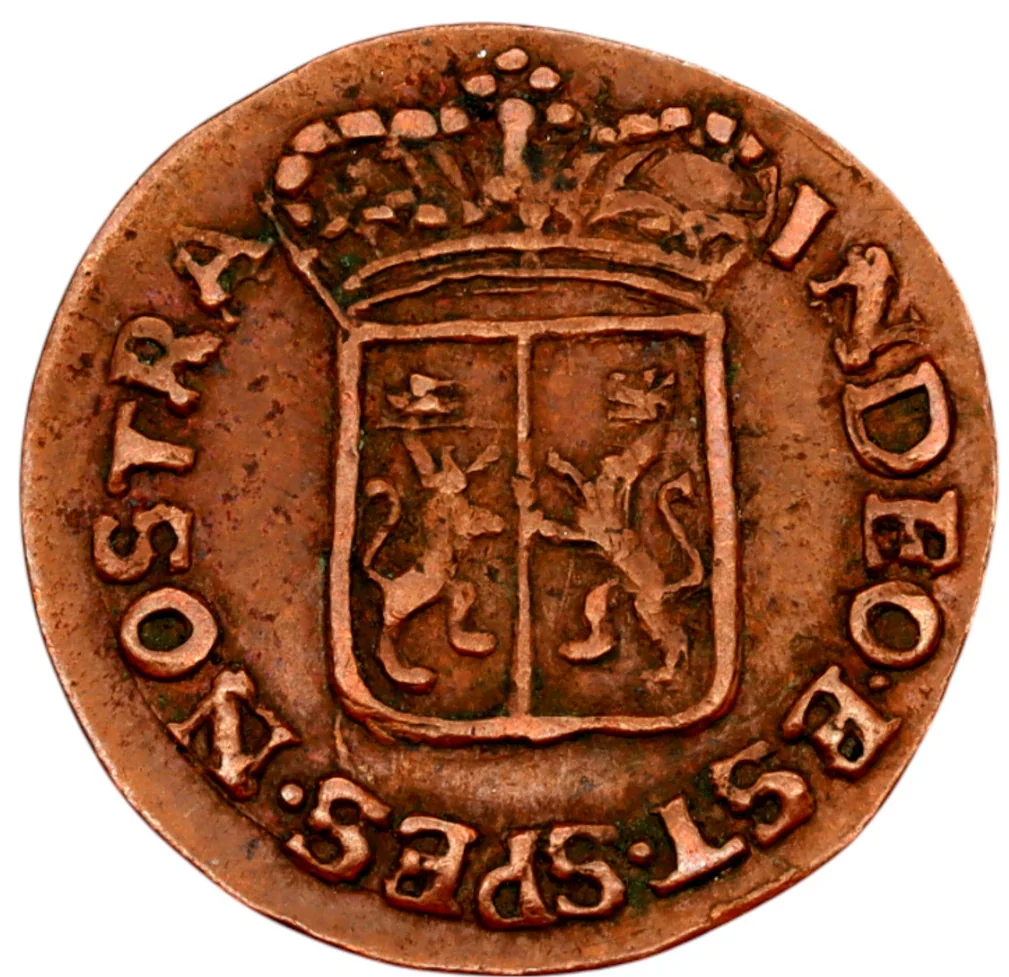
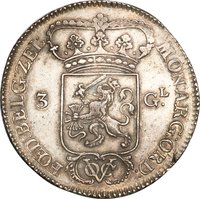
Crowned Gelderland arms with two rampant lions combatant.
Inscription:
IN DEO EST SPES NOSTRA
Script: Latin
Reverse
Description:
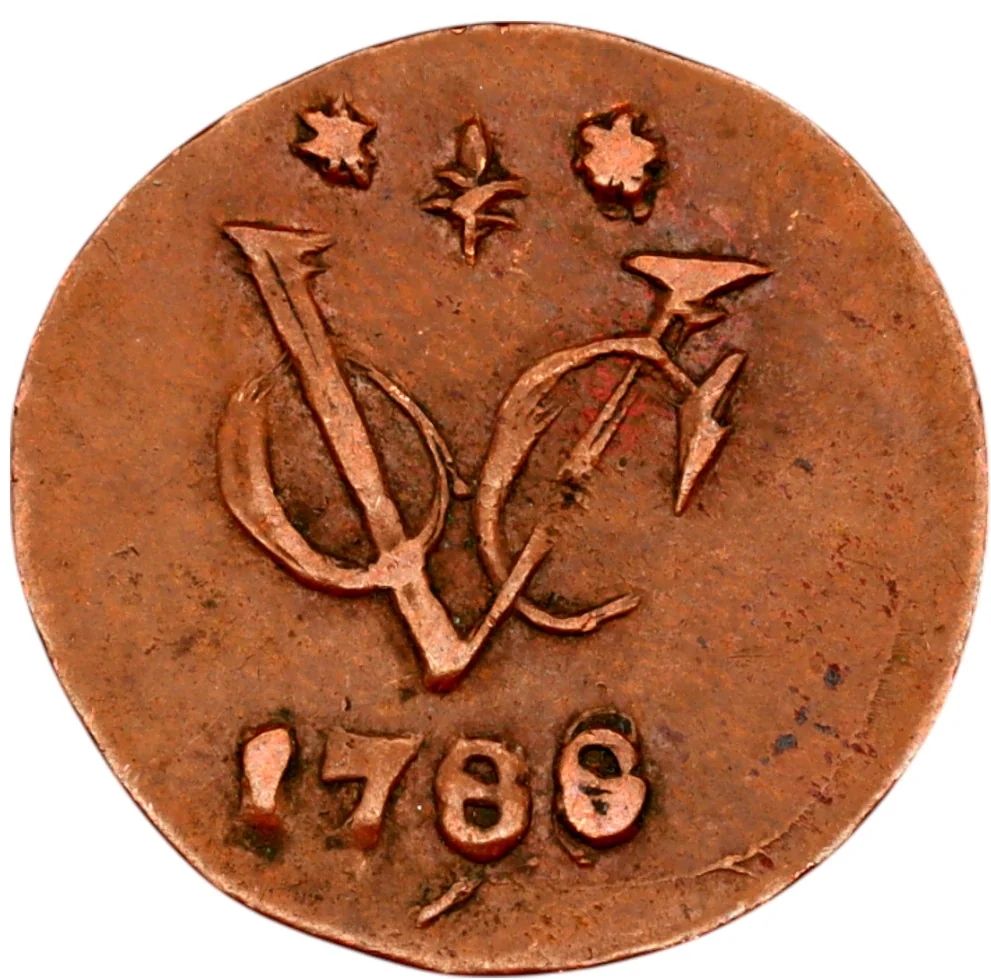
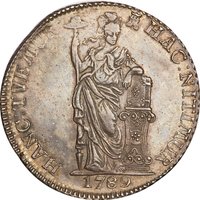
VOC monogram centered, privy mark (corn ear) between stars above, date below.
Inscription:
VOC
1788
1788
Script: Latin
Edge
Mintings
| Year | Mint Mark | Mintage | Quality | Collection |
|---|---|---|---|---|
| 1788 | — | — | ||
| 1789 | — | — | ||
| 1790 | — | — |
Historical background
In 1788, the currency situation in the Netherlands East Indies (NEI) was complex and strained, fundamentally shaped by the monopolistic practices of the Dutch East India Company (VOC). The official currency was the Netherlands Indies gulden, but its circulation was chronically insufficient. The VOC, facing severe financial difficulties of its own, often paid its employees and local suppliers with a proliferation of credit paper and negotiable bonds (negotiepenningen). This created a dual system where company-issued paper, alongside a limited supply of minted silver coins, circulated uneasily.
The scarcity of official specie led to the widespread use of a multitude of foreign coins, which the VOC tolerated out of necessity. Spanish American silver dollars (pieces of eight), Dutch ducatons, Japanese koban, and various Indian and Malay coins all circulated in port cities like Batavia. Their value was not fixed but fluctuated based on weight, silver content, and local demand, making everyday commerce cumbersome. The VOC attempted to assign official values to these coins through periodic plakaaten (decrees), but these rates often diverged from market reality, encouraging smuggling and arbitrage.
This monetary chaos was a symptom of the deeper decline of the VOC, which would declare bankruptcy just twelve years later in 1800. The lack of a unified, trusted currency system hindered efficient taxation and trade, creating economic friction across the archipelago. In essence, the currency situation in 1788 reflected a colonial administration struggling to maintain economic control, relying on a fragile patchwork of official and unofficial mediums of exchange to sustain its lucrative but increasingly mismanaged spice and commodity trade.
The scarcity of official specie led to the widespread use of a multitude of foreign coins, which the VOC tolerated out of necessity. Spanish American silver dollars (pieces of eight), Dutch ducatons, Japanese koban, and various Indian and Malay coins all circulated in port cities like Batavia. Their value was not fixed but fluctuated based on weight, silver content, and local demand, making everyday commerce cumbersome. The VOC attempted to assign official values to these coins through periodic plakaaten (decrees), but these rates often diverged from market reality, encouraging smuggling and arbitrage.
This monetary chaos was a symptom of the deeper decline of the VOC, which would declare bankruptcy just twelve years later in 1800. The lack of a unified, trusted currency system hindered efficient taxation and trade, creating economic friction across the archipelago. In essence, the currency situation in 1788 reflected a colonial administration struggling to maintain economic control, relying on a fragile patchwork of official and unofficial mediums of exchange to sustain its lucrative but increasingly mismanaged spice and commodity trade.
⭐ Rare