

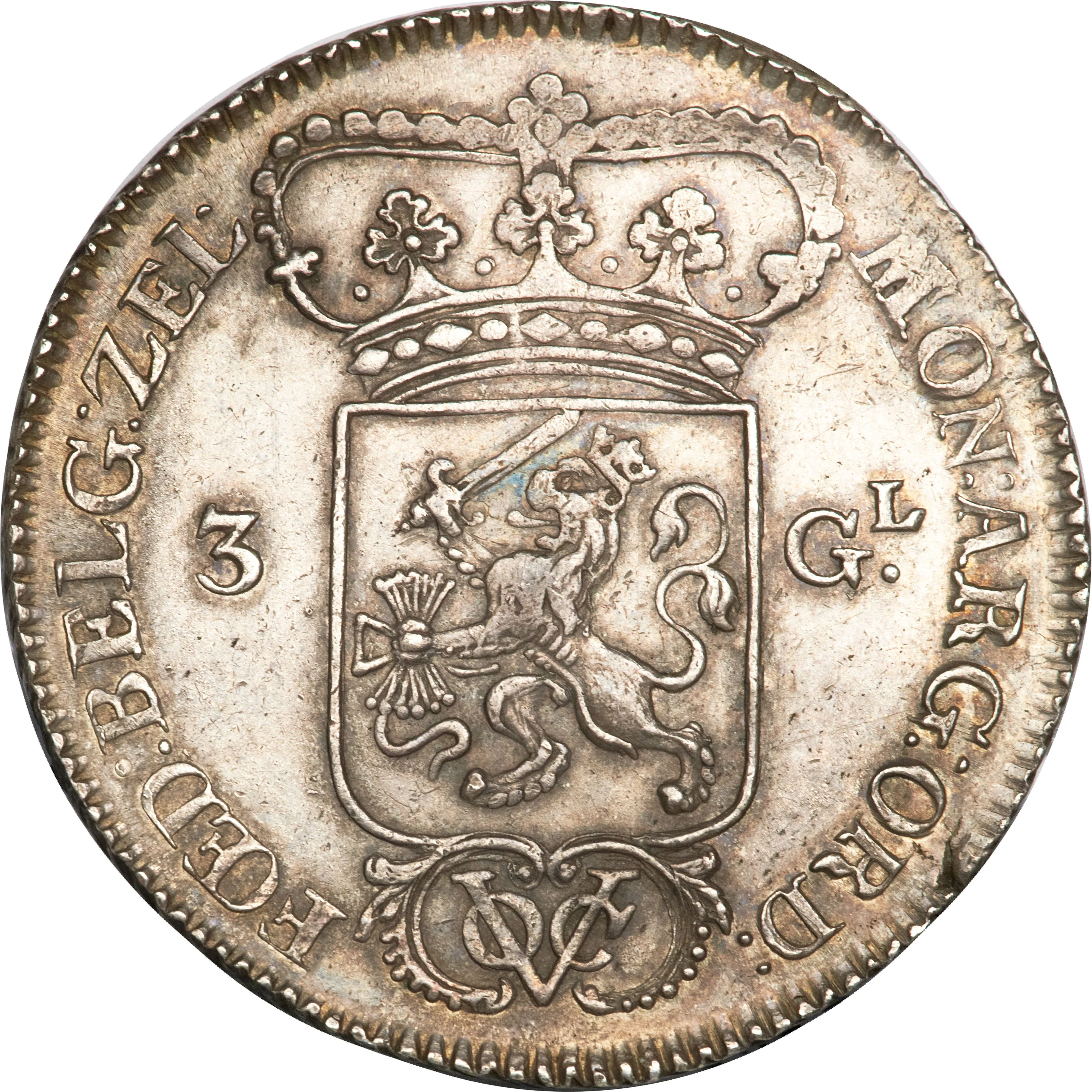
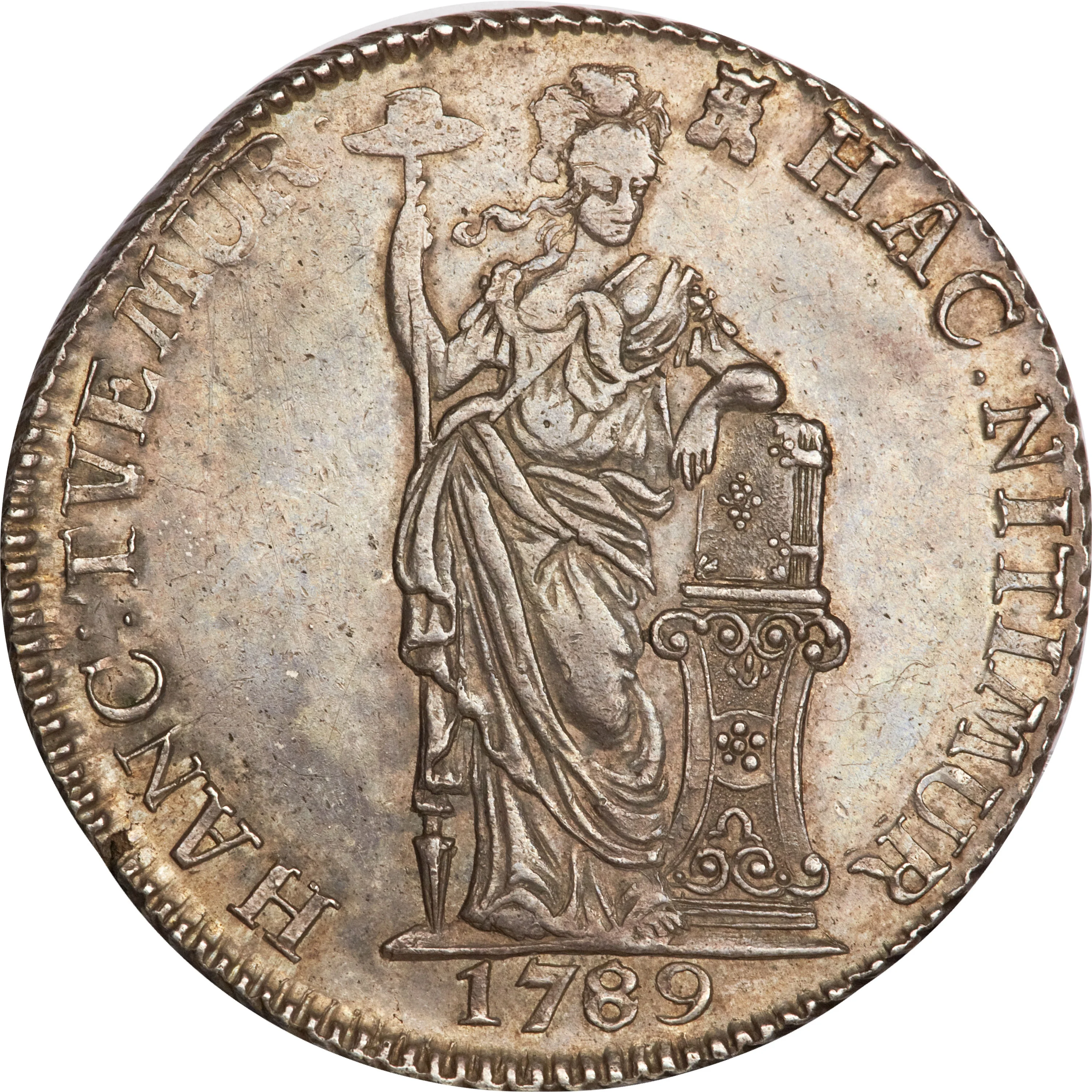
3 gulden – Netherlands East Indies
Add to wishlist
Indonesia
Context
Year: 1789
Country: Indonesia
Issuer: Netherlands East Indies
Period:
(1602—1800)
Currency:
(1726—1854)
Demonetized: Yes
References
KM: #
Numista: #27283
Mintings
| Year | Mint Mark | Mintage | Quality | Collection |
|---|---|---|---|---|
| 1789 | — | — |
Historical background
In 1789, the currency situation in the Netherlands East Indies (NEI) was a complex and problematic system defined by a severe shortage of official coinage. The primary unit of account was the Dutch guilder, but the actual circulating medium was a chaotic mix of physical currencies. These included Spanish-American silver pesos (known as "matten" or "pieces of eight"), Japanese copper koban and doits, and a vast array of other foreign coins from regions like India and the Arabian Peninsula. This proliferation was a direct result of the VOC's (Dutch East India Company) extensive intra-Asian trade, where coins were treated as a commodity.
The VOC authorities attempted to manage this by assigning arbitrary values to these foreign coins through official "proclamations," setting their worth in guilders. However, these mandated values often diverged significantly from the coins' intrinsic silver or gold content and their market value in regional trade. This led to widespread clipping, counterfeiting, and the outflow of undervalued "good" coins from the colony—a classic example of Gresham's Law, where "bad money drives out good." Consequently, public trust in the proclaimed values was low, and transactions were fraught with uncertainty and dispute.
Compounding the problem was the VOC's own financial distress. By 1789, the Company was nearing bankruptcy and could not import sufficient quantities of standardized coinage from the Netherlands to stabilize the system. To facilitate local trade, the VOC and private parties increasingly relied on the issuance of paper credit instruments and promissory notes. Thus, the monetary landscape was an unstable and inefficient hybrid: a theoretical guilder-based accounting system propped up by a disordered physical currency and an expanding, but not yet fully trusted, web of paper credit.
The VOC authorities attempted to manage this by assigning arbitrary values to these foreign coins through official "proclamations," setting their worth in guilders. However, these mandated values often diverged significantly from the coins' intrinsic silver or gold content and their market value in regional trade. This led to widespread clipping, counterfeiting, and the outflow of undervalued "good" coins from the colony—a classic example of Gresham's Law, where "bad money drives out good." Consequently, public trust in the proclaimed values was low, and transactions were fraught with uncertainty and dispute.
Compounding the problem was the VOC's own financial distress. By 1789, the Company was nearing bankruptcy and could not import sufficient quantities of standardized coinage from the Netherlands to stabilize the system. To facilitate local trade, the VOC and private parties increasingly relied on the issuance of paper credit instruments and promissory notes. Thus, the monetary landscape was an unstable and inefficient hybrid: a theoretical guilder-based accounting system propped up by a disordered physical currency and an expanding, but not yet fully trusted, web of paper credit.
✨ Legendary