

2 guineas – United Kingdom
Add to wishlist
United Kingdom
Context
Material
References
KM: #
Numista: #82846
Value
Bullion value: $2397.66
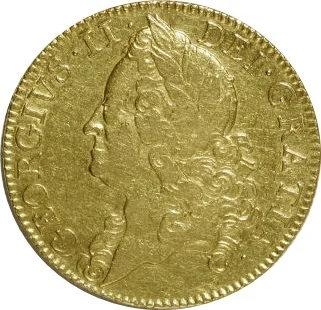
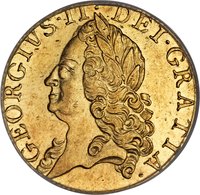
Obverse
Description:
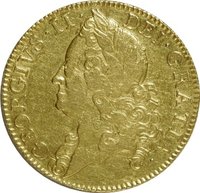
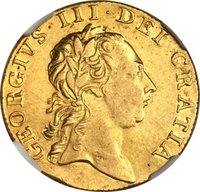
King George II portrait left, legend encircling.
Inscription:
GEORGIVS· II·DEI·GRATIA·
Script: Latin
Engraver: John Croker
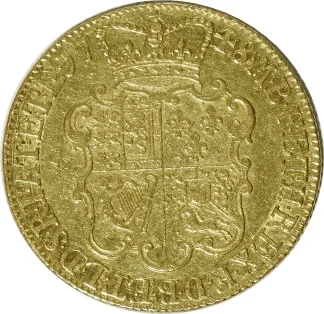
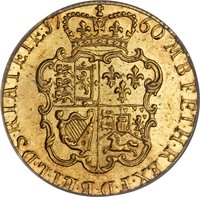
Reverse
Description:
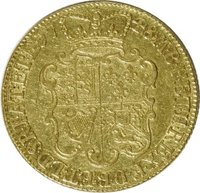
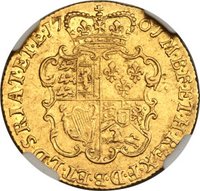
Quartered shield, date above, legend around.
Inscription:
M·B·F·ET·H·REX·F·D·B·ET·L·D·S·R·I·A·T·ET·E·1748·
Script: Latin
Engraver: John Croker
Edge
Reeded
Mintings
| Year | Mint Mark | Mintage | Quality | Collection |
|---|---|---|---|---|
| 1748 | — | — | ||
| 1753 | — | — |
Historical background
In 1748, the United Kingdom operated under a bimetallic currency system, with both gold and silver serving as legal tender. The primary unit of account was the pound sterling, divided into 20 shillings and 240 pence. However, the system was under significant strain. The official mint ratio between gold and silver did not accurately reflect their market values, leading to the phenomenon where the undervalued metal (in this case, silver) was hoarded or exported, leaving the circulating coinage dominated by gold guineas. This created a chronic shortage of usable small change for everyday transactions, hampering trade and wages for the common people.
The physical state of the coinage was a major problem. While the gold coinage, particularly the guinea (21 shillings), was relatively sound, the silver coinage was in a dire condition. Much of it was old, worn, clipped, and counterfeited, having not seen a major recoinage since the late 17th century. Consequently, the intrinsic silver value of many shillings and sixpences was often below their face value. This led to widespread public distrust, with people hesitating to accept lightweight coins and merchants often demanding a premium for payments in good-quality silver, effectively creating a dual-price system.
The situation was a recognised national concern, but major reform was delayed by the ongoing War of the Austrian Succession (concluded by the Treaty of Aix-la-Chapelle in 1748) which had drained Treasury resources and attention. The economic thinking of the time, influenced by figures like Isaac Newton (who had served as Master of the Mint) and the ongoing debates between bullionists and mercantilists, understood the need for a stable standard. The post-war period, therefore, set the stage for serious investigations that would eventually lead to the great recoinage of 1750 under Lord Mansfield, which aimed to withdraw lightweight silver and establish a firm gold standard, a pivotal step in British monetary history.
The physical state of the coinage was a major problem. While the gold coinage, particularly the guinea (21 shillings), was relatively sound, the silver coinage was in a dire condition. Much of it was old, worn, clipped, and counterfeited, having not seen a major recoinage since the late 17th century. Consequently, the intrinsic silver value of many shillings and sixpences was often below their face value. This led to widespread public distrust, with people hesitating to accept lightweight coins and merchants often demanding a premium for payments in good-quality silver, effectively creating a dual-price system.
The situation was a recognised national concern, but major reform was delayed by the ongoing War of the Austrian Succession (concluded by the Treaty of Aix-la-Chapelle in 1748) which had drained Treasury resources and attention. The economic thinking of the time, influenced by figures like Isaac Newton (who had served as Master of the Mint) and the ongoing debates between bullionists and mercantilists, understood the need for a stable standard. The post-war period, therefore, set the stage for serious investigations that would eventually lead to the great recoinage of 1750 under Lord Mansfield, which aimed to withdraw lightweight silver and establish a firm gold standard, a pivotal step in British monetary history.
✨ Legendary