

1 Guinea – United Kingdom
United Kingdom
Context

Material
References
KM: #Click to copy to clipboard588
Numista: #13126
Value
Bullion value: $1286.47
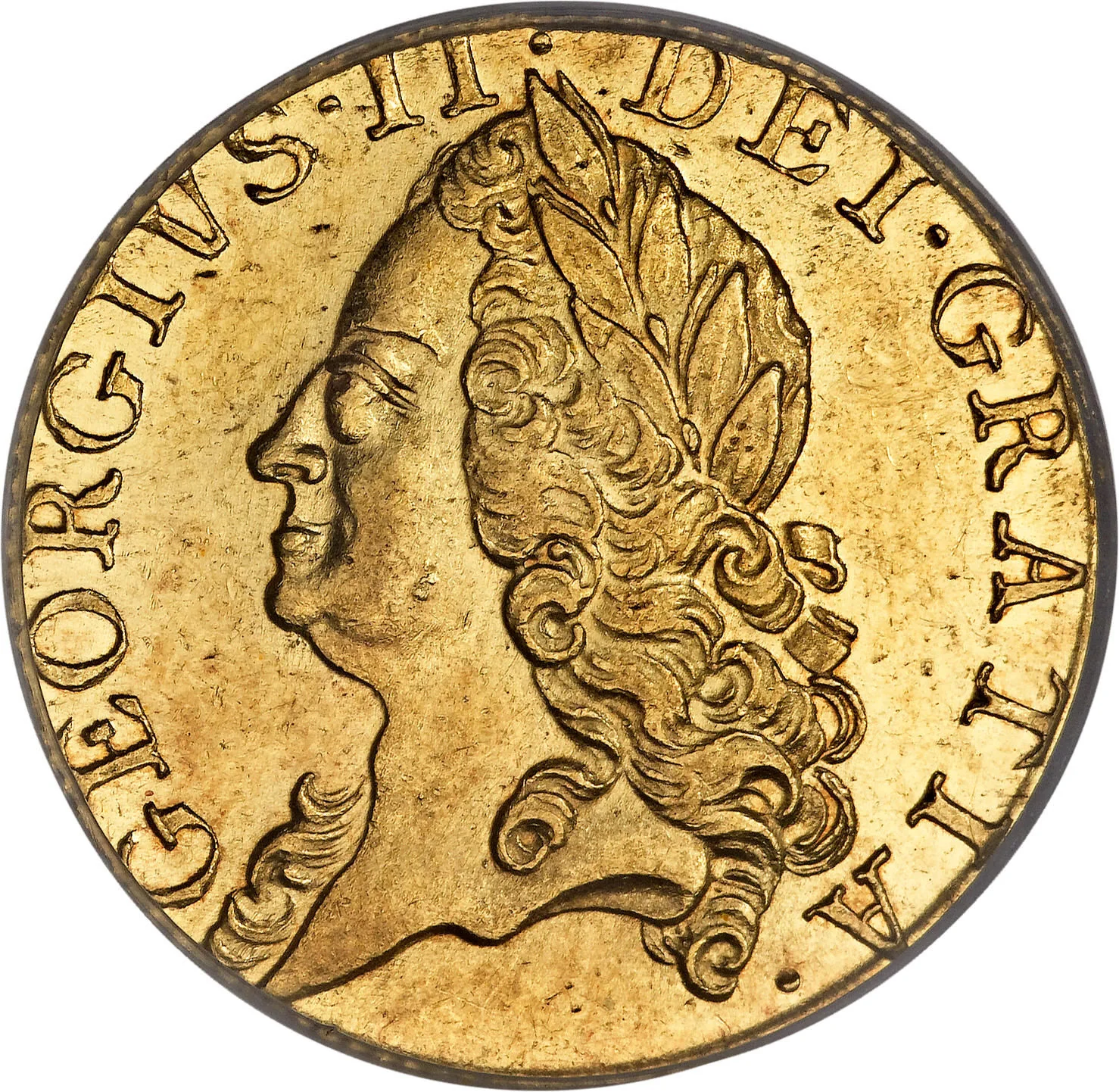
Obverse
Description:
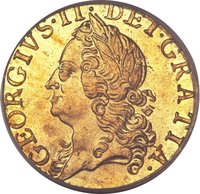
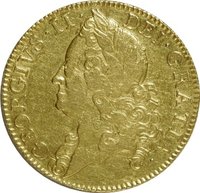
King George II portrait left, legend encircling.
Inscription:
GEORGIUS·II· DEI·GRATIA·
Script: Latin
Engraver: John Croker
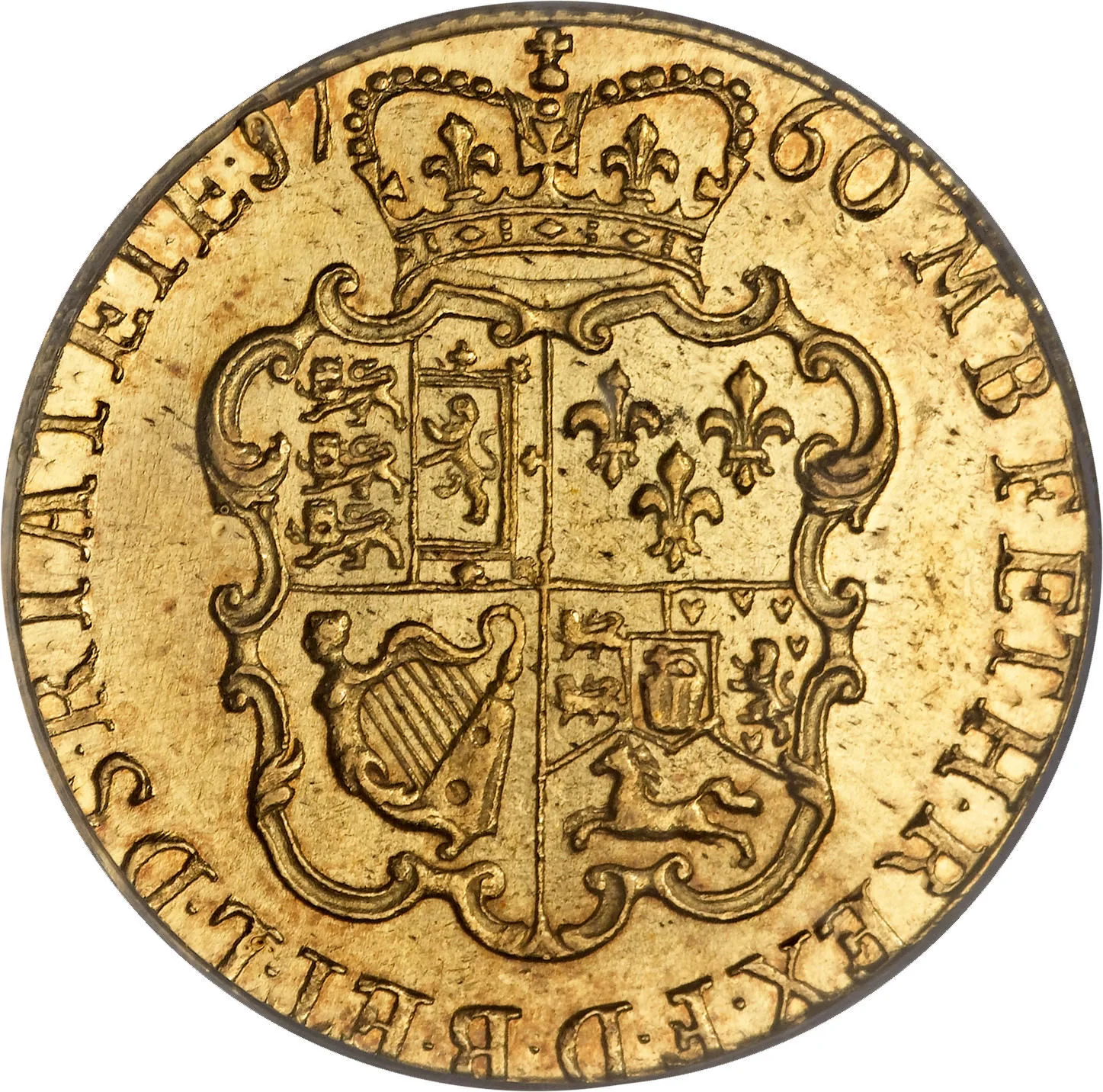
Reverse
Description:
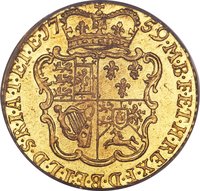
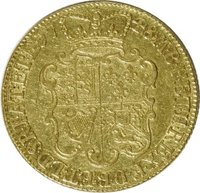
Quartered shield, date above, legend around.
Inscription:
M·B·F·ET·H·REX·F·D·B·ET·L·D·S·R·I·A·T·ET·E·17 60·
Script: Latin
Engraver: John Croker
Edge
Reeded
Mintings
| Year | Mint Mark | Mintage | Quality | Collection |
|---|---|---|---|---|
| 1747 | — | — | ||
| 1748 | — | — | ||
| 1749 | — | — | ||
| 1750 | — | — | ||
| 1751 | — | — | ||
| 1752 | — | — | ||
| 1753 | — | — | ||
| 1754 | — | — | ||
| 1755 | — | — | ||
| 1756 | — | — | ||
| 1758 | — | — | ||
| 1759 | — | — | ||
| 1760 | — | — |
Historical background
In 1747, the United Kingdom’s currency system was a complex and often problematic bimetallic standard, governed by the recoinage of 1696. The official currency consisted of gold guineas and silver shillings, but their relationship was unstable. The government had set the gold guinea at 21 shillings, but this official rate frequently misaligned with the higher market value of silver bullion in Europe. This discrepancy led to a critical shortage of circulating silver coin, as full-weight silver coins were melted down or exported for profit, leaving the domestic economy starved of small change for everyday transactions.
The physical state of the coinage in circulation was poor. While the gold coinage was generally in good condition following Sir Isaac Newton’s tenure as Master of the Mint, the silver currency was a public nuisance. What little silver coin remained was often worn, clipped, or counterfeit. This forced reliance on a patchwork of inconvenient substitutes: traders issued token coinages and promissory notes, while large payments depended on gold or bank instruments. The shortage hampered commerce and wages, creating a persistent friction in the growing economy of the mid-18th century.
This situation existed within a burgeoning financial revolution. The Bank of England, founded in 1694, was gaining prominence, and paper money in the form of banknotes was becoming more established, though public trust was not universal. The underlying monetary instability of 1747 highlighted the inadequacy of the old bimetallic system in a globalising mercantile economy. It was a period of transition, setting the stage for future reforms that would eventually lead to the gold standard, as silver effectively demonetised itself through its continual flight from the kingdom.
The physical state of the coinage in circulation was poor. While the gold coinage was generally in good condition following Sir Isaac Newton’s tenure as Master of the Mint, the silver currency was a public nuisance. What little silver coin remained was often worn, clipped, or counterfeit. This forced reliance on a patchwork of inconvenient substitutes: traders issued token coinages and promissory notes, while large payments depended on gold or bank instruments. The shortage hampered commerce and wages, creating a persistent friction in the growing economy of the mid-18th century.
This situation existed within a burgeoning financial revolution. The Bank of England, founded in 1694, was gaining prominence, and paper money in the form of banknotes was becoming more established, though public trust was not universal. The underlying monetary instability of 1747 highlighted the inadequacy of the old bimetallic system in a globalising mercantile economy. It was a period of transition, setting the stage for future reforms that would eventually lead to the gold standard, as silver effectively demonetised itself through its continual flight from the kingdom.
💎 Extremely Rare