

1 guinea – United Kingdom
Add to wishlist
United Kingdom
Context
Material
References
KM: #
Numista: #82807
Value
Bullion value: $1198.83
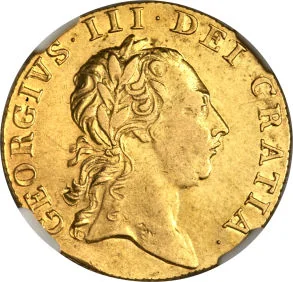
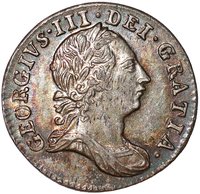
Obverse
Description:
King George III portrait right, legend surrounding.
Inscription:
·GEORGIVS·III DEI·GRATIA·
Script: Latin
Engraver: Richard Yeo
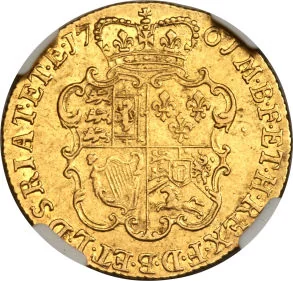
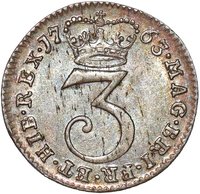
Reverse
Description:
Shield quartered with the arms of England & Scotland, France, Ireland, and Hanover; date above, legend around.
Inscription:
M·B·F·ET·H·REX·F·D·B·ET·L·D·S·R·I·A·T·ET·E·17 61·
Script: Latin
Engraver: John Tanner
Edge
Reeded
Mintings
| Year | Mint Mark | Mintage | Quality | Collection |
|---|---|---|---|---|
| 1761 | — | — |
Historical background
In 1761, the currency situation in the United Kingdom was underpinned by a silver standard, but was in a state of practical transition and strain. The official unit of account was the pound sterling, defined by a specific weight of sterling silver. However, the century had seen a chronic shortage of circulating silver coinage, much of which was worn, clipped, or counterfeit. This led to a heavy reliance on gold coins, like the guinea, which had effectively circulated at a floating market value against the silver standard, creating a cumbersome bimetallic system. The Great Recoinage of 1696 had attempted to solve these issues, but by the mid-18th century, the problems of insufficient and poor-quality small change for everyday transactions persisted.
The period was marked by significant macroeconomic pressures, primarily due to the ongoing Seven Years' War (1756-1763). War expenditure led to substantial government borrowing and inflationary pressures, which further complicated the currency system. To finance the conflict, the state relied on the Bank of England, which had been founded in 1694, and a growing system of public credit. While paper money in the form of Bank of England notes was trusted in London, provincial paper currencies and promissory notes filled the gap elsewhere, leading to a fragmented and often unreliable paper circulation alongside the problematic coinage.
Consequently, 1761 represents a point of tension within a longer monetary evolution. The silver standard was becoming increasingly theoretical as gold grew in practical importance, a shift that would be formally recognized with the de facto gold standard established by Sir Isaac Newton's evaluations as Master of the Mint and later solidified in 1774. The system was strained by war finance and an inadequate physical coinage, yet it was sustained by growing institutional confidence in the Bank of England and the mechanisms of public debt, setting the stage for the financial innovations of the Industrial Revolution.
The period was marked by significant macroeconomic pressures, primarily due to the ongoing Seven Years' War (1756-1763). War expenditure led to substantial government borrowing and inflationary pressures, which further complicated the currency system. To finance the conflict, the state relied on the Bank of England, which had been founded in 1694, and a growing system of public credit. While paper money in the form of Bank of England notes was trusted in London, provincial paper currencies and promissory notes filled the gap elsewhere, leading to a fragmented and often unreliable paper circulation alongside the problematic coinage.
Consequently, 1761 represents a point of tension within a longer monetary evolution. The silver standard was becoming increasingly theoretical as gold grew in practical importance, a shift that would be formally recognized with the de facto gold standard established by Sir Isaac Newton's evaluations as Master of the Mint and later solidified in 1774. The system was strained by war finance and an inadequate physical coinage, yet it was sustained by growing institutional confidence in the Bank of England and the mechanisms of public debt, setting the stage for the financial innovations of the Industrial Revolution.
✨ Legendary