

1 Guinea – United Kingdom
United Kingdom
Context

Material
References
KM: #Click to copy to clipboard600
Numista: #82806
Value
Bullion value: $1286.05
Obverse
Description:
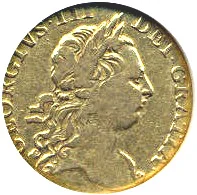
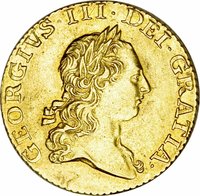
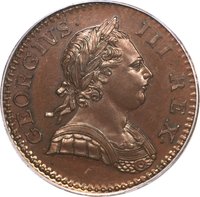
King George III facing right, surrounded by legend.
Inscription:
GEORGIVS·III DEI·GRATIA·
Script: Latin
Reverse
Description:
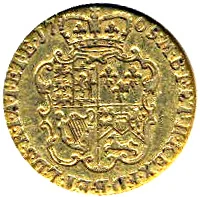
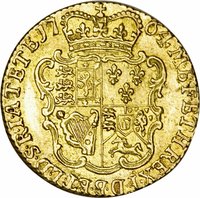
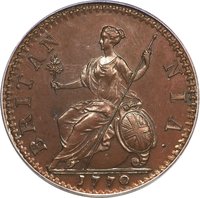
Shield quartered with the arms of England & Scotland, France, Ireland, and Hanover; date above, legend around.
Inscription:
M·B·F·ET·H·REX·F·D·B·ET·L·D·S·R·I·A·T·ET·E·1765·
Script: Latin
Edge
Reeded
Mintings
| Year | Mint Mark | Mintage | Quality | Collection |
|---|---|---|---|---|
| 1765 | — | — | ||
| 1766 | — | — | ||
| 1767 | — | — | ||
| 1768 | — | — | ||
| 1769 | — | — | ||
| 1770 | — | — | ||
| 1771 | — | — | ||
| 1772 | — | — | ||
| 1773 | — | — |
Historical background
In 1765, the British currency system was a complex bimetallic structure, centred on the pound sterling, shilling, and pence. The official standard was the gold guinea, valued at 21 shillings, and the silver shilling. However, a critical and chronic problem was the shortage of official, small-denomination coinage in circulation for everyday trade. This scarcity was due to the government's failure to mint sufficient silver coinage for decades, as the official mint price for silver was set below its market value, causing silver to be exported or melted down. Consequently, the economy relied heavily on a confusing array of foreign coins (like Spanish dollars and Portuguese joes), private tokens issued by merchants and industrialists, and cumbersome paper notes from the Bank of England and country banks.
This monetary instability was exacerbated by the demands of global trade and war. The recent conclusion of the Seven Years' War in 1763 had left Britain victorious but deeply in debt, straining public finances. The government, under Prime Minister George Grenville, was actively seeking new revenue streams from its expanded empire, most infamously through the Stamp Act of 1765 imposed on the American colonies. Domestically, the economy was experiencing a post-war recession, and the inadequate coinage system hindered commercial transactions and wage payments, creating friction in a rapidly industrialising society.
The situation presented a significant economic paradox: Britain was a growing imperial and commercial power, yet its internal currency system was fragmented and inefficient. The reliance on unreliable foreign and private money created opportunities for counterfeiting and exchange rate confusion. This monetary context formed the backdrop to broader political tensions, as the government's attempts to manage imperial finance (like the Stamp Act) clashed with the practical realities of a struggling, cash-starved economy at home and rising resistance in the colonies abroad.
This monetary instability was exacerbated by the demands of global trade and war. The recent conclusion of the Seven Years' War in 1763 had left Britain victorious but deeply in debt, straining public finances. The government, under Prime Minister George Grenville, was actively seeking new revenue streams from its expanded empire, most infamously through the Stamp Act of 1765 imposed on the American colonies. Domestically, the economy was experiencing a post-war recession, and the inadequate coinage system hindered commercial transactions and wage payments, creating friction in a rapidly industrialising society.
The situation presented a significant economic paradox: Britain was a growing imperial and commercial power, yet its internal currency system was fragmented and inefficient. The reliance on unreliable foreign and private money created opportunities for counterfeiting and exchange rate confusion. This monetary context formed the backdrop to broader political tensions, as the government's attempts to manage imperial finance (like the Stamp Act) clashed with the practical realities of a struggling, cash-starved economy at home and rising resistance in the colonies abroad.
✨ Legendary