

1 Quattrino – Ferrara
Italy
Context
Years: 1744–1748
Country: Italy 
Issuer: Ferrara
Ruler: Benedict XIV
Currency:
(1534—1835)
Demonetized: Yes
Material
References
KM: #Click to copy to clipboard135
Numista: #82781
Obverse
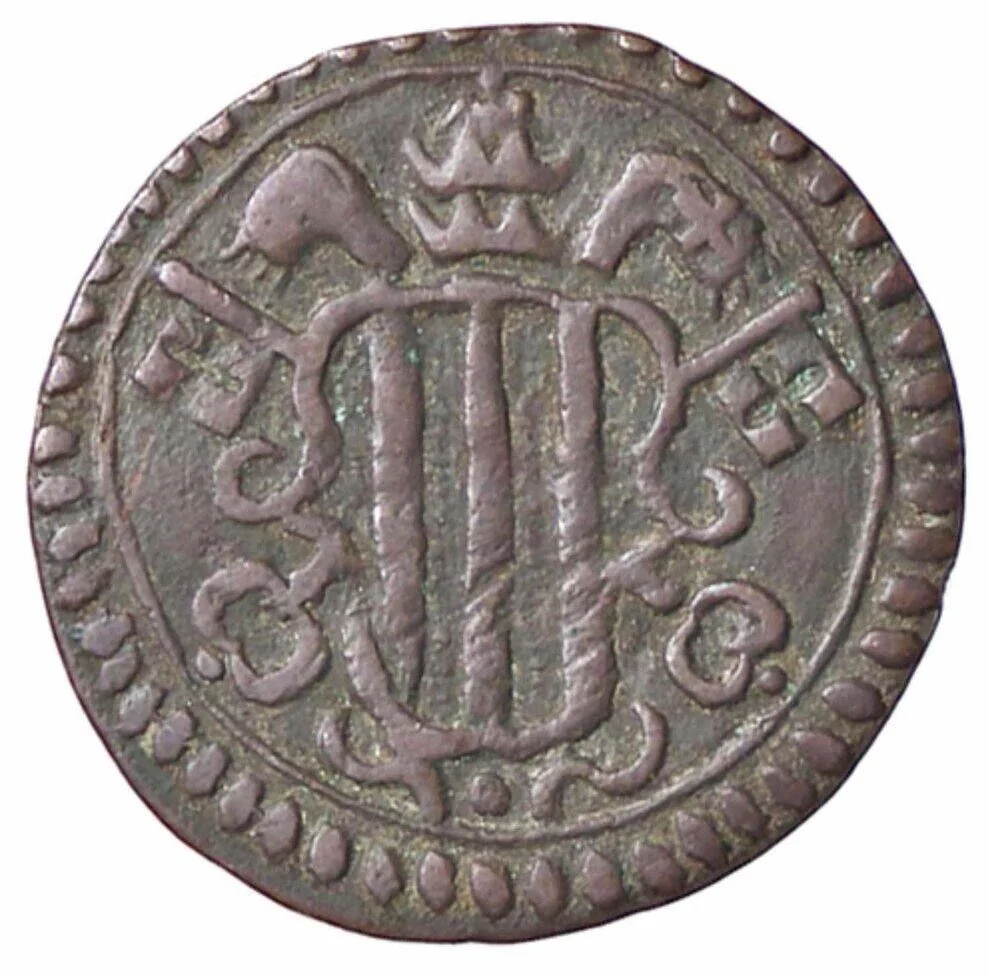
Description:
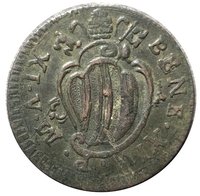
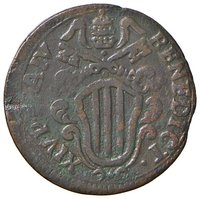
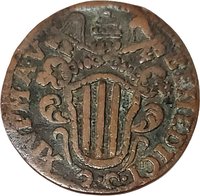
Papal coat of arms of Benedict XIV.
Reverse
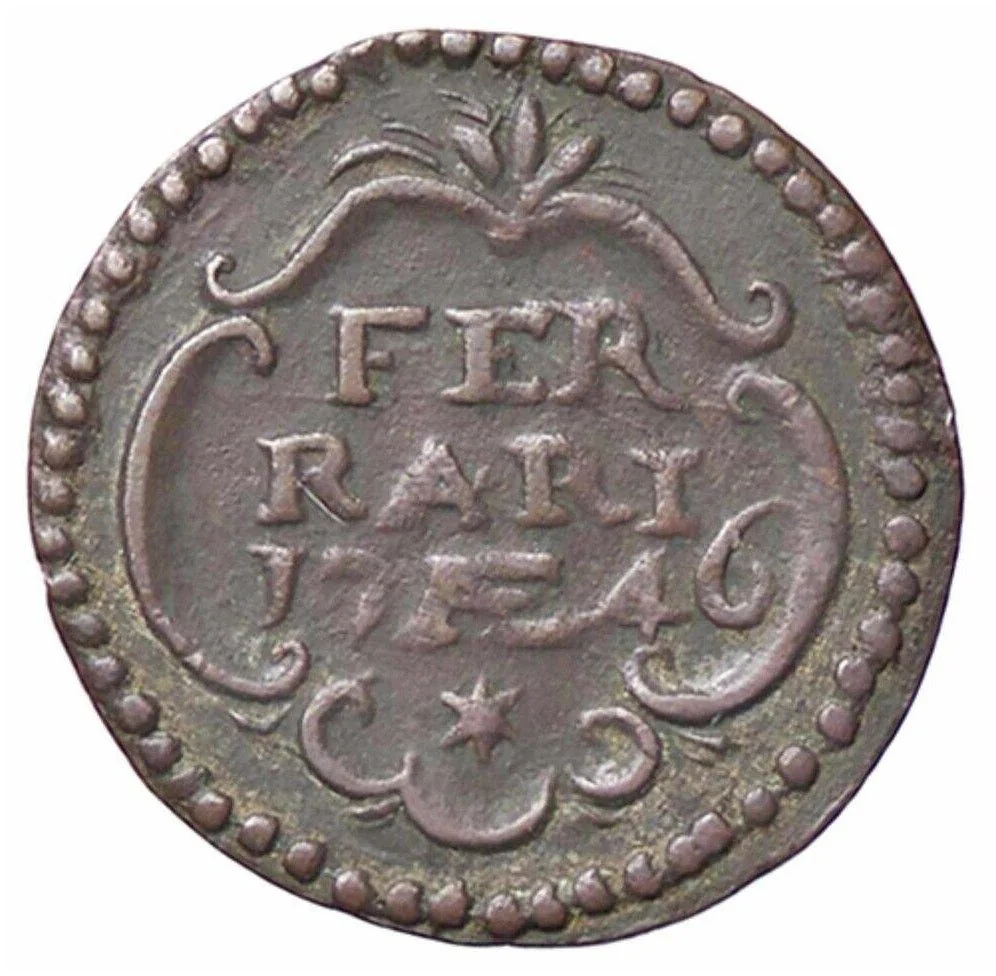
Description:
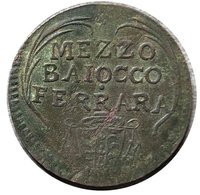
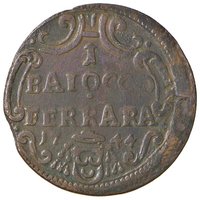
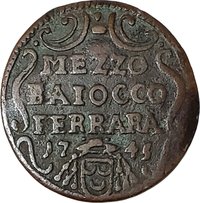
Three-line cartouche inscription. Date, if present, flanks "AE."
Inscription:
FER
RARI
17Æ46
🟌
RARI
17Æ46
🟌
Script: Latin
Edge
Plain
Categories
| Symbol> Crown |
| Symbols> Coat of Arms |
Mints
| Name | Mark |
|---|---|
| Ferrara | — |
Mintings
| Year | Mint Mark | Mintage | Quality | Collection |
|---|---|---|---|---|
| 1744 | — | — | ||
| — | — | — | ||
| 1745 | — | — | ||
| 1746 | — | — | ||
| 1747 | — | — | ||
| 1748 | — | — |
Historical background
In 1744, Ferrara’s currency situation was a complex tapestry reflecting its political status within the Papal States. Since the devolution of the Duchy of Ferrara to the Pope in 1598, the city no longer minted its own coinage but was subject to the monetary systems emanating from Rome and Bologna. The primary circulating coins were papal scudi (crowns), giuli, and baiocchi, but the practical reality was one of significant monetary plurality. Alongside these official issues, a wide variety of foreign coins, particularly from other Italian states like Venice (ducats) and Milan, as well as older Este-era coins, circulated freely, their values determined by fluctuating local exchange rates.
This multiplicity created chronic challenges for commerce and daily life. The value of coins was not fixed by their face value but by their precious metal content (silver or gold), which was often worn or clipped. Consequently, merchants and money-changers (banchieri) published daily lists (listini) setting exchange rates between the myriad of coins, leading to confusion, fraud, and transaction friction. The papal authorities struggled to enforce monetary uniformity, and the circulation of underweight or debased foreign coins exacerbated inflation and economic uncertainty for the populace.
The year 1744 itself fell within the War of the Austrian Succession, a broader European conflict that further strained Ferrara’s monetary environment. While the Papal States were officially neutral, the war disrupted trade routes and increased the inflow of even more diverse, and often suspect, foreign coinage from warring parties seeking to finance their campaigns. This period thus represented a peak of monetary disorder, where the theoretical papal monopoly collided with the practical realities of a frontier city enmeshed in regional trade and geopolitics, leaving its economy vulnerable to instability and speculative exchange.
This multiplicity created chronic challenges for commerce and daily life. The value of coins was not fixed by their face value but by their precious metal content (silver or gold), which was often worn or clipped. Consequently, merchants and money-changers (banchieri) published daily lists (listini) setting exchange rates between the myriad of coins, leading to confusion, fraud, and transaction friction. The papal authorities struggled to enforce monetary uniformity, and the circulation of underweight or debased foreign coins exacerbated inflation and economic uncertainty for the populace.
The year 1744 itself fell within the War of the Austrian Succession, a broader European conflict that further strained Ferrara’s monetary environment. While the Papal States were officially neutral, the war disrupted trade routes and increased the inflow of even more diverse, and often suspect, foreign coinage from warring parties seeking to finance their campaigns. This period thus represented a peak of monetary disorder, where the theoretical papal monopoly collided with the practical realities of a frontier city enmeshed in regional trade and geopolitics, leaving its economy vulnerable to instability and speculative exchange.
Series: 1744 Ferrara circulation coins
💎 Very Rare