

1 krone – Denmark
Add to wishlist
Denmark
Context
Material
References
KM: #
Numista: #82692
Value
Bullion value: $36.37
Obverse
Description:
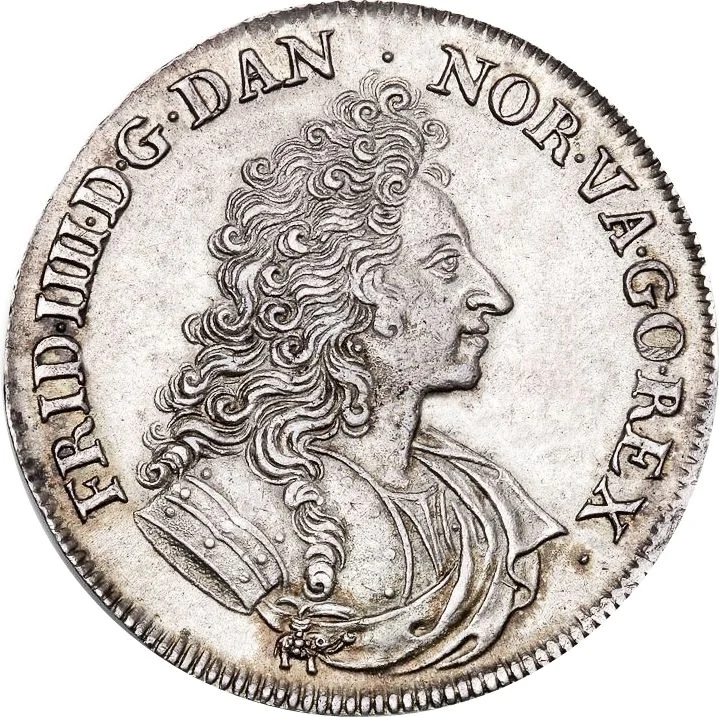
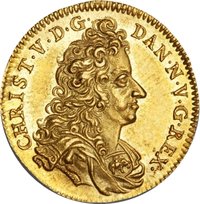
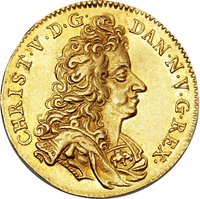
Armored bust of King Frederik IV facing right, wearing the Order of the Elephant pendant, encircled by legend.
Inscription:
FRID • IIII • D • G • DAN • NOR • VA • GO • REX •
Script: Latin
Reverse
Description:
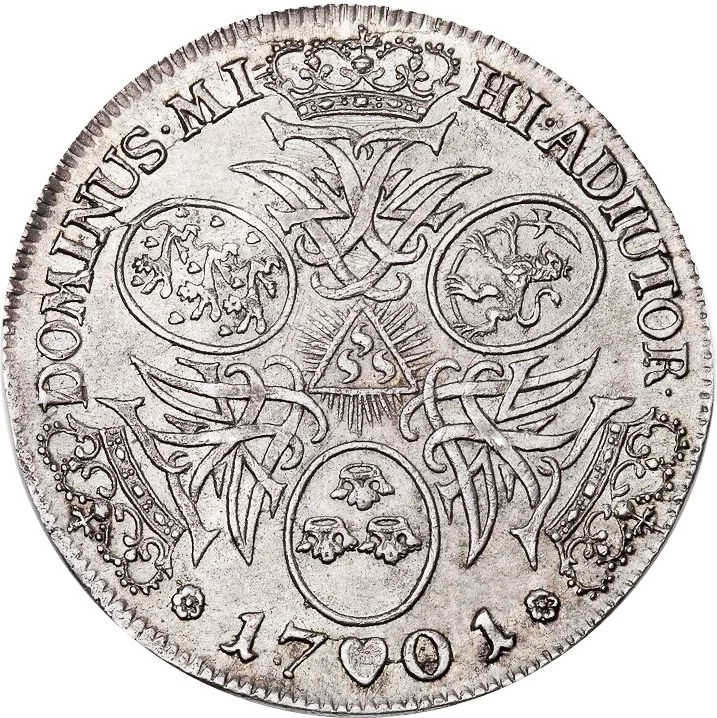
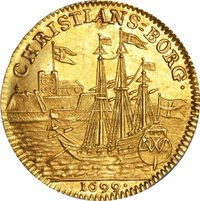
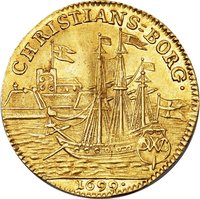
A central triangle with a radiant “Jehovah” Hebrew “S” design. Three crowned mirrored royal monograms top its points, alternating with inverted triangular shields of Denmark, Sweden, and Norway above its sides. The date, split by a floral heart, is below, with the king’s motto between the crowns.
Inscription:
DOMINUS • MI | HI • ADIUTOR •
* 17 ♥ 01 *
* 17 ♥ 01 *
Script: Latin
Edge
Categories
| Symbols> Coat of Arms |
Mints
| Name | Mark |
|---|---|
| Copenhagen | ♥ |
Historical background
In 1699, the Kingdom of Denmark-Norway was grappling with a severe and complex monetary crisis, primarily stemming from decades of deliberate currency debasement. To finance costly wars, particularly the Scanian War (1675-1679) against Sweden, the state had repeatedly reduced the silver content in its coinage while officially maintaining its face value. This practice led to a proliferation of underweight and inferior coins, driving older, full-weight coins out of circulation (Gresham's Law) and causing rampant inflation, which eroded public trust and disrupted both domestic and international trade.
The situation was further complicated by the circulation of numerous foreign coins, especially from the German states and the Netherlands, which were often preferred in commerce due to their more reliable intrinsic value. This created a chaotic monetary environment with multiple, fluctuating exchange rates. Recognizing the threat to economic stability and state credit, King Christian V and his government had already initiated a major monetary reform, which was enacted in 1687. This reform aimed to introduce a new, stable silver standard based on the kurantdaler, but the process of recalling and recoining the old, debased money was a protracted and difficult task that was still ongoing in 1699.
Therefore, the currency situation in 1699 was one of transition and lingering disorder. While the framework for a stable system was legally in place, the practical implementation was incomplete. The economy still suffered from the after-effects of inflation and a hangover of distrust, with both old debased coins and new proper coins circulating alongside foreign currency. The success of the reform hinged on the state's ability to complete the recoinage and consistently maintain the new standard, a challenge that would continue into the reign of King Frederick IV, who ascended the throne in August of that very year.
The situation was further complicated by the circulation of numerous foreign coins, especially from the German states and the Netherlands, which were often preferred in commerce due to their more reliable intrinsic value. This created a chaotic monetary environment with multiple, fluctuating exchange rates. Recognizing the threat to economic stability and state credit, King Christian V and his government had already initiated a major monetary reform, which was enacted in 1687. This reform aimed to introduce a new, stable silver standard based on the kurantdaler, but the process of recalling and recoining the old, debased money was a protracted and difficult task that was still ongoing in 1699.
Therefore, the currency situation in 1699 was one of transition and lingering disorder. While the framework for a stable system was legally in place, the practical implementation was incomplete. The economy still suffered from the after-effects of inflation and a hangover of distrust, with both old debased coins and new proper coins circulating alongside foreign currency. The success of the reform hinged on the state's ability to complete the recoinage and consistently maintain the new standard, a challenge that would continue into the reign of King Frederick IV, who ascended the throne in August of that very year.
✨ Legendary