

1 rupee – Maratha Empire
Add to wishlist
India
Context
Year: 1775
Islamic (Hijri) Year:: 1189
Country: India
Issuer: Maratha Empire
Currency:
(1674—1818)
Demonetized: Yes
Material
References
KM: #
Numista: #82460
Value
Bullion value: $28.65
Obverse
Description:
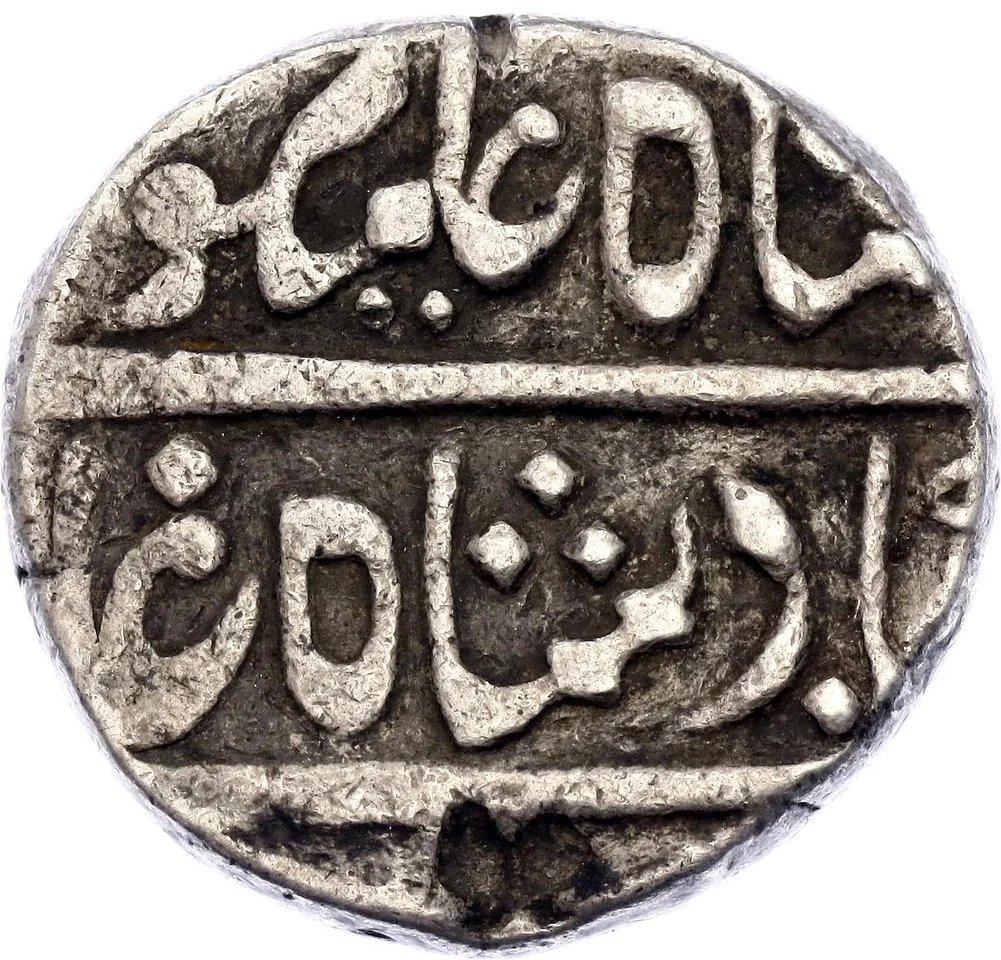
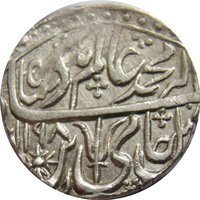
Shah Alam II (as Ali Gauhar), struck under Dev of Chinchwad.
Reverse
Description:
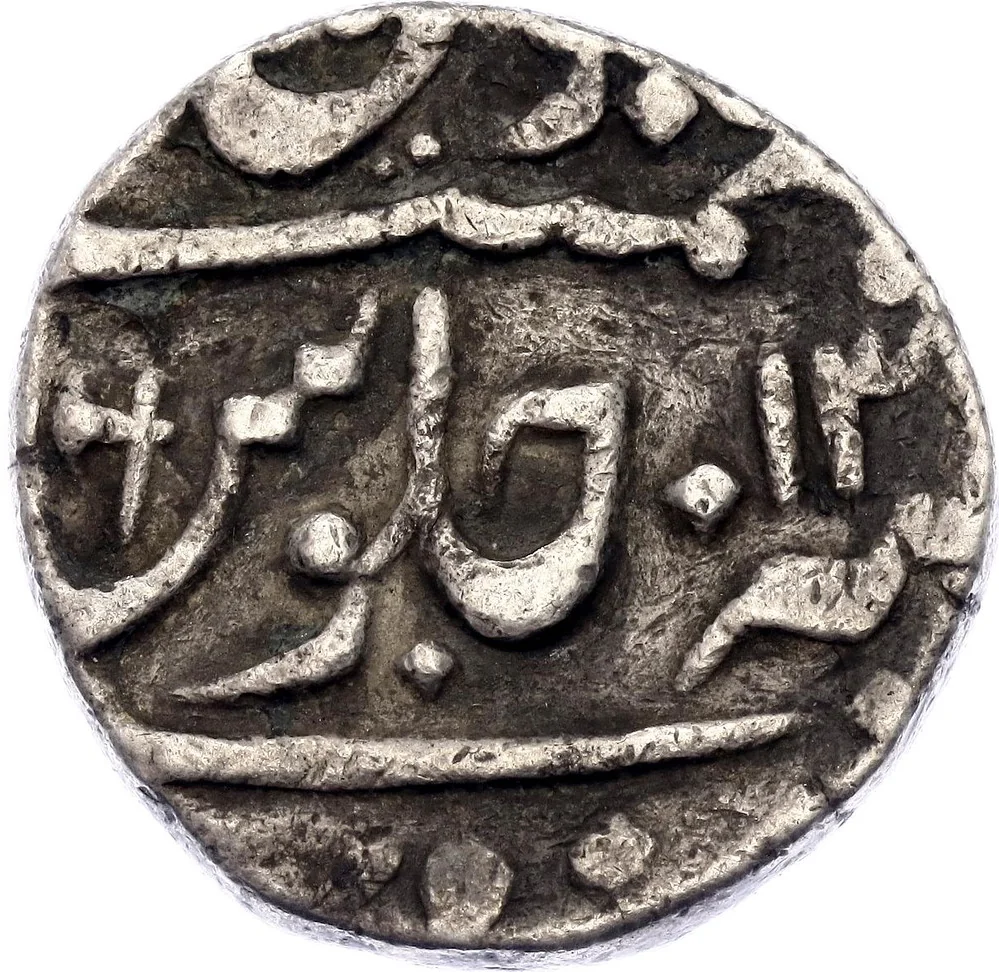
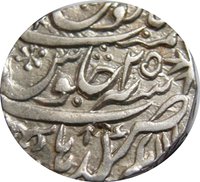
Mint mark 2
Edge
Mintings
| Year | Mint Mark | Mintage | Quality | Collection |
|---|---|---|---|---|
| — | — | — | ||
| 1775 | — | — |
Historical background
By 1775, the Maratha Empire's currency system reflected its complex political reality: a powerful confederacy with a central authority in decline. The Peshwa in Pune remained the nominal head, but power was increasingly decentralised among major chiefs like the Scindias, Holkars, Bhonsles, and Gaekwads. This political fragmentation was mirrored in the monetary landscape, which operated on a dual system. The central authority issued gold hon and silver rupaye from mints in Pune and Satara, bearing the name of the Chhatrapati (the Maratha king), but their circulation and acceptance were increasingly dependent on the allegiance of regional lords.
Simultaneously, the major Maratha chiefs operated their own mints, issuing coins in their own names, which circulated as legal tender within their respective territories. For example, the Scindias minted coins in Ujjain and Gwalior, while the Holkars issued their own from Indore. This proliferation of mints led to a variety of coinages in weight, purity, and design, complicating trade across the confederacy. Furthermore, the economy was not insulated; the Maratha currency system coexisted and competed with powerful external currencies, most notably the Mughal rupee and the coins of the British East India Company, which were gaining traction in coastal trade.
The year 1775 itself was a point of financial and political strain. The Marathas were embroiled in the First Anglo-Maratha War (1775-1782), triggered by the Treaty of Surat signed with the British by Raghunathrao, a claimant to the Peshwaship. The war effort placed enormous fiscal pressure on the treasury, necessitating the levying of heavy taxes (chauth and sardeshmukhi) and likely leading to debasement of coinage to fund military campaigns. Thus, the currency situation was one of decentralised production, varying standards, and inflationary pressures exacerbated by a costly war, signalling the financial challenges of sustaining a vast, fracturing empire against colonial encroachment.
Simultaneously, the major Maratha chiefs operated their own mints, issuing coins in their own names, which circulated as legal tender within their respective territories. For example, the Scindias minted coins in Ujjain and Gwalior, while the Holkars issued their own from Indore. This proliferation of mints led to a variety of coinages in weight, purity, and design, complicating trade across the confederacy. Furthermore, the economy was not insulated; the Maratha currency system coexisted and competed with powerful external currencies, most notably the Mughal rupee and the coins of the British East India Company, which were gaining traction in coastal trade.
The year 1775 itself was a point of financial and political strain. The Marathas were embroiled in the First Anglo-Maratha War (1775-1782), triggered by the Treaty of Surat signed with the British by Raghunathrao, a claimant to the Peshwaship. The war effort placed enormous fiscal pressure on the treasury, necessitating the levying of heavy taxes (chauth and sardeshmukhi) and likely leading to debasement of coinage to fund military campaigns. Thus, the currency situation was one of decentralised production, varying standards, and inflationary pressures exacerbated by a costly war, signalling the financial challenges of sustaining a vast, fracturing empire against colonial encroachment.
✨ Legendary