

1 rupee – Arcot
Add to wishlist
India
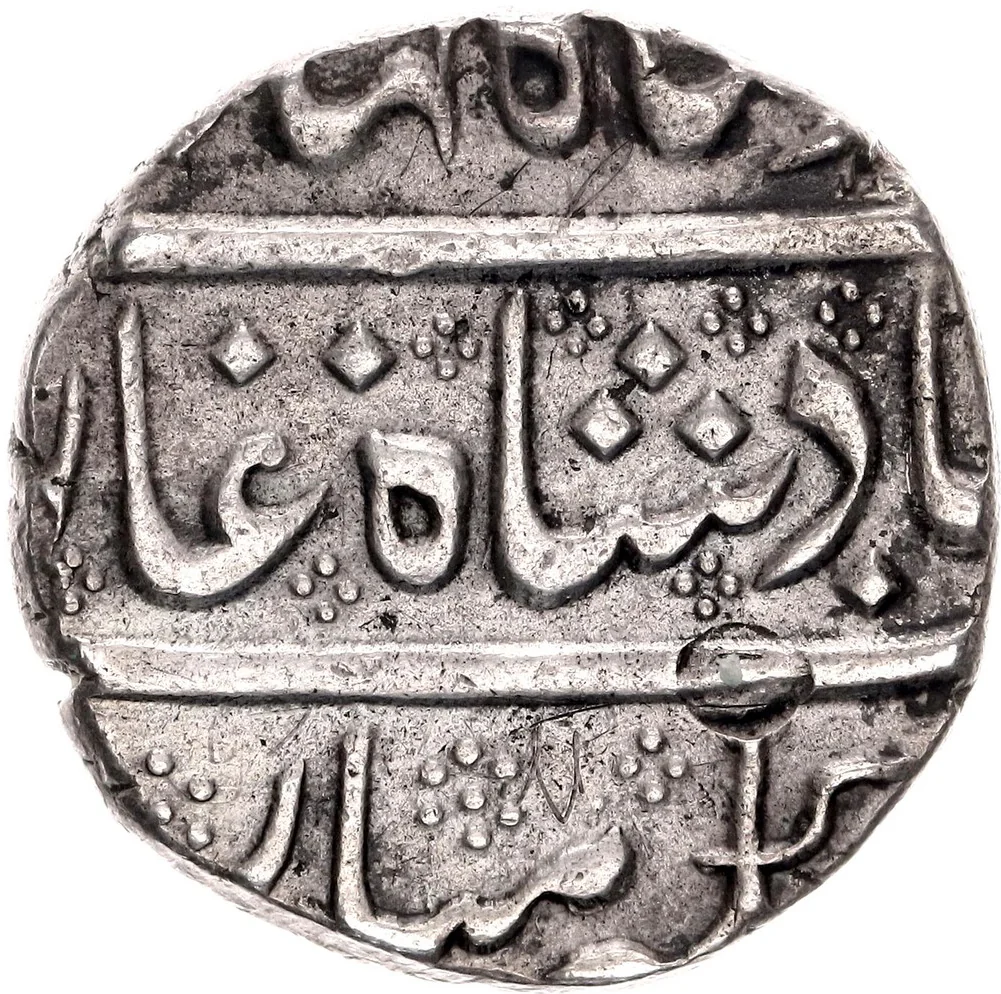
Obverse
Description:
Ahmad Shah, Mughal emperor.
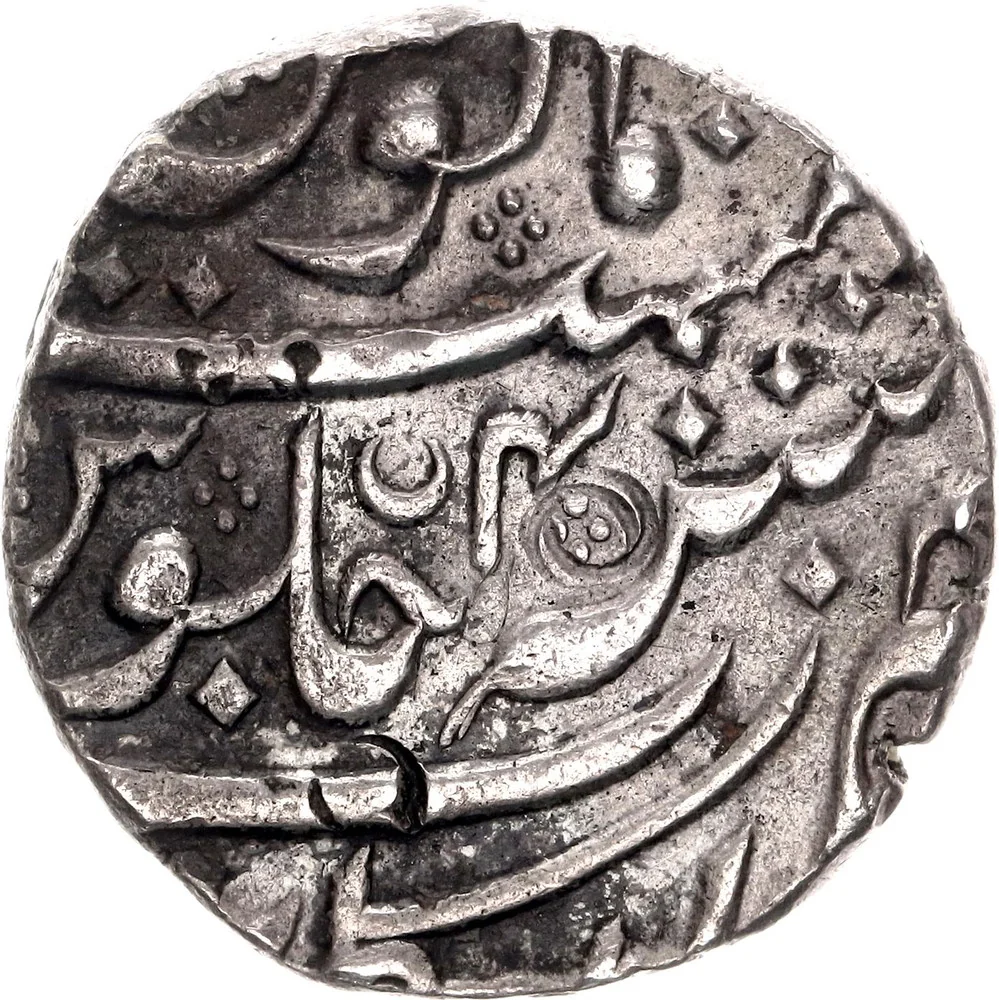
Reverse
Description:
Julus (formula)
Edge
Mints
| Name | Mark |
|---|---|
| Arcot | — |
Mintings
| Year | Mint Mark | Mintage | Quality | Collection |
|---|---|---|---|---|
| 1748 | — | — | ||
| 1749 | — | — | ||
| 1750 | — | — | ||
| 1751 | — | — | ||
| 1752 | — | — | ||
| 1753 | — | — | ||
| 1754 | — | — |
Historical background
In 1748, the Carnatic region of South India, with its capital at Arcot, was nominally part of the Mughal Empire but was effectively a semi-independent Nawabship. The currency situation was a complex and fragmented mosaic, reflecting both the declining central authority of the Mughals and the intense geopolitical rivalry between European trading companies, primarily the British East India Company and the French Compagnie des Indes Orientales. The primary circulating currency was the Arcot rupee, a silver coin minted by the Nawab. However, its value and purity were not uniform, as various mints operated under different local authorities and European factories, leading to a proliferation of issues with varying weights and fineness.
This monetary fragmentation was exacerbated by the widespread circulation of older Mughal rupees, such as those from the Surat or Delhi mints, alongside coins issued by other regional powers like the Marathas. Furthermore, European gold pagodas, particularly the Madras pagoda issued by the British, served as a major trade coin in the south. The result was a chaotic system where merchants and armies had to constantly negotiate exchange rates and assess the intrinsic silver content of coins, making large-scale trade and taxation inefficient and prone to dispute.
The year 1748 is particularly significant as it marked the end of the War of the Austrian Succession in Europe and, by extension, the First Carnatic War in India. The peace treaty forced a temporary cessation of open hostilities between the British and French companies, but the financial strain of the conflict had severely depleted the treasury of Nawab Anwaruddin Khan. This economic weakness, combined with the ongoing currency instability, created a volatile vacuum of power. The stage was set for the companies to increasingly manipulate the Nawab's finances and currency system to fund their own sepoy armies, a competition that would explode in the Second Carnatic War (1749-1754) and ultimately lead to British dominance over the region's economy and coinage.
This monetary fragmentation was exacerbated by the widespread circulation of older Mughal rupees, such as those from the Surat or Delhi mints, alongside coins issued by other regional powers like the Marathas. Furthermore, European gold pagodas, particularly the Madras pagoda issued by the British, served as a major trade coin in the south. The result was a chaotic system where merchants and armies had to constantly negotiate exchange rates and assess the intrinsic silver content of coins, making large-scale trade and taxation inefficient and prone to dispute.
The year 1748 is particularly significant as it marked the end of the War of the Austrian Succession in Europe and, by extension, the First Carnatic War in India. The peace treaty forced a temporary cessation of open hostilities between the British and French companies, but the financial strain of the conflict had severely depleted the treasury of Nawab Anwaruddin Khan. This economic weakness, combined with the ongoing currency instability, created a volatile vacuum of power. The stage was set for the companies to increasingly manipulate the Nawab's finances and currency system to fund their own sepoy armies, a competition that would explode in the Second Carnatic War (1749-1754) and ultimately lead to British dominance over the region's economy and coinage.



💎 Extremely Rare