

¼ rupee – Arcot
Add to wishlist
India
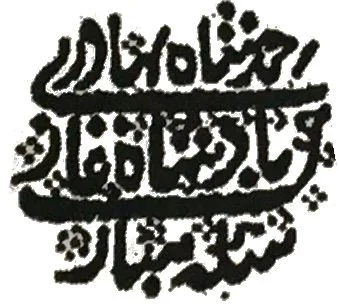
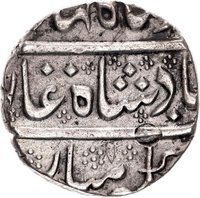
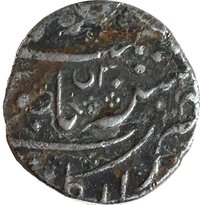
Obverse
Description:
Ahmad Shah Bahadur, Shah of Persia.
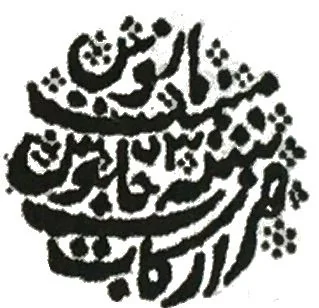
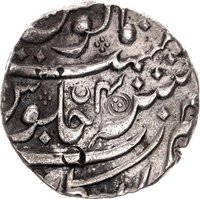
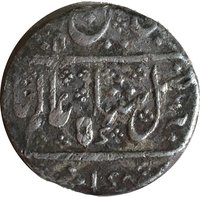
Reverse
Description:
Persian - Julus mint.
Edge
Mints
| Name | Mark |
|---|---|
| Arcot | — |
Mintings
| Year | Mint Mark | Mintage | Quality | Collection |
|---|---|---|---|---|
| 1750 | — | — | ||
| 1752 | — | — |
Historical background
By 1750, the Carnatic region of South India, with its capital at Arcot, was a nexus of intense political and economic transition. The Nawab of Arcot, nominally a subordinate of the Nizam of Hyderabad, was embroiled in a succession struggle exacerbated by European colonial rivalry between the British East India Company and the French Compagnie des Indes. This constant warfare, particularly the ongoing Second Carnatic War (1749-1754), drained the treasury and destabilized the regional economy. The Nawab's authority was increasingly reliant on massive loans from both the Company and private British "agency houses," using future tax revenues as collateral, embedding European financial control into the heart of the state.
The monetary system itself was a complex tapestry. The primary currency was the Arcot rupee, a silver coin minted in the Nawab's name, but its value and purity were inconsistent due to fiscal pressures. Alongside this circulated a multitude of other coins: gold pagodas (particularly the Varaha pagoda of earlier Vijayanagara influence), Mughal rupees from the north, and coins from regional neighbours like Mysore and the Maratha Confederacy. Furthermore, European trade introduced Spanish silver dollars (pieces of eight) and Company rupees, creating a chaotic foreign exchange environment where merchants and money-changers (shroffs) played a critical role in assessing the intrinsic value of each coin based on its metal content and wear.
This currency instability directly reflected and accelerated Arcot's declining sovereignty. To finance his wars and debts, the Nawab often resorted to debasing the coinage—reducing the silver content in the Arcot rupee to produce more coins from the same bullion, a short-term fix that eroded public trust and spurred inflation. The British East India Company, meanwhile, began to assert its own monetary standards to streamline its trade and military expenses. Thus, by 1750, Arcot's currency situation was not merely one of numismatic variety but a clear indicator of a state in fiscal distress, caught between traditional systems and the rising, systematizing financial power of the Company, which would soon eclipse it entirely.
The monetary system itself was a complex tapestry. The primary currency was the Arcot rupee, a silver coin minted in the Nawab's name, but its value and purity were inconsistent due to fiscal pressures. Alongside this circulated a multitude of other coins: gold pagodas (particularly the Varaha pagoda of earlier Vijayanagara influence), Mughal rupees from the north, and coins from regional neighbours like Mysore and the Maratha Confederacy. Furthermore, European trade introduced Spanish silver dollars (pieces of eight) and Company rupees, creating a chaotic foreign exchange environment where merchants and money-changers (shroffs) played a critical role in assessing the intrinsic value of each coin based on its metal content and wear.
This currency instability directly reflected and accelerated Arcot's declining sovereignty. To finance his wars and debts, the Nawab often resorted to debasing the coinage—reducing the silver content in the Arcot rupee to produce more coins from the same bullion, a short-term fix that eroded public trust and spurred inflation. The British East India Company, meanwhile, began to assert its own monetary standards to streamline its trade and military expenses. Thus, by 1750, Arcot's currency situation was not merely one of numismatic variety but a clear indicator of a state in fiscal distress, caught between traditional systems and the rising, systematizing financial power of the Company, which would soon eclipse it entirely.
✨ Legendary