

1 speciedaler – Norway
Add to wishlist
Norway
Context
Material
References
KM: #
Numista: #82371
Value
Bullion value: $62.01
Obverse
Description:
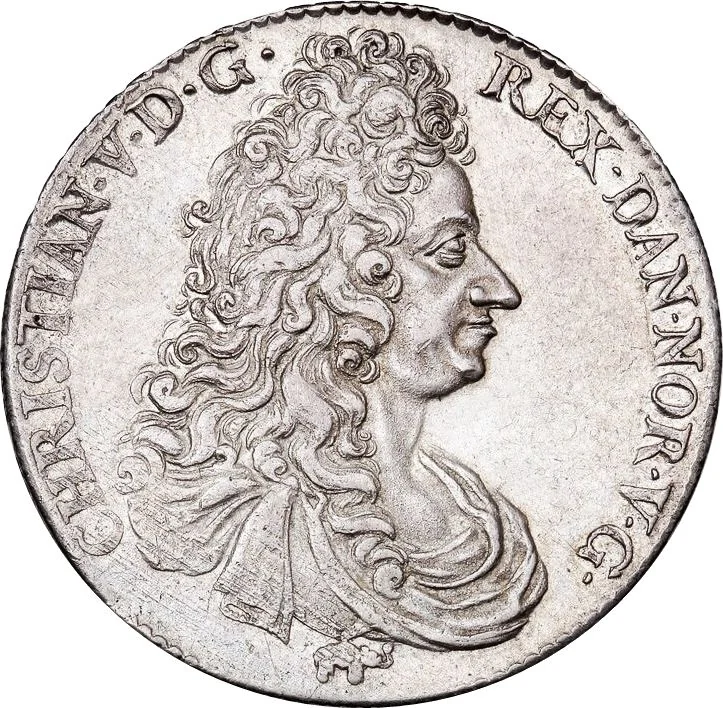
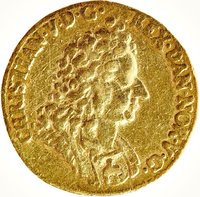
Bust of Christian V facing right, with long hair, an elephant symbol below, surrounded by inscription and a beaded rim.
Inscription:
CHRISTIAN·V·D·G· REX·DAN·NOR·V·G·
Script: Latin
Engraver: Caspar Barth
Reverse
Description:
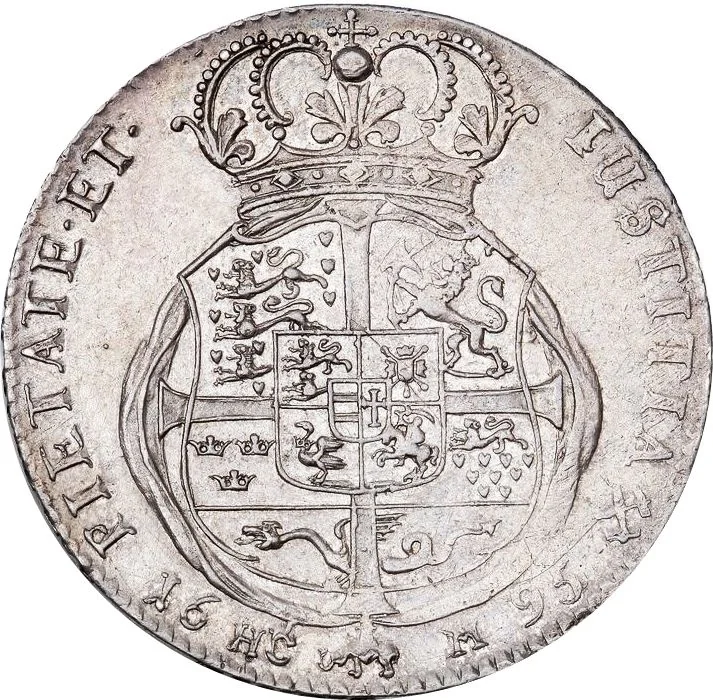
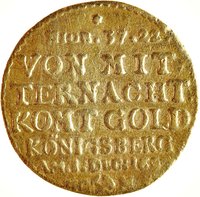
Shield with a crowned coat of arms over a cross. The central shield features Schlesvig, Holstein, Stormarn, and Ditmarsken. The main shield displays Denmark, Norway, the Nordic Union, the Goths, and the Wends. Below is the Elephant Order badge. The surrounding inscription includes a date split by the mintmaster's initials and the order's symbol. A beaded ring encircles the rim.
Inscription:
PIETATE·ET· IUSTITIA ⚒
16 HC M 95
16 HC M 95
Script: Latin
Engraver: Caspar Barth
Edge
Inscription. There are seven different variations of the edge inscription.
Mints
| Name | Mark |
|---|---|
| Norwegian Mint | — |
Mintings
| Year | Mint Mark | Mintage | Quality | Collection |
|---|---|---|---|---|
| 1695 | — | — | ||
| 1696 | — | — |
Historical background
In 1695, Norway found itself in a precarious monetary crisis, a direct consequence of its political union with Denmark under the absolutist King Christian V. The Danish-Norwegian state was engaged in costly wars, particularly the Nine Years' War, which drained the treasury and led to severe fiscal strain. To finance these military endeavours, the government resorted to debasing the currency, significantly reducing the silver content in coins while ordering them to remain at their old face value. This practice, intended as a short-term fiscal measure, rapidly eroded public trust in the coinage.
The situation was exacerbated by the arrival of vast quantities of low-quality klipping coins. These were small, hastily minted pieces with irregular "clipped" edges, containing minimal silver. As good, full-valued coins were hoarded or exported, the inferior klipping flooded the market, leading to a classic manifestation of Gresham's Law: "bad money drives out good." This resulted in rampant inflation, as merchants demanded more of the debased coins for goods and services, causing prices to soar and creating widespread economic hardship and uncertainty among the population.
Ultimately, the crisis of 1695 forced a monetary reform. The state acknowledged the failure of the debased currency and initiated a recall and re-minting programme. The worthless klipping were demonetised and replaced with new, properly valued coins, though often at a significant loss to the holders of the old currency. This painful episode underscored the dangers of currency manipulation for state finance and left a lasting impression on Norwegian economic policy, reinforcing a later historical preference for monetary stability.
The situation was exacerbated by the arrival of vast quantities of low-quality klipping coins. These were small, hastily minted pieces with irregular "clipped" edges, containing minimal silver. As good, full-valued coins were hoarded or exported, the inferior klipping flooded the market, leading to a classic manifestation of Gresham's Law: "bad money drives out good." This resulted in rampant inflation, as merchants demanded more of the debased coins for goods and services, causing prices to soar and creating widespread economic hardship and uncertainty among the population.
Ultimately, the crisis of 1695 forced a monetary reform. The state acknowledged the failure of the debased currency and initiated a recall and re-minting programme. The worthless klipping were demonetised and replaced with new, properly valued coins, though often at a significant loss to the holders of the old currency. This painful episode underscored the dangers of currency manipulation for state finance and left a lasting impression on Norwegian economic policy, reinforcing a later historical preference for monetary stability.
✨ Legendary