

1 speciedaler – Norway
Add to wishlist
Norway
Context
Material
References
KM: #
Numista: #445607
Value
Bullion value: $62.01
Obverse
Description:
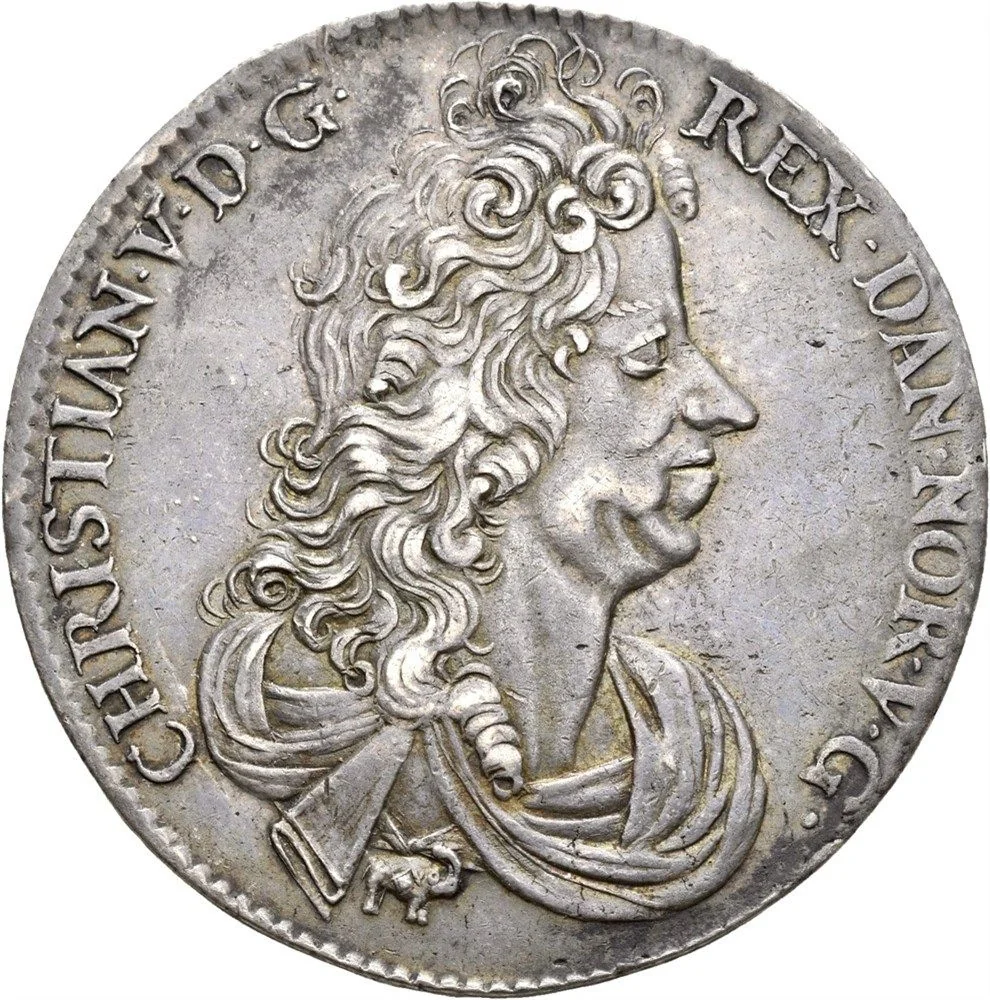
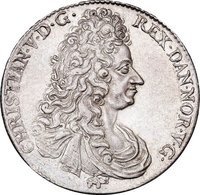
Bust of Christian V facing right, with long hair, an elephant symbol below, surrounded by inscription and a beaded rim.
Inscription:
CHRISTIAN·V·D·G· REX·DAN·NOR·V·G·
Script: Latin
Engraver: Caspar Barth
Reverse
Description:
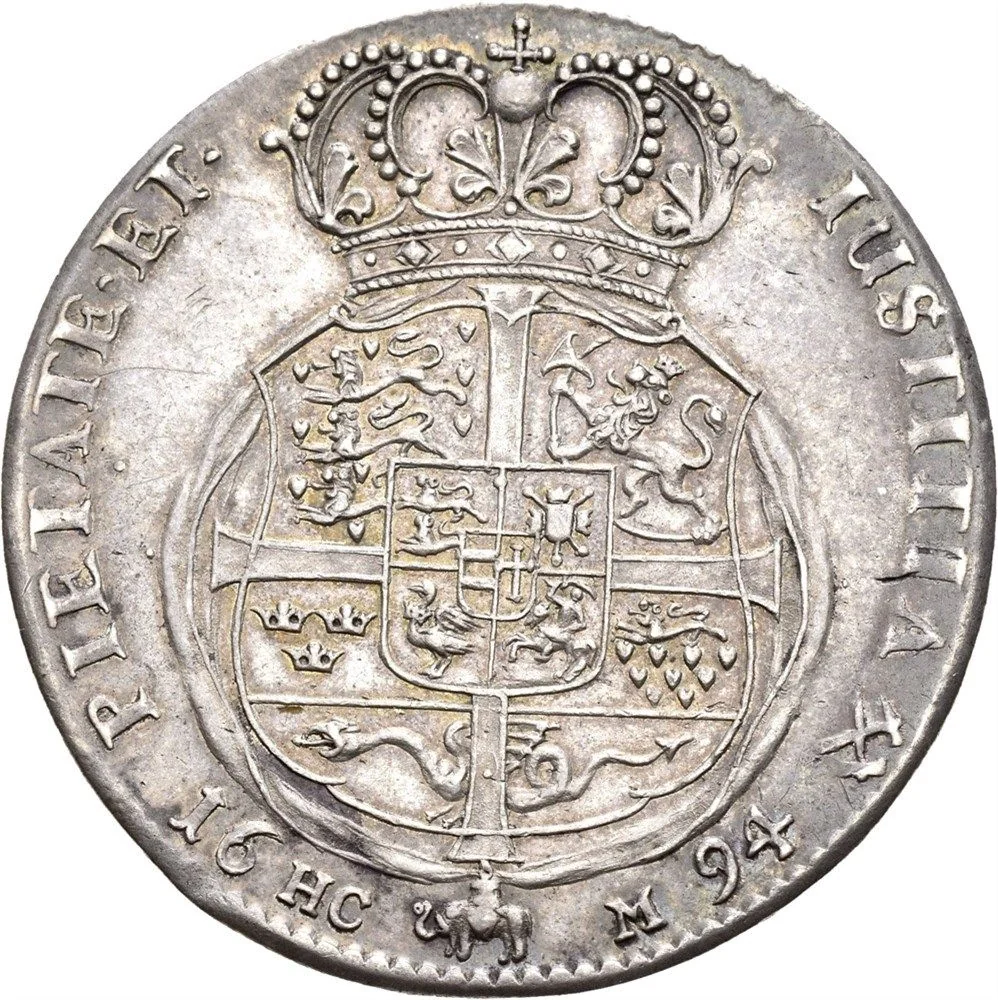
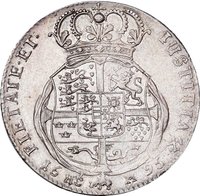
Shield with a crowned coat of arms over a cross. The central shield features Schlesvig, Holstein, Stormarn, and Ditmarsken. The main shield displays Denmark, Norway, the Nordic Union, the Goths, and the Wends. Below is the Elephant Order badge. The surrounding inscription includes a date split by the mintmaster's initials and the order's symbol. A beaded ring encircles the rim.
Inscription:
PIETATE·ET· IUSTITIA ⚒
16 HC M 94
16 HC M 94
Script: Latin
Engraver: Caspar Barth
Edge
Inscription. There are seven different variations of the edge inscription.
Mints
| Name | Mark |
|---|---|
| Norwegian Mint | — |
Mintings
| Year | Mint Mark | Mintage | Quality | Collection |
|---|---|---|---|---|
| 1694 | — | — | ||
| 1695 | — | — |
Historical background
In 1694, Norway found itself in a precarious monetary situation, deeply entangled with its political union with Denmark. As part of the Danish-Norwegian dual monarchy, Norway did not have an independent central bank or currency. The sole circulating coinage was the Danish rigsdaler, but a severe shortage of physical specie plagued the realm. This scarcity was exacerbated by Norway's persistent trade deficit, as exports like timber and fish often failed to cover the cost of imported goods, causing silver and copper coins to flow out of the country. This created significant difficulties for daily commerce and state finances.
The crisis prompted the Danish-Norwegian king, Christian V, to authorize a radical and ultimately disastrous solution: the establishment of a private note-issuing bank in Trondheim. Led by the merchant Jørgen Thormøhlen, this "Trondheim Bank" was granted the privilege to issue credit notes intended to function as paper currency, a first in Norwegian history. However, the bank was catastrophically undercapitalized, backed by little more than promises against future tax revenues and Thormøhlen's own overextended credit.
The experiment ended in swift failure. Public trust in the unfamiliar paper money was minimal, and by 1695, just a year after its founding, the bank collapsed as Thormøhlen went bankrupt. The notes became worthless, leaving many holders ruined and deepening the monetary distrust. This episode left Norway without a stable circulating medium, a problem that would persist until the establishment of the Danish Kurantbanken in 1736, which eventually provided a more reliable paper currency for the united kingdoms.
The crisis prompted the Danish-Norwegian king, Christian V, to authorize a radical and ultimately disastrous solution: the establishment of a private note-issuing bank in Trondheim. Led by the merchant Jørgen Thormøhlen, this "Trondheim Bank" was granted the privilege to issue credit notes intended to function as paper currency, a first in Norwegian history. However, the bank was catastrophically undercapitalized, backed by little more than promises against future tax revenues and Thormøhlen's own overextended credit.
The experiment ended in swift failure. Public trust in the unfamiliar paper money was minimal, and by 1695, just a year after its founding, the bank collapsed as Thormøhlen went bankrupt. The notes became worthless, leaving many holders ruined and deepening the monetary distrust. This episode left Norway without a stable circulating medium, a problem that would persist until the establishment of the Danish Kurantbanken in 1736, which eventually provided a more reliable paper currency for the united kingdoms.
✨ Legendary