

1 ducat – Norway
Add to wishlist
Norway
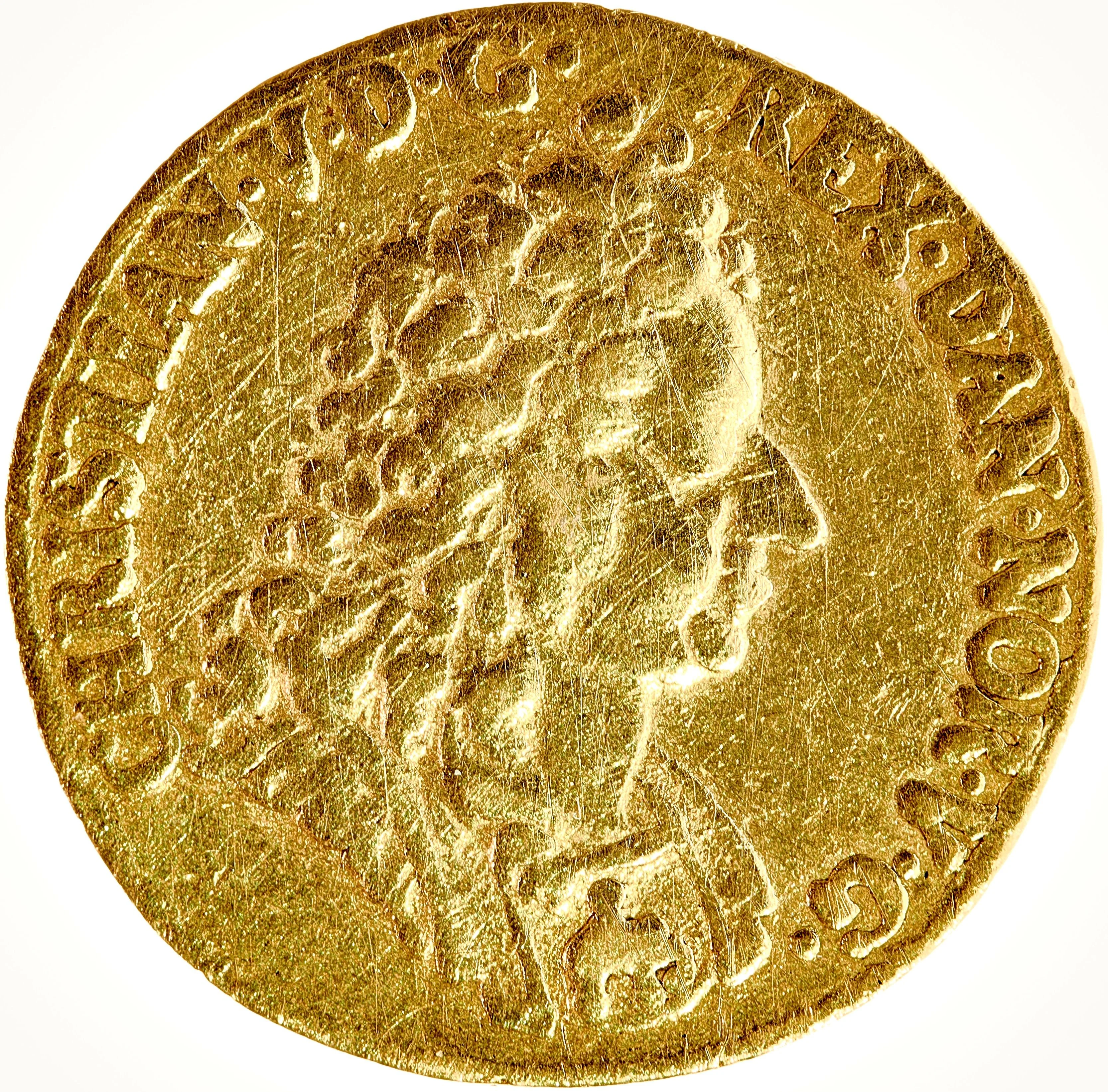
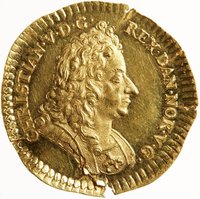
Obverse
Description:
Bust of King Christian V facing right, with long hair and the Elephant Order medal. Encircled by inscription, with a beaded rim.
Inscription:
CHRISTIAN·V·D·G· REX·DAN·NOR·V·G·
Script: Latin
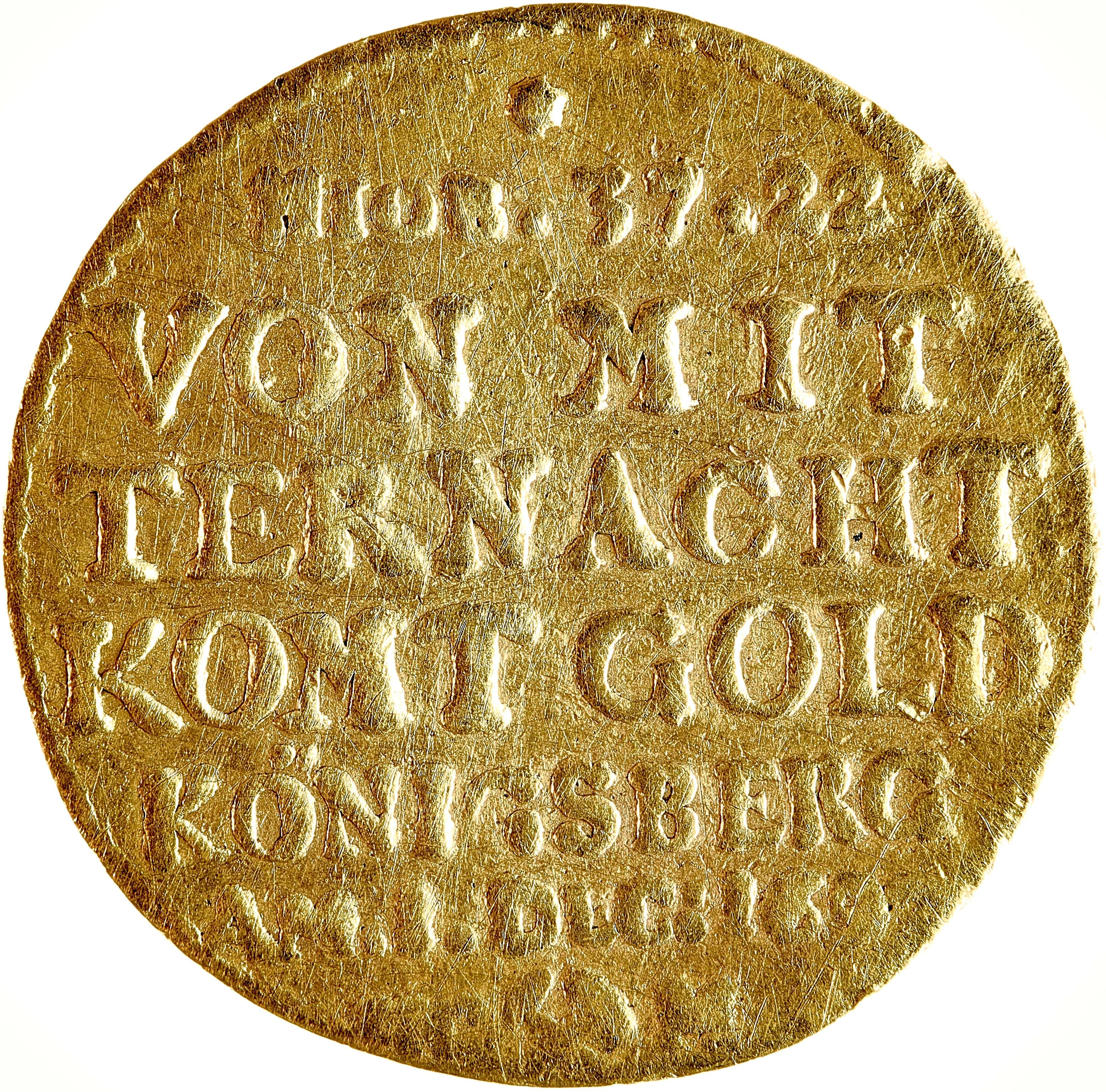
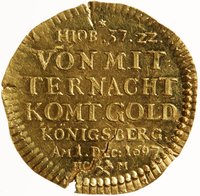
Reverse
Description:
Six-line inscription. Mintmark below, splitting mintmaster initials. Beaded edge.
Inscription:
🟌
HIOB.37.ZZ.
VON MIT=
TERNACHT.
KOMT.GOLD.
KÖNIGSBERG.
AM 1. DEC: 1697
HC ⚒ M
HIOB.37.ZZ.
VON MIT=
TERNACHT.
KOMT.GOLD.
KÖNIGSBERG.
AM 1. DEC: 1697
HC ⚒ M
Script: Latin
Edge
Mints
| Name | Mark |
|---|---|
| Norwegian Mint | — |
Mintings
| Year | Mint Mark | Mintage | Quality | Collection |
|---|---|---|---|---|
| 1697 | — | — |
Historical background
In 1697, Norway was part of the dual monarchy of Denmark-Norway, and its currency situation was complex and troubled. The official currency was the Danish rigsdaler, a silver coin, but the monetary system was severely debased. A long period of war and economic strain had led the Danish Crown to repeatedly reduce the silver content of the coinage to fund state expenditures, creating a disconnect between the face value of coins and their intrinsic metal worth. This practice, combined with a chronic shortage of small change for everyday transactions, led to widespread use of fragmented coins and private tokens, creating a chaotic and unreliable monetary environment.
The situation was further exacerbated by the circulation of a vast array of foreign coins, particularly from the Netherlands and Germany, which merchants and the public often trusted more than the debased domestic currency. These foreign coins traded at fluctuating market rates, adding another layer of complexity to commerce. In response to the crisis, a major monetary reform was being prepared in Copenhagen. The goal of the 1695 reform, which was being implemented in these years, was to introduce a new, stable silver rigsdaler and a subsidiary coinage, aiming to restore public confidence and simplify trade.
However, the transition was difficult. The new, purer coins were hoarded or exported due to Gresham's Law ("bad money drives out good"), as the older, debased coins remained in circulation. For the average Norwegian farmer, fisherman, or merchant in 1697, this meant a daily reality of uncertainty, where the value of money was unstable and the risk of being short-changed was high. The currency chaos reflected the broader economic challenges within the kingdom, where central policy from Copenhagen often struggled to meet the practical needs of the Norwegian populace.
The situation was further exacerbated by the circulation of a vast array of foreign coins, particularly from the Netherlands and Germany, which merchants and the public often trusted more than the debased domestic currency. These foreign coins traded at fluctuating market rates, adding another layer of complexity to commerce. In response to the crisis, a major monetary reform was being prepared in Copenhagen. The goal of the 1695 reform, which was being implemented in these years, was to introduce a new, stable silver rigsdaler and a subsidiary coinage, aiming to restore public confidence and simplify trade.
However, the transition was difficult. The new, purer coins were hoarded or exported due to Gresham's Law ("bad money drives out good"), as the older, debased coins remained in circulation. For the average Norwegian farmer, fisherman, or merchant in 1697, this meant a daily reality of uncertainty, where the value of money was unstable and the risk of being short-changed was high. The currency chaos reflected the broader economic challenges within the kingdom, where central policy from Copenhagen often struggled to meet the practical needs of the Norwegian populace.
✨ Legendary