

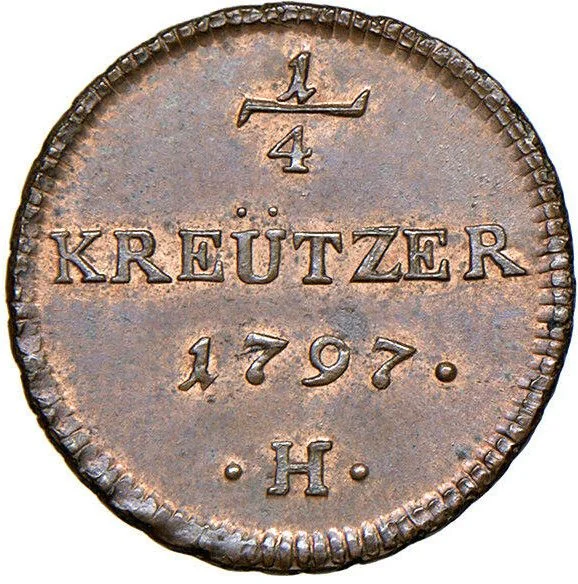
¼ Kreuzer – Further Austria
Austria
Context
Years: 1792–1800
Country: Austria 
Issuer: Further Austria
Ruler: Francis II
Currency:
Demonetized: Yes
References
KM: #Click to copy to clipboard17
Numista: #81573
Obverse
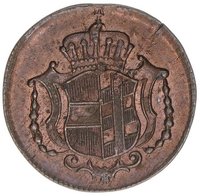
Description:
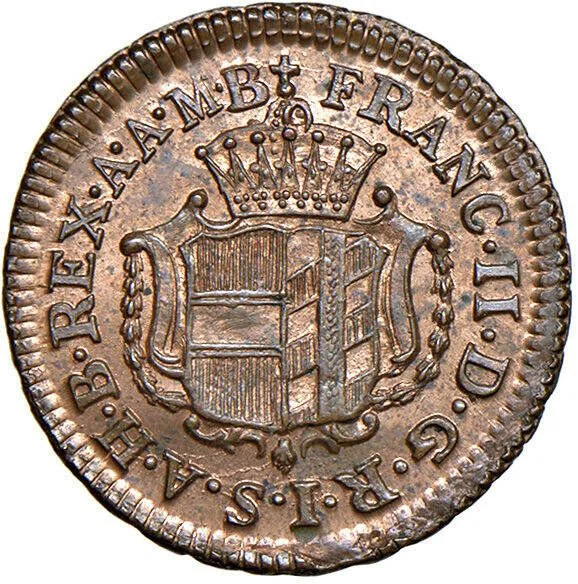
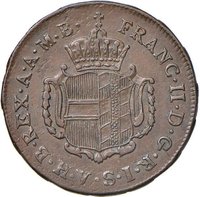
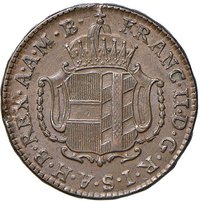
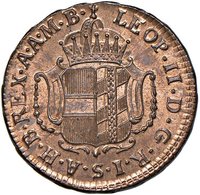
Austrian coat of arms encircled by lettering.
Inscription:
FRANC. II. D. G. R. I. S. A. H. B. REX. A. A. M. B.
Script: Latin
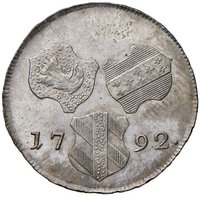
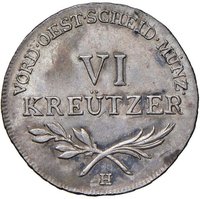
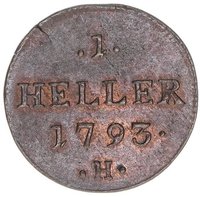
Reverse
Edge
Mints
| Name | Mark |
|---|---|
| Günzburg | — |
Mintings
| Year | Mint Mark | Mintage | Quality | Collection |
|---|---|---|---|---|
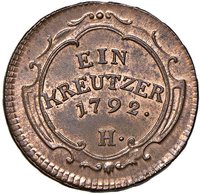
| 1792 | H | — | ||
| 1793 | H | — | ||
| 1797 | H | — | ||
| 1798 | H | — | ||
| 1799 | H | — | ||
| 1800 | H | — |
Historical background
In 1792, the currency situation in Further Austria (Vorderösterreich) was complex and fragmented, reflecting the territory's disparate geography and political structure. These Habsburg possessions, scattered across modern-day Baden-Württemberg, Alsace, and Switzerland, lacked a unified monetary system. The primary circulating coin was the Konventionskreuzer, based on the 20-Gulden standard (Konventionsfuß) established across the Habsburg Monarchy in 1753. However, this official currency competed with a plethora of regional and foreign coins, particularly from the numerous independent states of Swabia and the Rhineland, as well as French Livres. This created a chaotic exchange environment where the value of money could vary significantly from town to town.
The local economy, heavily reliant on agriculture, small-scale commerce, and transit trade, suffered under this inconsistency. Merchants and administrators faced constant difficulties with exchange rates and the fluctuating silver content of coins, which hampered economic planning and tax collection. Furthermore, the Habsburg state's chronic fiscal strain, exacerbated by the costs of war with Revolutionary France, led to attempts to extract more revenue from its territories, often through monetary manipulation. This period saw a gradual debasement of coinage, as the government sought to stretch its silver reserves, eroding public trust in the official currency.
By the end of 1792, the monetary instability was accelerating due to direct geopolitical pressure. The outbreak of the War of the First Coalition brought military conflict to the region's doorstep, particularly in the Alsatian territories. The advancing French armies not only disrupted trade routes but also began to impose their own revolutionary currency, the Assignat, in occupied areas. Thus, the traditional, fragmented monetary order of Further Austria was being simultaneously undermined from within by Habsburg fiscal policy and from without by the forces of the French Revolution, setting the stage for its complete dissolution as these territories were gradually lost to Habsburg control in the coming years.
The local economy, heavily reliant on agriculture, small-scale commerce, and transit trade, suffered under this inconsistency. Merchants and administrators faced constant difficulties with exchange rates and the fluctuating silver content of coins, which hampered economic planning and tax collection. Furthermore, the Habsburg state's chronic fiscal strain, exacerbated by the costs of war with Revolutionary France, led to attempts to extract more revenue from its territories, often through monetary manipulation. This period saw a gradual debasement of coinage, as the government sought to stretch its silver reserves, eroding public trust in the official currency.
By the end of 1792, the monetary instability was accelerating due to direct geopolitical pressure. The outbreak of the War of the First Coalition brought military conflict to the region's doorstep, particularly in the Alsatian territories. The advancing French armies not only disrupted trade routes but also began to impose their own revolutionary currency, the Assignat, in occupied areas. Thus, the traditional, fragmented monetary order of Further Austria was being simultaneously undermined from within by Habsburg fiscal policy and from without by the forces of the French Revolution, setting the stage for its complete dissolution as these territories were gradually lost to Habsburg control in the coming years.
💎 Very Rare