

1 Skilling – Norway
Norway
Context
Years: 1779–1780
Issuer: Norway 
Ruler: Christian VII
Currency:
(1746—1814)
Demonetized: Yes
Total mintage: 1,996,800
References
KM: #Click to copy to clipboard258
Numista: #99009
Obverse
Description:
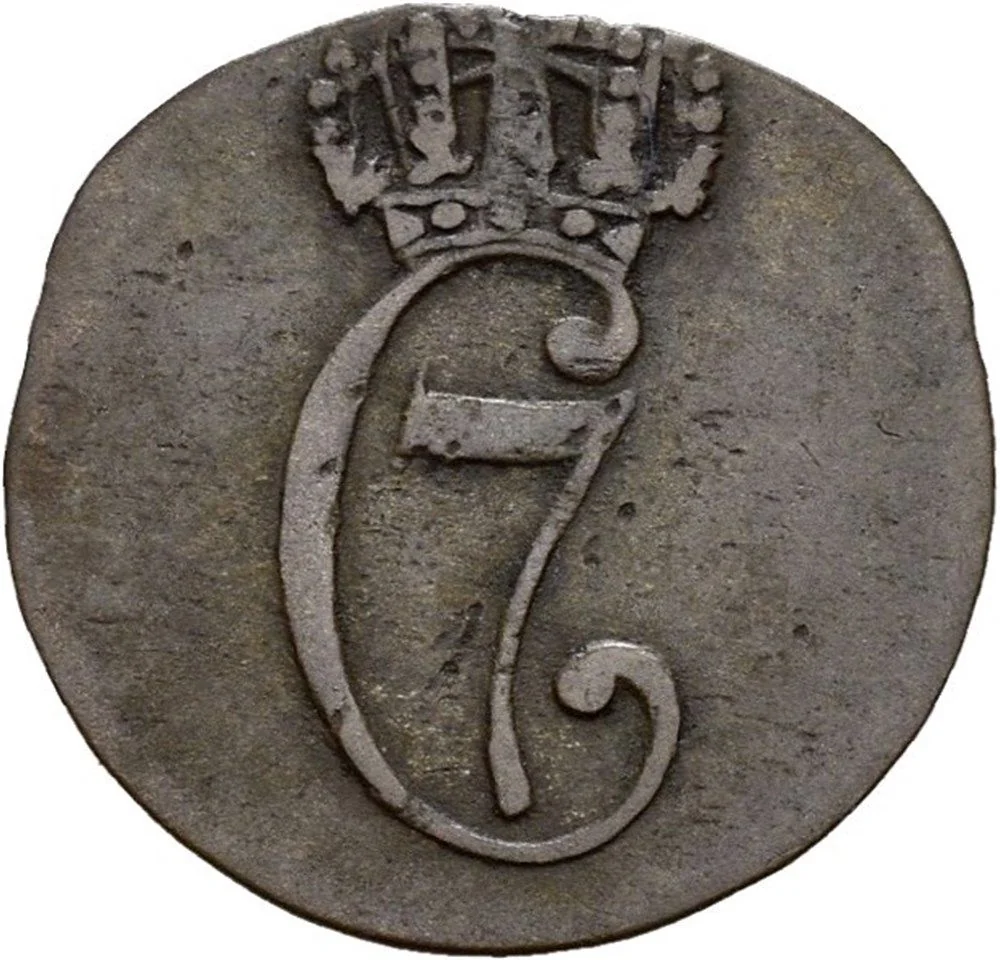
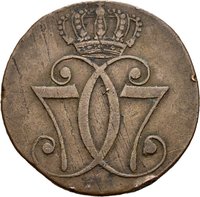
Christian VII crowned monogram. Beaded edge.
Script: Latin
Reverse
Description:
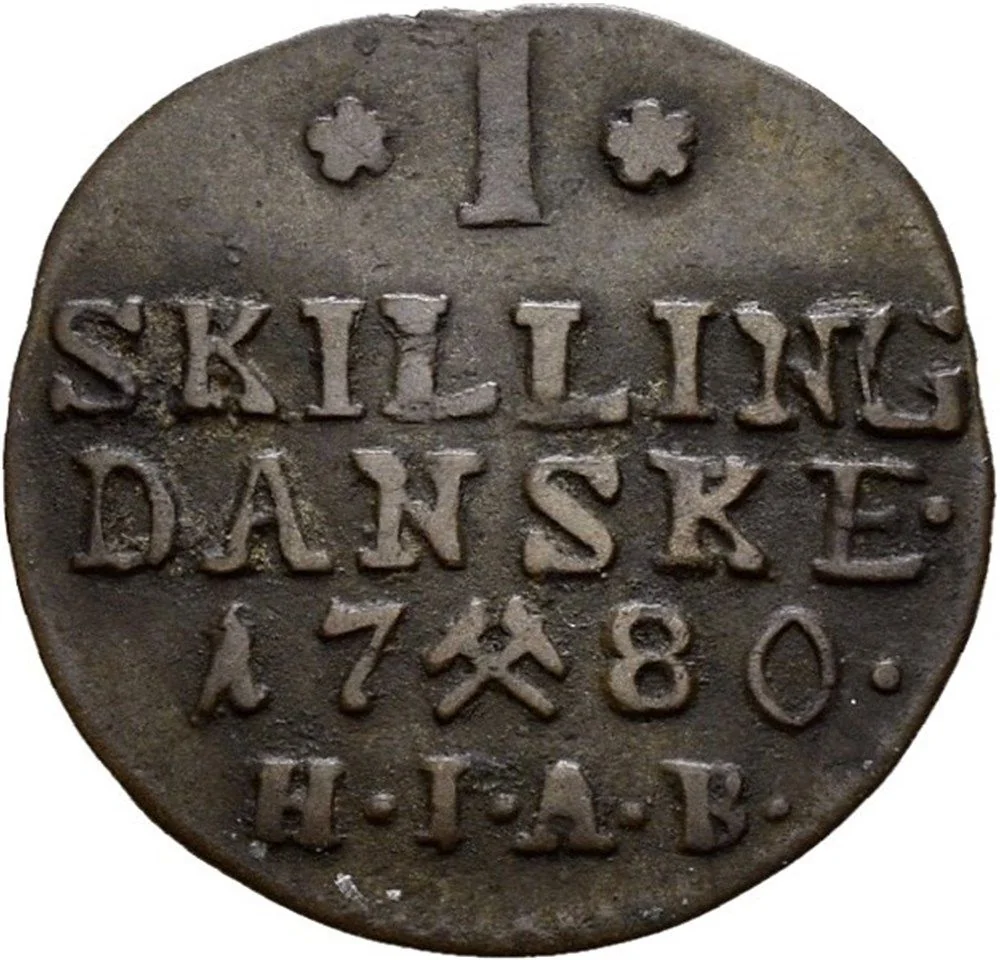
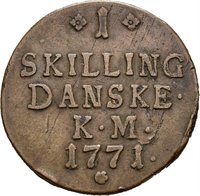
Value and date on four lines.
Date divided by mintmark.
Mintmaster's initials below.
Beaded edge.
Date divided by mintmark.
Mintmaster's initials below.
Beaded edge.
Inscription:
✿ I ✿
SKILLING
DANSKE·
17 ⚒ 80·
H·I·A·B·
SKILLING
DANSKE·
17 ⚒ 80·
H·I·A·B·
Script: Latin
Edge
Mints
| Name | Mark |
|---|---|
| Norwegian Mint | — |
Mintings
| Year | Mint Mark | Mintage | Quality | Collection |
|---|---|---|---|---|
| 1779 | — | 844,800 | ||
| 1780 | — | 1,152,000 |
Historical background
In 1779, Norway, then in a union with Denmark under the Danish Crown, operated within a complex and strained monetary system. The official currency was the Danish rigsdaler, divided into 96 skilling, but the reality was one of severe scarcity of official coinage. This shortage was a chronic issue, exacerbated by Norway's persistent trade deficit with Denmark, which caused silver and copper coins to continually flow out of the kingdom to settle debts. As a result, everyday commerce relied heavily on a confusing patchwork of substitutes, including fragmented coins, private promissory notes, and even commodity money like dried fish or butter in remote areas.
The situation was further complicated by the circulation of numerous foreign coins, particularly the speciedaler, a large silver coin that many considered more reliable than the official currency. This led to a de facto dual system where large transactions were conducted in speciedaler while small change remained desperately scarce. The Danish state attempted to manage the system by issuing paper money, the so-called kurantsedler, but these notes were not legal tender in Norway and often traded at a significant discount, adding another layer of instability and confusion to the economy.
This monetary disarray created significant economic friction, hindering trade and creating uncertainty for both merchants and the general population. The year 1779 fell within a period of growing Norwegian economic nationalism and calls for a separate national bank to address the currency problem. These pressures would eventually culminate in the founding of Norges Bank in 1816, shortly after the dissolution of the union with Denmark, marking the beginning of a modern, unified Norwegian currency.
The situation was further complicated by the circulation of numerous foreign coins, particularly the speciedaler, a large silver coin that many considered more reliable than the official currency. This led to a de facto dual system where large transactions were conducted in speciedaler while small change remained desperately scarce. The Danish state attempted to manage the system by issuing paper money, the so-called kurantsedler, but these notes were not legal tender in Norway and often traded at a significant discount, adding another layer of instability and confusion to the economy.
This monetary disarray created significant economic friction, hindering trade and creating uncertainty for both merchants and the general population. The year 1779 fell within a period of growing Norwegian economic nationalism and calls for a separate national bank to address the currency problem. These pressures would eventually culminate in the founding of Norges Bank in 1816, shortly after the dissolution of the union with Denmark, marking the beginning of a modern, unified Norwegian currency.
💎 Extremely Rare