

7 Kreuzers – Kingdom of Bohemia
Context
Years: 1762–1765
Country: Bohemia
Issuer: Kingdom of Bohemia
Ruler: Francis I of Lorraine
Currency:
(1754—1857)
Demonetized: Yes
Material
References
KM: #Click to copy to clipboard795
Numista: #80391
Value
Bullion value: $8.87
Obverse
Description:
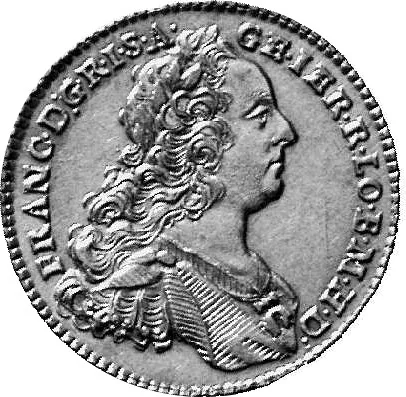
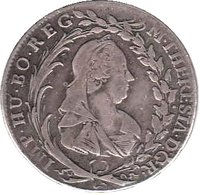
Portrait of Emperor Francis I in a long curly wig, facing right. Legend: "Francis, by the Grace of God, Emperor of the Romans, Ever August, King of Germany, Jerusalem, Lorraine, and Bar, Grand Duke of Tuscany."
Inscription:
FRANC D G R I S A GE IER R LO B M H D
Script: Latin
Reverse
Description:
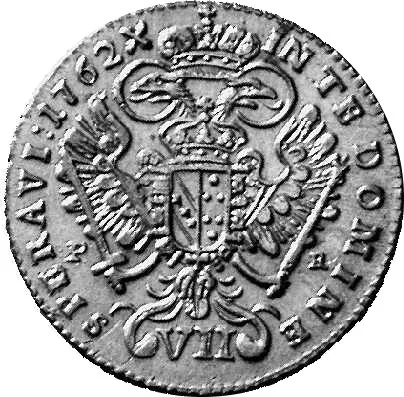
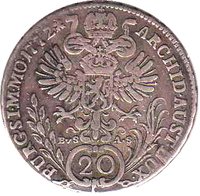
Imperial eagle with Lorraine and Tuscany arms. Value in tail feathers. Split mint mark. Legend begins at 1 o'clock.
Inscription:
IN TE DOMINE SPERAVI
VII
P R
VII
P R
Script: Latin
Edge
Mints
| Name | Mark |
|---|---|
| Prague | — |
Mintings
| Year | Mint Mark | Mintage | Quality | Collection |
|---|---|---|---|---|
| 1762 | P | — | ||
| 1763 | P | — | ||
| 1764 | P | — | ||
| 1765 | P | — |
Historical background
In 1762, the Kingdom of Bohemia, a core crown land of the Habsburg Monarchy, operated within a complex and strained monetary system. The currency landscape was dominated by the Conventionsthaler, a large silver coin established by the 1753 Austro-Bohemian currency convention with Bavaria. This convention aimed to standardize coinage across the region, defining the Conventionsthaler as containing a specific fine silver content (10 thalers from one Vienna Mark of silver). However, everyday transactions relied heavily on smaller fractional coins, particularly kreuzers, with 60 kreuzers equaling one Conventionsthaler.
The system was under severe pressure due to the ongoing Seven Years' War (1756-1763). To finance the massive military expenditures against Prussia, the Habsburg state, under Empress Maria Theresa, resorted to heavy debasement of subsidiary coinage. While the silver Conventionsthaler was maintained for international trade and large payments, the government drastically increased the minting of low-value billon (debased silver) and copper coins, such as kreuzers and hellers. This led to a classic inflationary spiral: an oversupply of less valuable coins caused their market value to fall against the stable silver thaler, increasing prices and causing public distrust.
Consequently, Bohemia in 1762 suffered from a fractured currency environment with a widening gap between the "good" large silver coins, which were hoarded or used for foreign obligations, and the "bad" circulating small change. This created significant hardship for the general population, who were paid and conducted daily business in the depreciating coins. The situation exemplified the fiscal strains of wartime Habsburg rule, where monetary policy was primarily a tool for state survival, setting the stage for future reforms like those implemented by Count Chotek in the 1760s to restore confidence and stability.
The system was under severe pressure due to the ongoing Seven Years' War (1756-1763). To finance the massive military expenditures against Prussia, the Habsburg state, under Empress Maria Theresa, resorted to heavy debasement of subsidiary coinage. While the silver Conventionsthaler was maintained for international trade and large payments, the government drastically increased the minting of low-value billon (debased silver) and copper coins, such as kreuzers and hellers. This led to a classic inflationary spiral: an oversupply of less valuable coins caused their market value to fall against the stable silver thaler, increasing prices and causing public distrust.
Consequently, Bohemia in 1762 suffered from a fractured currency environment with a widening gap between the "good" large silver coins, which were hoarded or used for foreign obligations, and the "bad" circulating small change. This created significant hardship for the general population, who were paid and conducted daily business in the depreciating coins. The situation exemplified the fiscal strains of wartime Habsburg rule, where monetary policy was primarily a tool for state survival, setting the stage for future reforms like those implemented by Count Chotek in the 1760s to restore confidence and stability.
💎 Extremely Rare