Logo Title
obverse
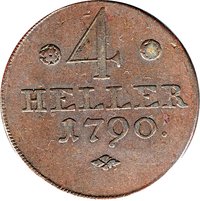
reverse

4 Hellers – Landgraviate of Hesse-Cassel

Context
Years: 1788–1794
Ruler: William IX
Currency:
Demonetized: Yes
Material
Diameter: 25.15 mm
Weight: 7.3 g
Thickness: 1.8 mm
Shape: Round
Composition: Copper
Magnetic: No
Alignment: Medal alignment
Obverse
OBVERSE ↑
flip
Reverse
REVERSE ↑
References
KM: #Click to copy to clipboard533
Numista: #80196

Obverse

Description:
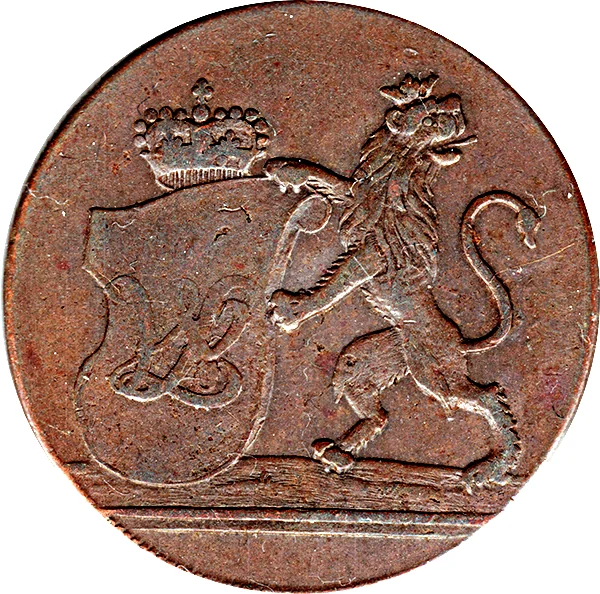
Crowned lion supporting a crowned shield with WL monogram.
Inscription:
WL

Reverse

Description:
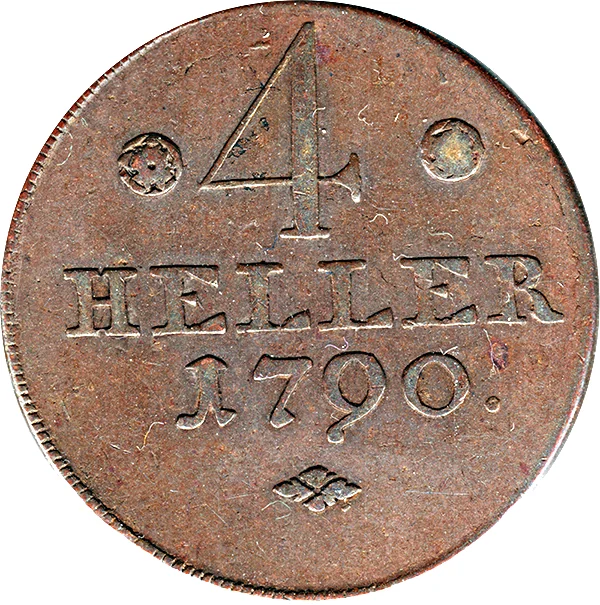
Denomination and date in three lines.
Inscription:
*4*

HELLER

1790

*
Script: Latin

Edge

Mintings

YearMint MarkMintageQualityCollection
1788
1789
1790
1794

Historical background

In 1788, the currency situation in the Landgraviate of Hesse-Cassel was a complex and fragmented system, typical of the Holy Roman Empire's myriad states. The primary unit was the Hessian Thaler, but its value and physical composition were not absolute. The landgraviate officially operated on a Conventionsfuß standard (20 Gulden to a Cologne Mark of fine silver), yet a plethora of other coins circulated freely. These included Reichsthalers, Gulden, Kreuzers, and Albus from neighboring principalities and free cities, as well as older, debased domestic issues. This created a constant challenge for commerce, as exchange rates between these coins fluctuated and required specialized knowledge.

The root of this complexity lay in the sovereign right of German princes to mint coinage, often exploited for profit. While Landgrave Frederick II (1760-1785) had attempted reforms, his successor, William IX (the future Elector William I), inherited a system where the state's own coins competed with a flood of foreign currency. The situation was further muddied by the widespread use of bank money and promissory notes in larger transactions, particularly in the capital, Kassel, which added a layer of credit-based exchange atop the metallic system. For ordinary citizens, this meant daily transactions were fraught with calculations and the risk of receiving underweight or counterfeit coins.

Economically, this monetary fragmentation was a significant hindrance to internal trade and state administration. It created uncertainty, facilitated fraud, and imposed transaction costs that stifled economic growth. However, for the landgraviate's treasury, there was also a strategic dimension. Hesse-Cassel was famously wealthy, largely due to its practice of leasing mercenary soldiers to foreign powers, most notably to Great Britain during the American Revolutionary War. The resulting substantial capital inflows, including British subsidies, had to be managed within this chaotic system, prompting the court to maintain sophisticated financial and banking operations to navigate its own convoluted currency landscape.
💎 Very Rare