

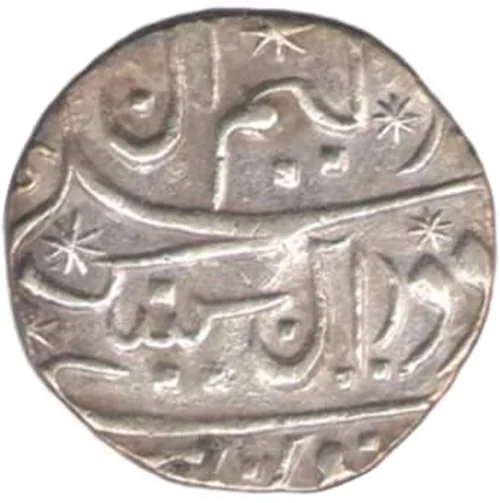
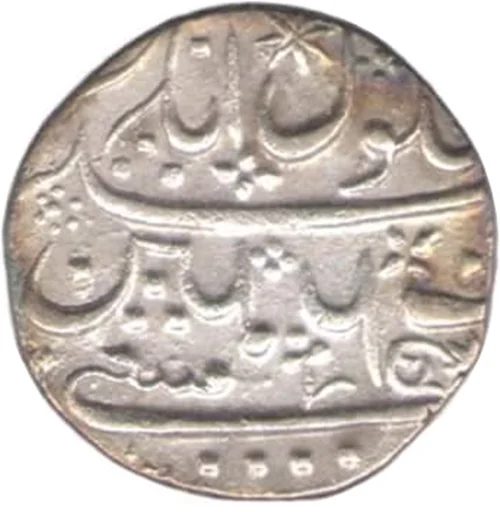
1 Rupee – Bombay Presidency
India
Context
Years: 1692–1695
Country: India 
Issuer: Bombay Presidency
Currency:
(1672—1835)
Demonetization: 1697
Material
References
KM: #Click to copy to clipboard148
Numista: #79752
Value
Bullion value: $33.41
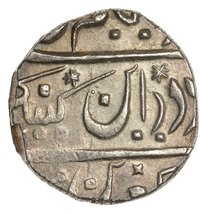
Obverse
Description:
Coins minted during King William and Queen Mary's reign.
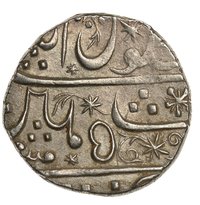
Reverse
Description:
British East India Company coin, minted Mumbai, Year 6 of reign.
Inscription:
٦
Edge
Plain
Mintings
| Year | Mint Mark | Mintage | Quality | Collection |
|---|---|---|---|---|
| — | — | — |
Historical background
In 1692, the currency situation within the Bombay Presidency was a complex and often chaotic reflection of its position as a fledgling English East India Company outpost amidst a vibrant Indian economy. The presidency, comprising Bombay Island and its dependencies, operated within a vast monetary ecosystem dominated by the Mughal Empire’s silver rupee. However, no single, standardized coinage prevailed. Instead, a multitude of rupees minted in various Mughal mints (like those from Surat, Ahmedabad, or imperial capitals), alongside a host of European gold and silver coins like Portuguese xeraphims and Spanish pieces of eight, circulated simultaneously. Their value was not fixed but fluctuated based on weight, purity, and the ever-changing dynamics of trade.
This multiplicity created significant administrative and commercial difficulties for the Company. Transactions required expert shroffs (money-changers and assayers) to evaluate each coin, leading to transaction friction, fraud, and uncertainty. The Company’s own attempts to introduce currency, such as the "Bombay rupee" minted from 1677 with permission from the English Crown, struggled to gain authoritative traction. These coins, though a statement of sovereignty, often failed to displace the more trusted Mughal rupees in wider commerce, leaving the presidency with a fragmented and unreliable monetary base.
Consequently, 1692 fell within a period of persistent financial experimentation and strain. The Company’s administration grappled with chronic shortages of specie, exacerbated by its need to finance fortifications, troops, and trade goods. The lack of a stable and universally accepted currency hampered both local revenue collection and the smooth functioning of its export-oriented economy. Thus, the monetary landscape was one of competitive currencies, where the Company’s political ambition to control coinage clashed with the practical reality of a market-driven, multi-currency system, presenting a constant challenge to its commercial and governance objectives.
This multiplicity created significant administrative and commercial difficulties for the Company. Transactions required expert shroffs (money-changers and assayers) to evaluate each coin, leading to transaction friction, fraud, and uncertainty. The Company’s own attempts to introduce currency, such as the "Bombay rupee" minted from 1677 with permission from the English Crown, struggled to gain authoritative traction. These coins, though a statement of sovereignty, often failed to displace the more trusted Mughal rupees in wider commerce, leaving the presidency with a fragmented and unreliable monetary base.
Consequently, 1692 fell within a period of persistent financial experimentation and strain. The Company’s administration grappled with chronic shortages of specie, exacerbated by its need to finance fortifications, troops, and trade goods. The lack of a stable and universally accepted currency hampered both local revenue collection and the smooth functioning of its export-oriented economy. Thus, the monetary landscape was one of competitive currencies, where the Company’s political ambition to control coinage clashed with the practical reality of a market-driven, multi-currency system, presenting a constant challenge to its commercial and governance objectives.
✨ Legendary