

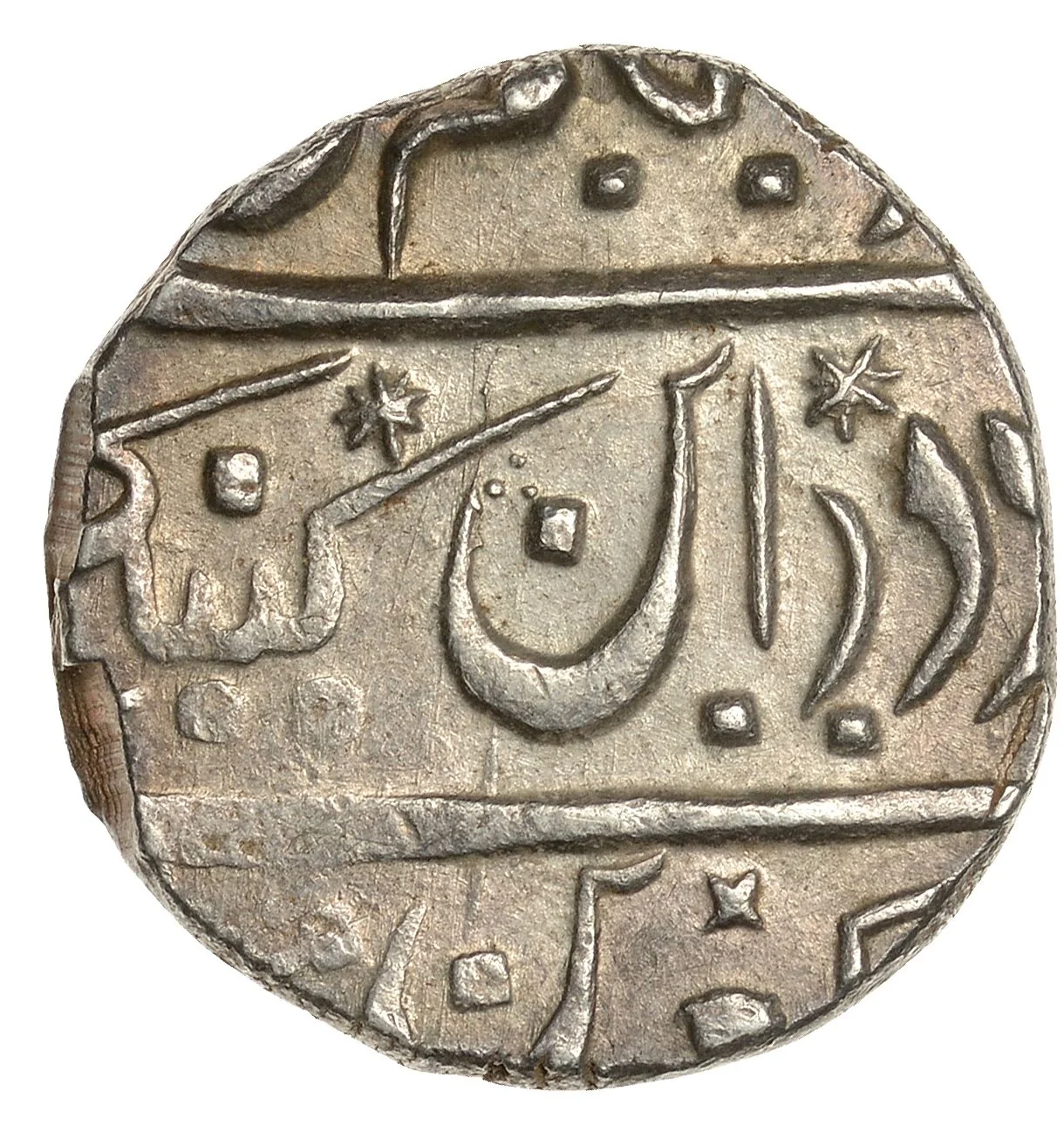
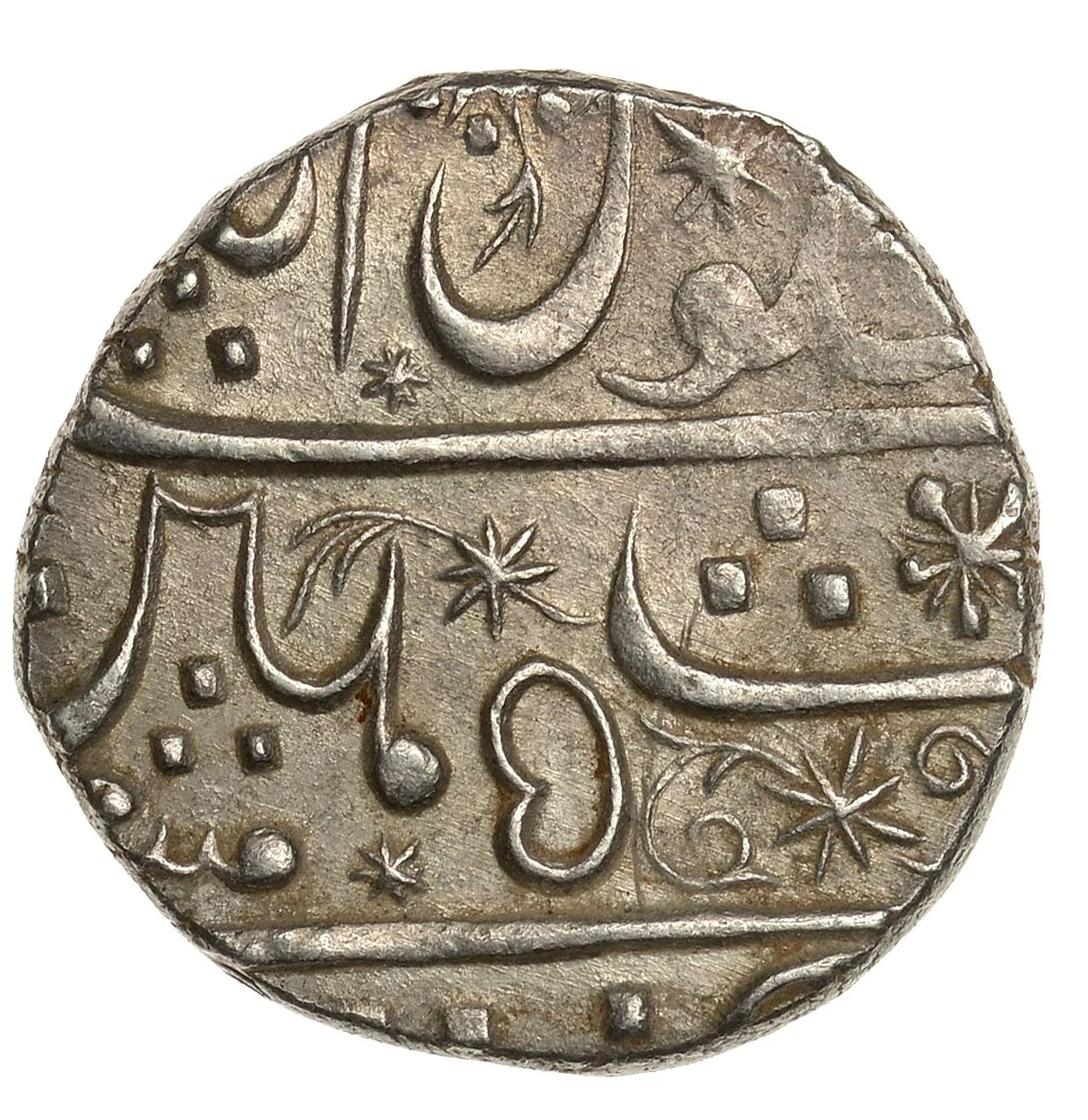
½ Rupee – Bombay Presidency
India

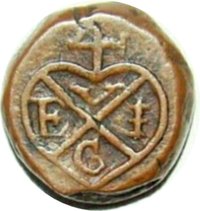
Obverse
Description:
Coins minted during William and Mary's reign.
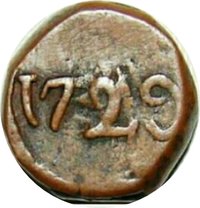
Reverse
Description:
Persian: Year 5 of English rule, Shaheen coin, Mumbai.
Edge
Mints
| Name | Mark |
|---|---|
| Mumbai / Bombay | — |
Mintings
| Year | Mint Mark | Mintage | Quality | Collection |
|---|---|---|---|---|
| — | — | — |
Historical background
In 1693, the currency situation within the Bombay Presidency was a complex and often chaotic reflection of its position as a fledgling English East India Company (EIC) outpost amidst powerful indigenous economies. The primary challenge was the coexistence of multiple, competing currency systems. While the EIC attempted to impose a rupee-based accounting system for its own trade and administration, the actual circulation was dominated by a vast array of foreign coins, most notably the silver rials of eight (Spanish dollars) and the gold pagodas of the neighbouring Mughal and Maratha territories. These coins, along with Portuguese xeraphims and others, circulated not at their intrinsic metal value but at fluctuating rates set by the volatile Bombay bazaar, leading to constant confusion and arbitrage.
This monetary disorder was exacerbated by a severe shortage of specie (coin), a chronic problem for the Company. Bombay’s trade was growing, but the EIC lacked the sovereign authority to mint its own credible currency. Attempts to introduce Company-minted rupees often failed due to public distrust and competition from well-established Mughal coinage. Consequently, trade relied heavily on the physical import of bullion and foreign coin, making the economy vulnerable to supply shocks. The problem was so acute that the Company sometimes resorted to issuing "bombay rupees" as ledger entries or promissory notes, a primitive form of paper currency that struggled to gain acceptance beyond forced use in paying local troops and officials.
Ultimately, the currency chaos of 1693 underscored Bombay’s transitional status. It was neither a fully sovereign entity with control over its mint nor a seamlessly integrated part of the Mughal monetary sphere. The Presidency’s administration, under President Sir John Gayer, grappled with these issues as a major impediment to stable revenue collection and commercial growth. The situation would persist until the EIC acquired formal minting rights later in the 18th century, beginning the long process of imposing a standardized currency regime that would eventually underpin British economic control in western India.
This monetary disorder was exacerbated by a severe shortage of specie (coin), a chronic problem for the Company. Bombay’s trade was growing, but the EIC lacked the sovereign authority to mint its own credible currency. Attempts to introduce Company-minted rupees often failed due to public distrust and competition from well-established Mughal coinage. Consequently, trade relied heavily on the physical import of bullion and foreign coin, making the economy vulnerable to supply shocks. The problem was so acute that the Company sometimes resorted to issuing "bombay rupees" as ledger entries or promissory notes, a primitive form of paper currency that struggled to gain acceptance beyond forced use in paying local troops and officials.
Ultimately, the currency chaos of 1693 underscored Bombay’s transitional status. It was neither a fully sovereign entity with control over its mint nor a seamlessly integrated part of the Mughal monetary sphere. The Presidency’s administration, under President Sir John Gayer, grappled with these issues as a major impediment to stable revenue collection and commercial growth. The situation would persist until the EIC acquired formal minting rights later in the 18th century, beginning the long process of imposing a standardized currency regime that would eventually underpin British economic control in western India.
✨ Legendary