

1 Carlin – Bologna
Italy
Context
Years: 1702–1719
Country: Italy 
Issuer: Bologna
Ruler: Clement XI
Currency:
(1534—1835)
Demonetization: 5 October 1861
Material
References
KM: #Click to copy to clipboard136
Numista: #79540
Value
Bullion value: $4.63
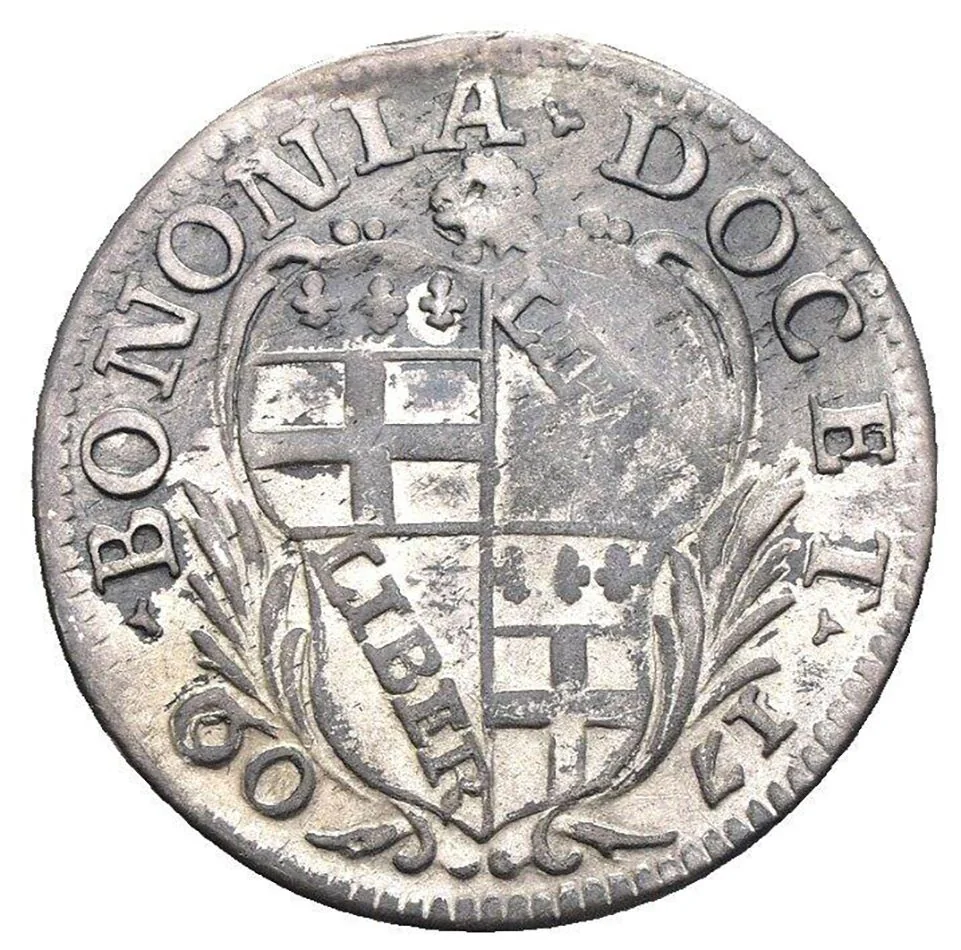
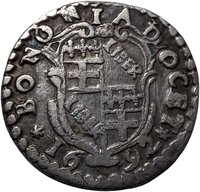
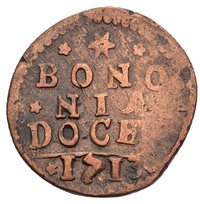
Obverse
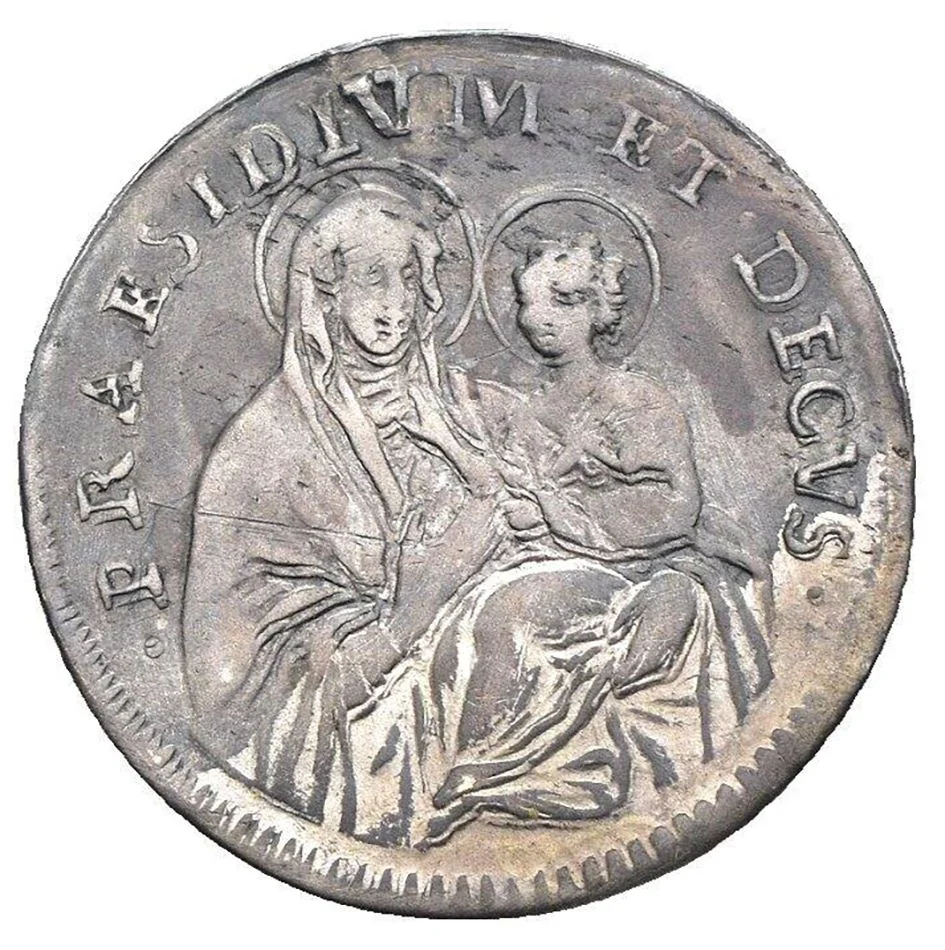
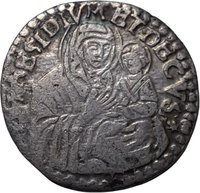
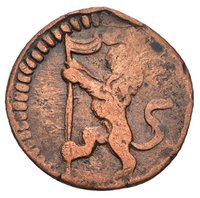
Reverse
Edge
Plain
Categories
| Person> Religious figure |
| Symbols> Coat of Arms |
| Symbol> Cross |
Mints
| Name | Mark |
|---|---|
| Bologna | — |
Mintings
| Year | Mint Mark | Mintage | Quality | Collection |
|---|---|---|---|---|
| 1702 | — | — | ||
| 1709 | — | — | ||
| 1713 | — | — | ||
| 1714 | — | — | ||
| 1718 | — | — | ||
| 1719 | — | — |
Historical background
In 1702, Bologna existed within a complex and fragmented monetary landscape, typical of the Italian Peninsula before unification. The city was part of the Papal States, and thus the official currency was the Papal scudo, along with its subdivisions like the giulio and baiocco. However, Bologna's position as a major commercial and academic hub meant that a multitude of other currencies circulated freely alongside the papal issues. In everyday trade, one would encounter coins from neighbouring states like the Venetian ducat, the Florentine florin, and even Spanish silver reales and French louis d'or, their values constantly fluctuating against each other.
This proliferation created a persistent challenge of exchange and valuation. The actual value of a coin was not solely determined by its official stamp but by its weight and precious metal content, which could be degraded through clipping or wear. Money changers (banchieri) held essential positions in the market, setting daily exchange rates and verifying the quality of coins. The city's authorities attempted to regulate this chaos by periodically publishing official valuation lists (listini), which fixed the rates for dozens of different foreign coins in terms of the local Bolognese lira, a money of account used for bookkeeping.
The year 1702 fell during the War of the Spanish Succession (1701-1714), which critically exacerbated Bologna's monetary instability. The passage and requisitions of opposing armies—French, Imperial, and Papal—flooded the region with even more foreign coinage and often debased emergency issues. This military pressure strained public finances, leading to potential manipulations of the coinage by the Papal mint to raise revenue. Consequently, merchants and citizens in Bologna faced heightened uncertainty, with the threat of sudden devaluation and the practical difficulty of conducting reliable transactions in a market saturated with heterogeneous and suspect currency.
This proliferation created a persistent challenge of exchange and valuation. The actual value of a coin was not solely determined by its official stamp but by its weight and precious metal content, which could be degraded through clipping or wear. Money changers (banchieri) held essential positions in the market, setting daily exchange rates and verifying the quality of coins. The city's authorities attempted to regulate this chaos by periodically publishing official valuation lists (listini), which fixed the rates for dozens of different foreign coins in terms of the local Bolognese lira, a money of account used for bookkeeping.
The year 1702 fell during the War of the Spanish Succession (1701-1714), which critically exacerbated Bologna's monetary instability. The passage and requisitions of opposing armies—French, Imperial, and Papal—flooded the region with even more foreign coinage and often debased emergency issues. This military pressure strained public finances, leading to potential manipulations of the coinage by the Papal mint to raise revenue. Consequently, merchants and citizens in Bologna faced heightened uncertainty, with the threat of sudden devaluation and the practical difficulty of conducting reliable transactions in a market saturated with heterogeneous and suspect currency.
✨ Legendary