

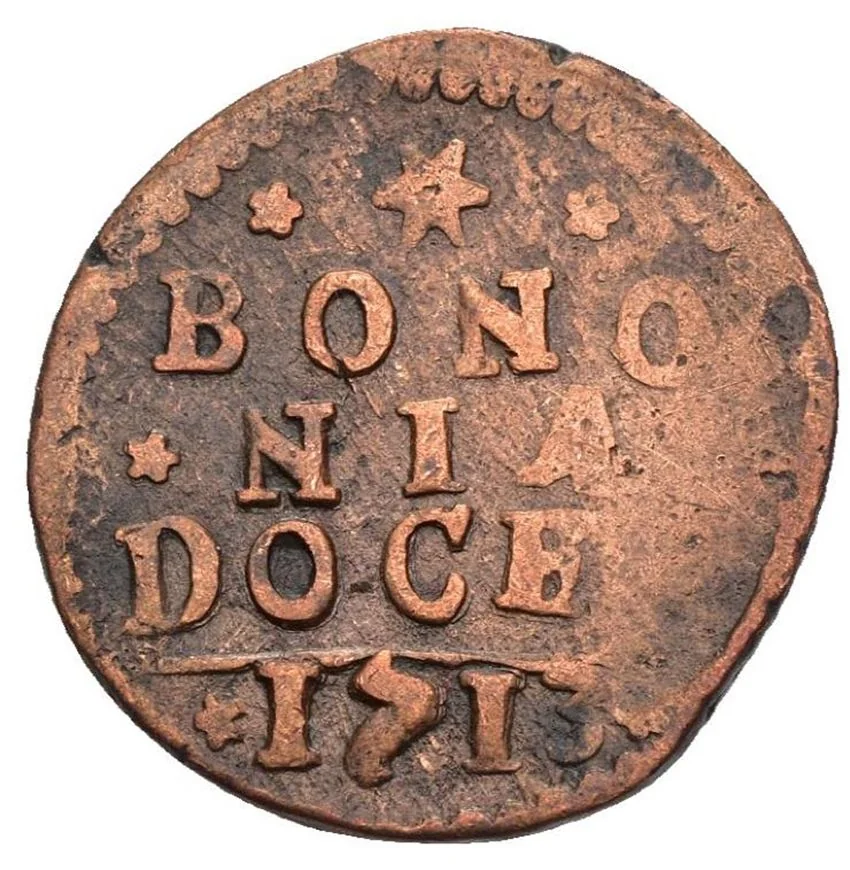
1 Quattrino – Bologna
Italy
Context
Years: 1706–1720
Country: Italy 
Issuer: Bologna
Ruler: Clement XI
Currency:
(1534—1835)
Demonetized: Yes
Material
References
KM: #Click to copy to clipboard140
Numista: #163039
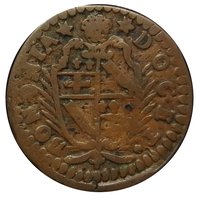
Obverse
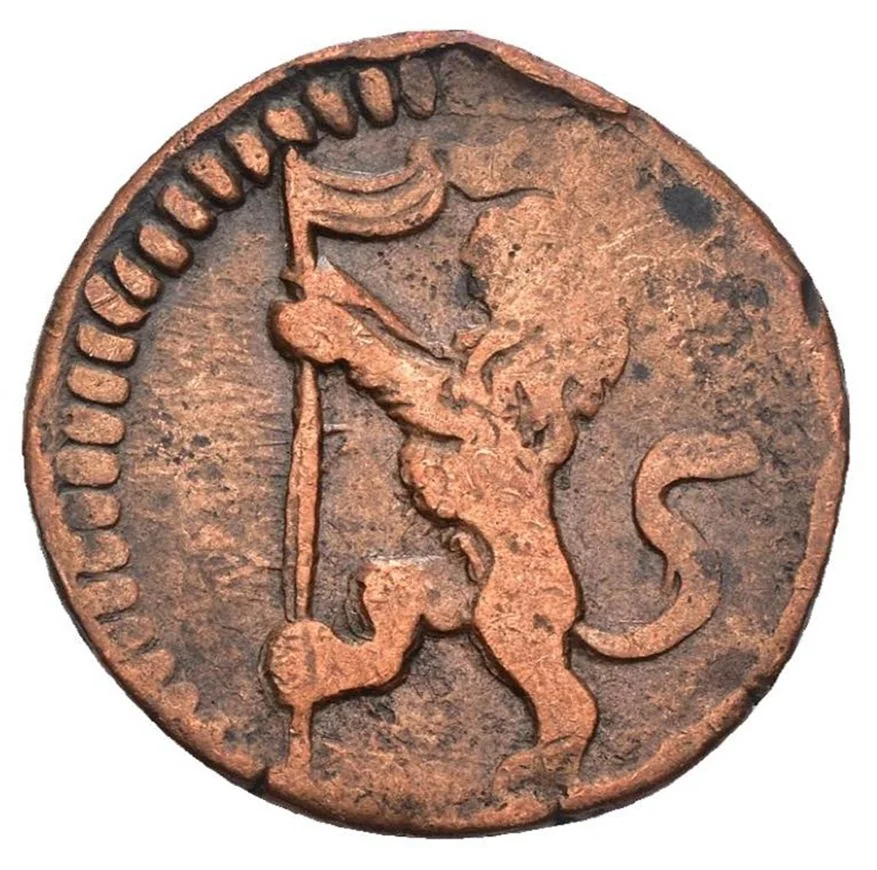
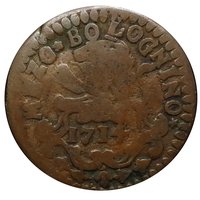
Reverse
Description:
Lion left, banner behind.
Edge
Plain
Mints
| Name | Mark |
|---|---|
| Bologna | — |
Mintings
| Year | Mint Mark | Mintage | Quality | Collection |
|---|---|---|---|---|
| 1706 | — | — | ||
| 1709 | — | — | ||
| 1712 | — | — | ||
| 1713 | — | — | ||
| 1714 | — | — | ||
| 1715 | — | — | ||
| 1716 | — | — | ||
| 1717 | — | — | ||
| 1718 | — | — | ||
| 1719 | — | — | ||
| 1720 | — | — |
Historical background
In 1706, Bologna found itself in a complex monetary situation typical of the fragmented Italian peninsula, operating within a dual system of "real" and "virtual" money. The city, part of the Papal States, officially used a bimetallic system based on the Papal scudo (gold) and the giulio (silver). However, decades of coin debasement and the circulation of a multitude of foreign coins from neighbouring states like Venice, Milan, and Tuscany created chronic instability. The actual value of coins was determined by their precious metal content, leading to frequent re-evaluations and public announcements (grida) that attempted to fix exchange rates between the myriad physical coins in use.
Alongside this tangible coinage existed a system of "virtual" or "money of account": the lira bolognese (divided into 20 soldi and 240 denari). This was not a physical coin but a stable accounting unit used for contracts, bookkeeping, and setting prices, shielding local commerce from the day-to-day fluctuations of metallic currency. A key challenge was the fluctuating agio—the premium or discount—between the stable lira di bolognini and the ever-changing metallic value of the physical scudo. This disconnect between real and imaginary money required money-changers (banchieri) and merchants to be highly skilled in constant calculation.
The year 1706 fell during the War of the Spanish Succession, which exacerbated these underlying issues. Military campaigns in Northern Italy increased the demand for specie (coin), often leading to shortages and the hoarding of full-weight coins. Furthermore, the passage and requisition demands of foreign armies could forcibly introduce even more foreign coinage or cause sudden outflows of silver and gold, distorting local markets. Thus, Bologna's currency landscape was one of precarious balance, managed through official proclamations and market ingenuity, but perpetually vulnerable to the region's political and military upheavals.
Alongside this tangible coinage existed a system of "virtual" or "money of account": the lira bolognese (divided into 20 soldi and 240 denari). This was not a physical coin but a stable accounting unit used for contracts, bookkeeping, and setting prices, shielding local commerce from the day-to-day fluctuations of metallic currency. A key challenge was the fluctuating agio—the premium or discount—between the stable lira di bolognini and the ever-changing metallic value of the physical scudo. This disconnect between real and imaginary money required money-changers (banchieri) and merchants to be highly skilled in constant calculation.
The year 1706 fell during the War of the Spanish Succession, which exacerbated these underlying issues. Military campaigns in Northern Italy increased the demand for specie (coin), often leading to shortages and the hoarding of full-weight coins. Furthermore, the passage and requisition demands of foreign armies could forcibly introduce even more foreign coinage or cause sudden outflows of silver and gold, distorting local markets. Thus, Bologna's currency landscape was one of precarious balance, managed through official proclamations and market ingenuity, but perpetually vulnerable to the region's political and military upheavals.
💎 Extremely Rare