

1 Ducat – Duchy of Livonia
Context
Years: 1588–1619
Country: Livonia
Issuer: Duchy of Livonia
Ruler: Sigismund III Vasa
Currency:
(1581—1629)
Demonetized: Yes
Material
References
KM: #Click to copy to clipboardA9
Numista: #78802
Value
Bullion value: $576.82
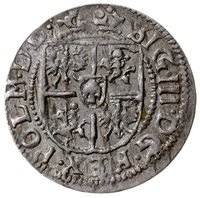
Obverse
Description:
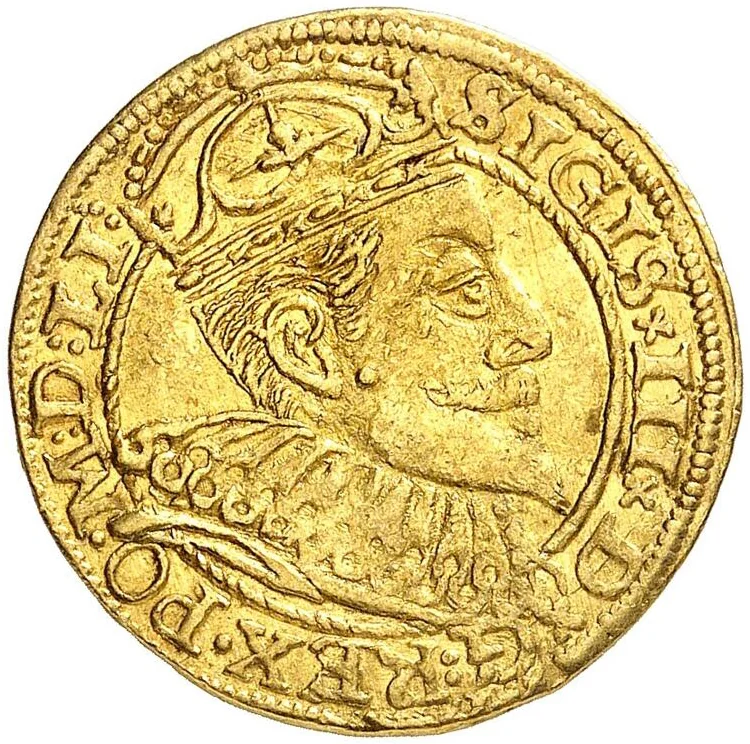
Crowned right-facing bust within legend.
Inscription:
SIGIS · III · D · G : REX · PO · M · D · LI ·
Script: Latin
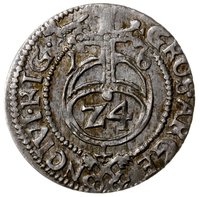
Reverse
Description:
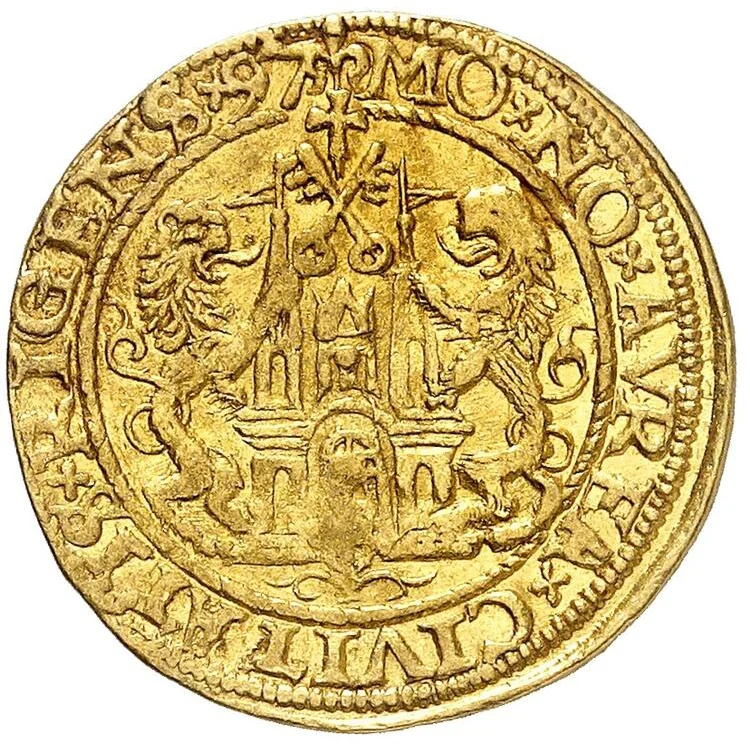
Castle under crossed keys, flanked by lions, encircled by legend.
Inscription:
MO · NO · AVREA · CIVITATIS · RIGENS · 97
Script: Latin
Edge
Plain
Categories
| Building> Castle or fortification |
Mints
| Name | Mark |
|---|---|
| Riga | — |
Mintings
| Year | Mint Mark | Mintage | Quality | Collection |
|---|---|---|---|---|
| 1588 | — | — | ||
| 1594 | — | — | ||
| 1597 | — | — | ||
| 1599 | — | — | ||
| 1619 | — | — |
Historical background
In 1588, the Duchy of Livonia, a fragile and short-lived state, was grappling with profound monetary instability rooted in its political subordination. Created in 1561 as a vassal state of the Grand Duchy of Lithuania and later the Polish-Lithuanian Commonwealth following the collapse of the Livonian Order, the Duchy never established its own sovereign mint. Consequently, its economy operated with a chaotic mix of circulating foreign coins, primarily Polish-Lithuanian grosz and solidi, Swedish coins, and older German and Livonian Order issues, leading to a lack of uniform value and frequent disputes in trade.
The core of the currency crisis was severe debasement and inflation. To finance near-constant warfare in the region, the Commonwealth, which controlled monetary policy, repeatedly reduced the silver content in its coinage. This devalued currency flooded Livonia, driving older, purer coins out of circulation (Gresham's Law) and causing prices to soar. For the local populace, this meant eroding purchasing power and economic hardship, as wages failed to keep pace with the declining real value of the coins they used daily.
This monetary turmoil was a direct symptom of the Duchy's precarious existence. By 1588, it was already in its final decade, fully absorbed into the Commonwealth's Inflanty Voivodeship in 1621. The lack of a distinct Livonian currency underscored its lack of true autonomy, and the inflationary spiral weakened its economic fabric. Thus, the currency situation of 1588 reflects a territory in transition, caught in the geopolitical crosscurrents of powerful neighbors and suffering the economic consequences of being a peripheral battlefield in the struggle for Baltic dominance.
The core of the currency crisis was severe debasement and inflation. To finance near-constant warfare in the region, the Commonwealth, which controlled monetary policy, repeatedly reduced the silver content in its coinage. This devalued currency flooded Livonia, driving older, purer coins out of circulation (Gresham's Law) and causing prices to soar. For the local populace, this meant eroding purchasing power and economic hardship, as wages failed to keep pace with the declining real value of the coins they used daily.
This monetary turmoil was a direct symptom of the Duchy's precarious existence. By 1588, it was already in its final decade, fully absorbed into the Commonwealth's Inflanty Voivodeship in 1621. The lack of a distinct Livonian currency underscored its lack of true autonomy, and the inflationary spiral weakened its economic fabric. Thus, the currency situation of 1588 reflects a territory in transition, caught in the geopolitical crosscurrents of powerful neighbors and suffering the economic consequences of being a peripheral battlefield in the struggle for Baltic dominance.
✨ Legendary