

1 Schilling (Solidus / Silins) – Swedish Livonia
Context
Years: 1654–1658
Country: Livonia
Issuer: Swedish Livonia
Ruler: Charles X Gustav
Currency:
(1629—1710)
Subdivision: 1 Schilling (Solidus / Silins) = 1⁄48 Thaler
Demonetized: Yes
Material
Diameter: 15 mm
Weight: 0.51 g
Thickness: 0.3 mm
Shape: Round
Composition: Billon
Technique: Roller milled
Alignment: Medal alignment
flip
References
KM: #Click to copy to clipboard4
Numista: #78795
Obverse
Description:
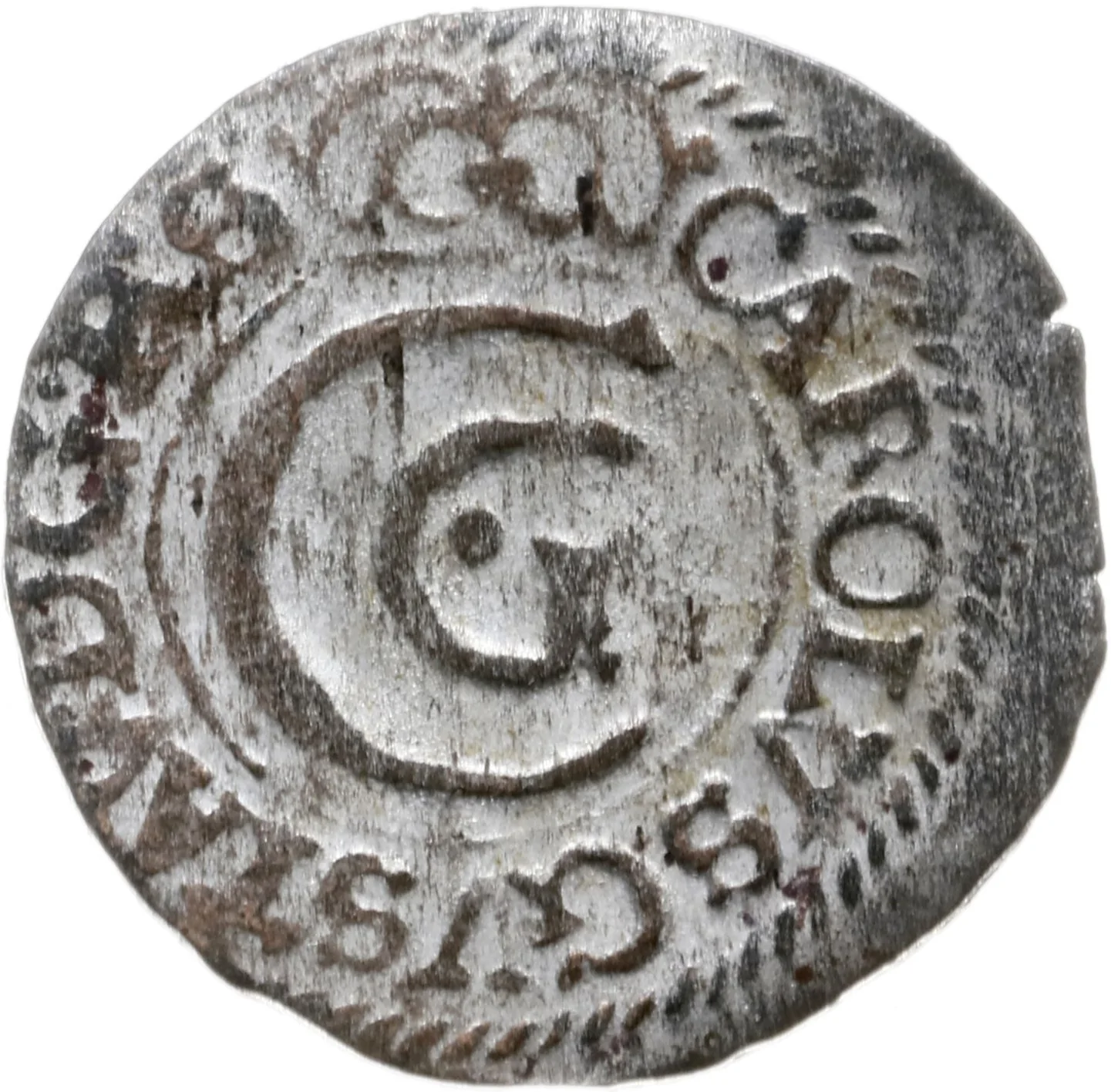
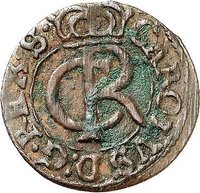
Crowned monogram encircled by legend.
Inscription:
CAROLVS · GVSTAV · D · G · R · S ·
CG
CG
Script: Latin
Reverse
Description:
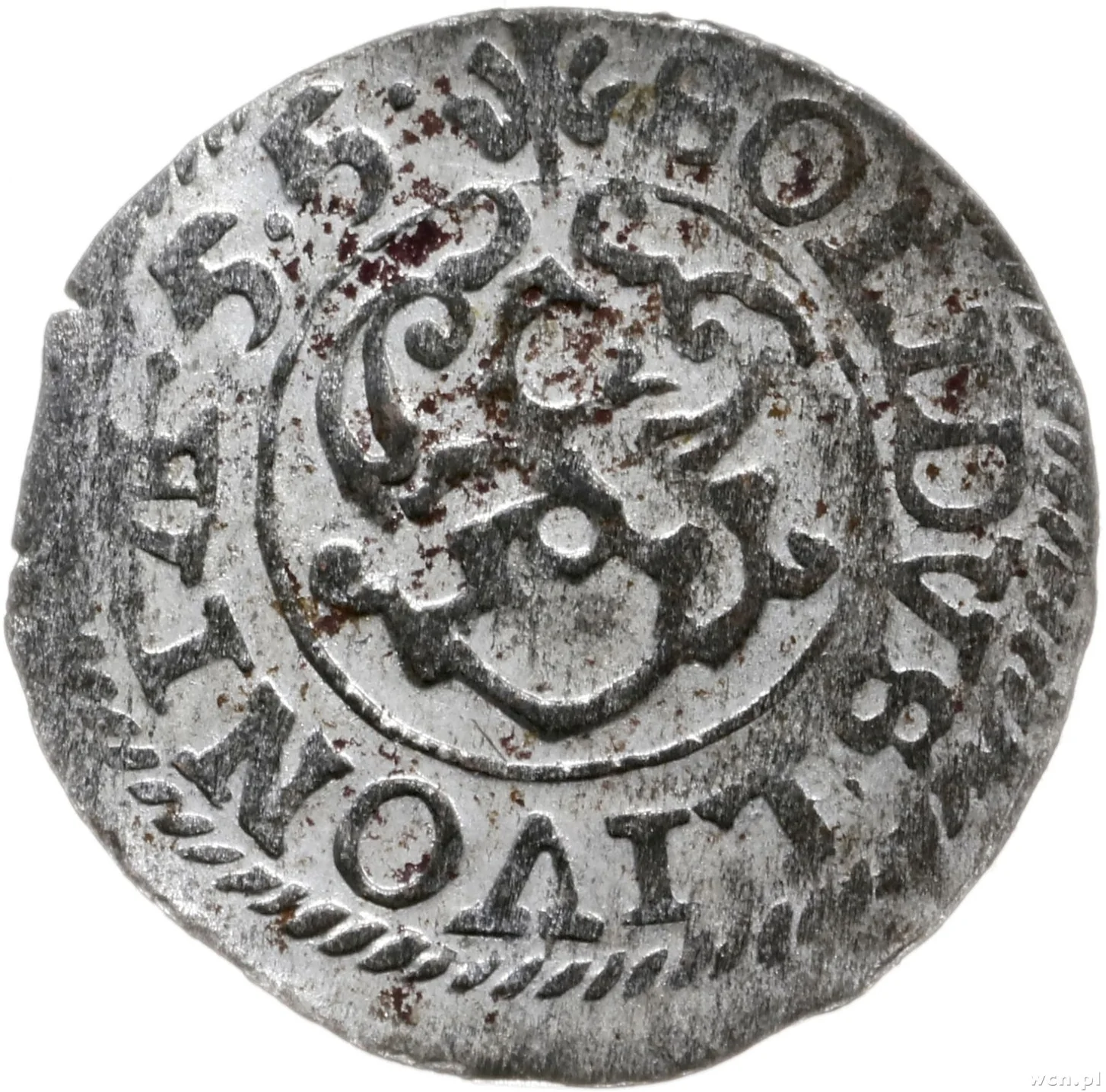
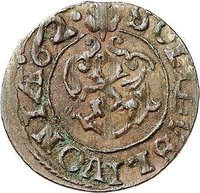
Griffin wielding dual swords with its talons, encircled by legend.
Inscription:
SOLIDVS · LIVONIÆ · 5 · 5 ·
Script: Latin
Edge
Plain
Categories
| Mythology> Fantastic animal |
| Symbols> Monogram |
Mints
| Name | Mark |
|---|---|
| Riga | — |
Mintings
| Year | Mint Mark | Mintage | Quality | Collection |
|---|---|---|---|---|
| 1654 | — | — | ||
| 1655 | — | — | ||
| 1656 | — | — | ||
| 1657 | — | — | ||
| 1658 | — | — |
Historical background
In 1654, Swedish Livonia was grappling with a severe and multifaceted currency crisis, rooted in the region's complex monetary history and exacerbated by contemporary warfare. The monetary system was a chaotic mix of older Polish-Lithuanian coins, Swedish riksdalers, and a flood of debased copper currency from Sweden proper. This "copper standard" policy, where Sweden used heavy copper plate money (plåtmynt) to finance its military ambitions in the Thirty Years' War, destabilized the entire Baltic economy. The intrinsic value of copper fluctuated wildly, and its sheer physical weight made transactions cumbersome, leading to widespread distrust in the currency.
The situation was further inflamed by the outbreak of the Russo-Swedish War (1656–1658), which followed the Russian capture of neighboring Polish Livonia. While the major invasion began in 1656, the looming threat in 1654 caused severe economic dislocation, disrupting trade and agriculture—the pillars of Livonia's wealth. Swedish authorities, primarily concerned with extracting resources for the central treasury, struggled to impose order. They faced the dual challenge of controlling the circulation of foreign coins and managing the unpopular copper money, while local merchants and landowners preferred more reliable silver.
Consequently, prices became unstable, and a de facto dual system emerged where transactions were often calculated in a silver-based accounting system (the Riksdaler specie) while actual payment was made in depreciated copper. This created significant friction in the economy, harming both peasants paying rents and the Swedish crown collecting taxes. The currency chaos of 1654 thus reflected the strains of Sweden's imperial project, where the financial demands of war directly undermined the economic stability of a recently acquired and strategically vital province.
The situation was further inflamed by the outbreak of the Russo-Swedish War (1656–1658), which followed the Russian capture of neighboring Polish Livonia. While the major invasion began in 1656, the looming threat in 1654 caused severe economic dislocation, disrupting trade and agriculture—the pillars of Livonia's wealth. Swedish authorities, primarily concerned with extracting resources for the central treasury, struggled to impose order. They faced the dual challenge of controlling the circulation of foreign coins and managing the unpopular copper money, while local merchants and landowners preferred more reliable silver.
Consequently, prices became unstable, and a de facto dual system emerged where transactions were often calculated in a silver-based accounting system (the Riksdaler specie) while actual payment was made in depreciated copper. This created significant friction in the economy, harming both peasants paying rents and the Swedish crown collecting taxes. The currency chaos of 1654 thus reflected the strains of Sweden's imperial project, where the financial demands of war directly undermined the economic stability of a recently acquired and strategically vital province.
🌟 Limited