

3 Polker – Swedish Livonia
Context
Years: 1647–1648
Country: Livonia
Issuer: Swedish Livonia
Ruler: Christina
Currency:
(1629—1710)
Subdivision: 3 Polker = 1⁄24 Thaler
Demonetized: Yes
Material
References
KM: #Click to copy to clipboard3
Numista: #78794
Value
Bullion value: $2.71
Obverse
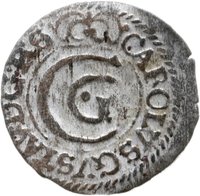
Description:
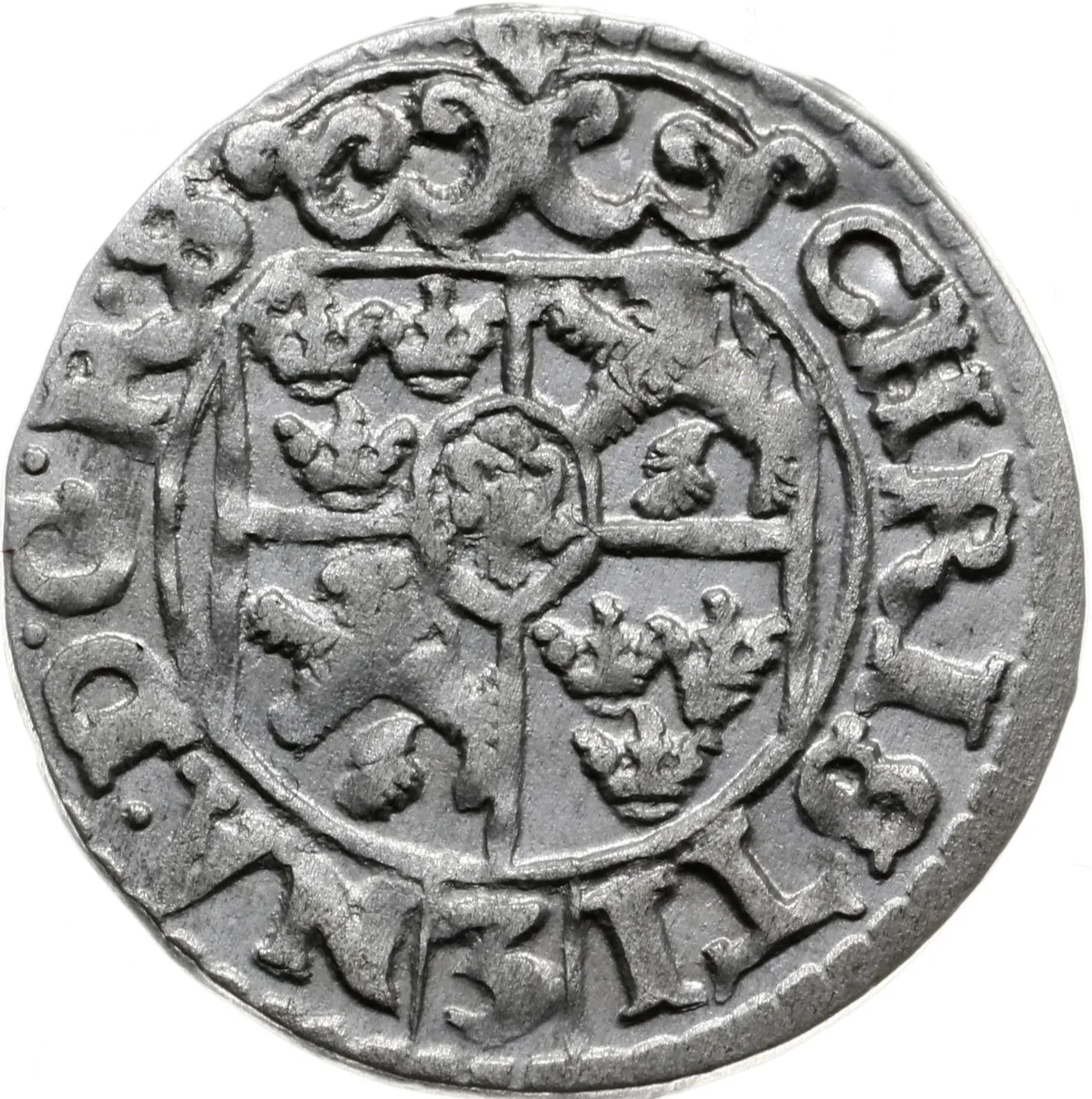
Quartered shield with crown, encircled by inscription.
Inscription:
CHRISTI NA · D · G · R · S
3
3
Script: Latin
Reverse
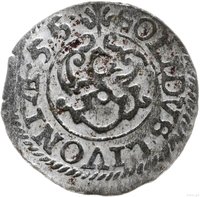
Description:
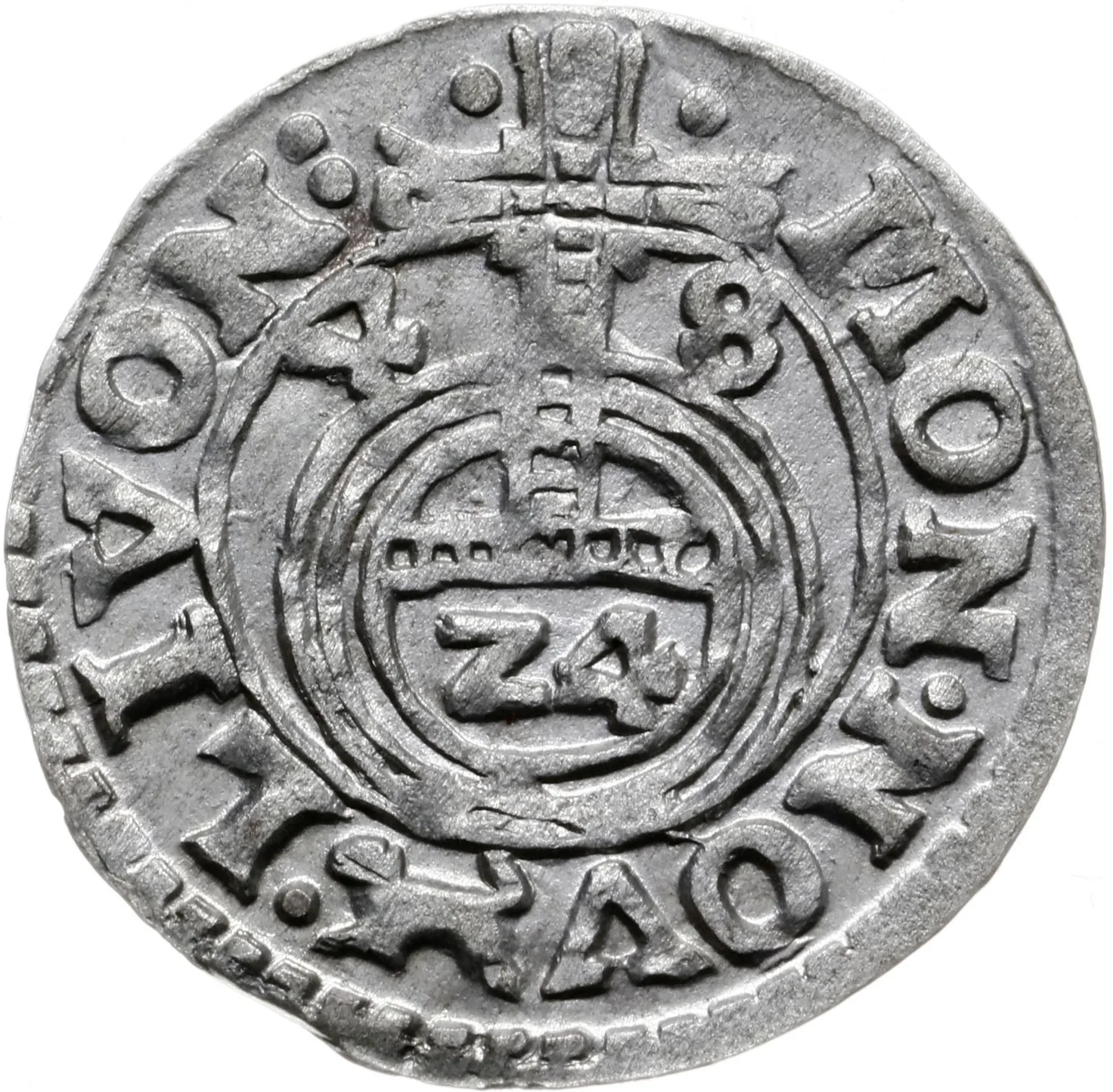
Cross on orb with value and date, encircled by legend.
Inscription:
MON · NOV · LIVON :
4 - 8
z4
4 - 8
z4
Script: Latin
Edge
Plain
Mints
| Name | Mark |
|---|---|
| Riga | — |
Mintings
| Year | Mint Mark | Mintage | Quality | Collection |
|---|---|---|---|---|
| 1647 | — | — | ||
| 1648 | — | — |
Historical background
In 1647, Swedish Livonia (encompassing most of modern-day Latvia and southern Estonia) operated under a complex and strained monetary system, a direct legacy of its recent integration into the Swedish Empire. The region had formally come under Swedish control with the 1629 Treaty of Altmark, ending decades of Polish-Lithuanian rule and warfare. However, the monetary landscape remained fragmented, characterized by the persistent circulation of a multitude of foreign coins. Polish ort (1/4 thaler) and schillings, Swedish riksdalers, and various German and Dutch coins all competed in daily transactions, creating confusion and facilitating fraud due to their fluctuating intrinsic values and weights.
This chaotic situation was exacerbated by Sweden's own fiscal policies. To finance its ongoing involvement in the Thirty Years' War, the Swedish crown frequently engaged in currency manipulation, such as debasing the copper daler and issuing lower-quality subsidiary coinage. These practices, while beneficial for the royal treasury in Stockholm, caused inflation and distrust in the provinces. In Livonia, this meant that officially set exchange rates between coins often bore little relation to their actual market value, harming local commerce and tax collection. The provincial nobility and burghers repeatedly petitioned the crown for a stable, unified currency to foster economic recovery.
Consequently, the monetary situation in 1647 was one of transition and administrative challenge. Swedish authorities were actively attempting to impose greater control, standardizing accounting on the Swedish riksdaler and pushing for the gradual withdrawal of old Polish money. However, these efforts met with limited success against entrenched local practices and the sheer volume of foreign coin. Thus, the economy functioned on a precarious hybrid system, caught between the old Polish monetary sphere and the new, yet unstable, Swedish one, awaiting more decisive reform that would only begin to materialize in the following decades.
This chaotic situation was exacerbated by Sweden's own fiscal policies. To finance its ongoing involvement in the Thirty Years' War, the Swedish crown frequently engaged in currency manipulation, such as debasing the copper daler and issuing lower-quality subsidiary coinage. These practices, while beneficial for the royal treasury in Stockholm, caused inflation and distrust in the provinces. In Livonia, this meant that officially set exchange rates between coins often bore little relation to their actual market value, harming local commerce and tax collection. The provincial nobility and burghers repeatedly petitioned the crown for a stable, unified currency to foster economic recovery.
Consequently, the monetary situation in 1647 was one of transition and administrative challenge. Swedish authorities were actively attempting to impose greater control, standardizing accounting on the Swedish riksdaler and pushing for the gradual withdrawal of old Polish money. However, these efforts met with limited success against entrenched local practices and the sheer volume of foreign coin. Thus, the economy functioned on a precarious hybrid system, caught between the old Polish monetary sphere and the new, yet unstable, Swedish one, awaiting more decisive reform that would only begin to materialize in the following decades.
💎 Very Rare