

20 Soldi – Milan
Italy
Context
Year: 1655
Country: Italy 
Issuer: Milan
Ruler: Philip III
Currency:
(1515—1796)
Subdivision: 20 Soldi = 1 Lira
Demonetized: Yes
Material
References
KM: #Click to copy to clipboard57
Numista: #119270
Value
Bullion value: $14.72
Obverse
Description:
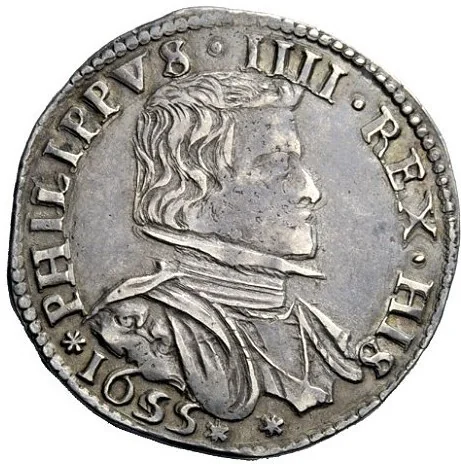
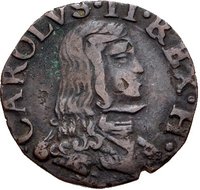
Bust right, high collar, date below.
Inscription:
PHILIPPVS·IIII·REX·HIS
1655
1655
Script: Latin
Reverse
Description:
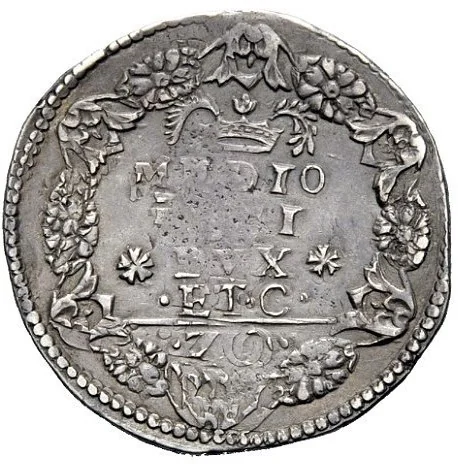
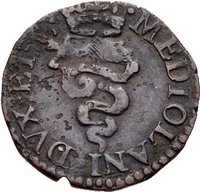
Crowned two-branch motif above inscribed text, all within an ornate frame.
Inscription:
MEDIO
LANI
DVX
·ET·C·
·Z0·
LANI
DVX
·ET·C·
·Z0·
Script: Latin
Edge
Mints
| Name | Mark |
|---|---|
| Milan | — |
Mintings
| Year | Mint Mark | Mintage | Quality | Collection |
|---|---|---|---|---|
| 1655 | — | — |
Historical background
In 1655, Milan found itself navigating a complex monetary landscape as a key territory within the Spanish Habsburg Empire. The Duchy of Milan, a strategic and wealthy hub, operated under a bimetallic system based on silver lire and gold scudi d’oro. However, the actual circulating medium was a chaotic mix of physical coins from various Italian states, Spanish pieces, and even French and German issues, leading to chronic instability. The official exchange rates set by the Milanese authorities often failed to reflect the market's reality, creating confusion for merchants and daily transactions.
This monetary disarray was exacerbated by the broader fiscal policies of the Spanish Crown, which was engaged in protracted conflicts like the Thirty Years' War and the Franco-Spanish War. To finance its military campaigns, Spain frequently resorted to currency manipulations, such as the deliberate debasement of the silver reales produced in its kingdoms. These debased coins flowed into Milan, driving better-quality full-weight coins out of circulation (Gresham's Law) and causing inflation. The local government issued proclamations to adjust the value of specific coins, but these were often reactive and insufficient to stem the tide of devaluation.
Consequently, Milanese merchants and bankers had to operate with acute awareness of coin weights, metallic purity, and fluctuating exchange bulletins. The situation placed a significant burden on commerce, increasing transaction costs and risk. While Milan remained a vital financial center, the currency instability of 1655 reflected the wider strain of imperial overreach and fiscal desperation, undermining economic confidence in one of Europe's most advanced regions.
This monetary disarray was exacerbated by the broader fiscal policies of the Spanish Crown, which was engaged in protracted conflicts like the Thirty Years' War and the Franco-Spanish War. To finance its military campaigns, Spain frequently resorted to currency manipulations, such as the deliberate debasement of the silver reales produced in its kingdoms. These debased coins flowed into Milan, driving better-quality full-weight coins out of circulation (Gresham's Law) and causing inflation. The local government issued proclamations to adjust the value of specific coins, but these were often reactive and insufficient to stem the tide of devaluation.
Consequently, Milanese merchants and bankers had to operate with acute awareness of coin weights, metallic purity, and fluctuating exchange bulletins. The situation placed a significant burden on commerce, increasing transaction costs and risk. While Milan remained a vital financial center, the currency instability of 1655 reflected the wider strain of imperial overreach and fiscal desperation, undermining economic confidence in one of Europe's most advanced regions.
✨ Legendary