


Obverse
Description:
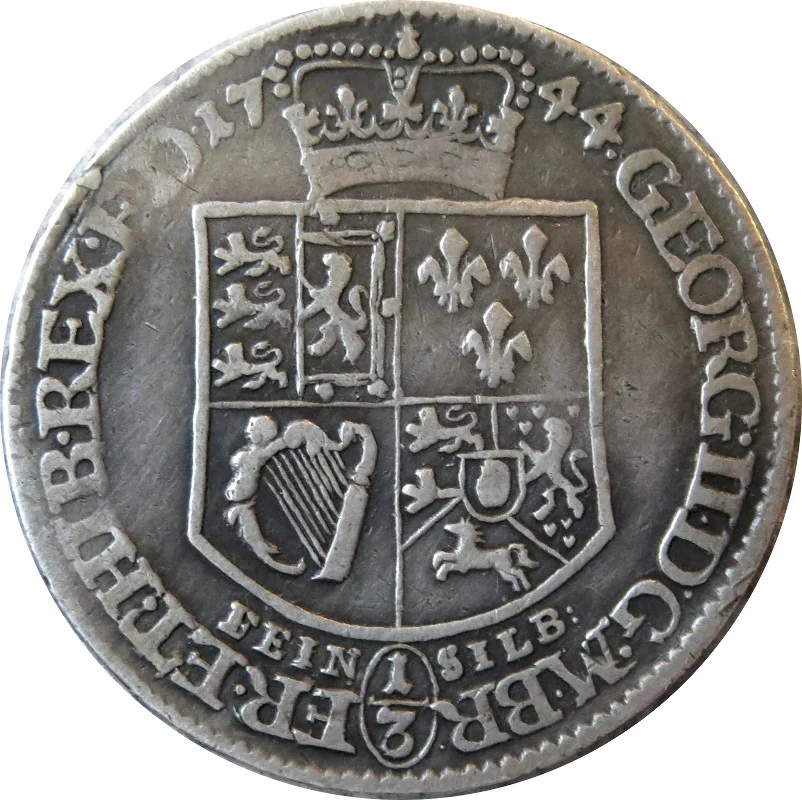
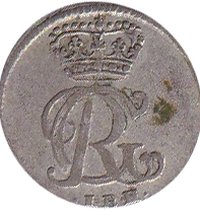
Fourfold crowned arms (Great Britain, France, Brunswick-Lüneburg, Ireland). Crown splits date above, value splits legend below. Legend begins at 2 o'clock.
Inscription:
17 44
.GEORG·II·D·G·M·BR FR·ET·HIB·REX·F·D·
FEIN SILB:
1/3
.GEORG·II·D·G·M·BR FR·ET·HIB·REX·F·D·
FEIN SILB:
1/3
Script: Latin
Reverse
Description:
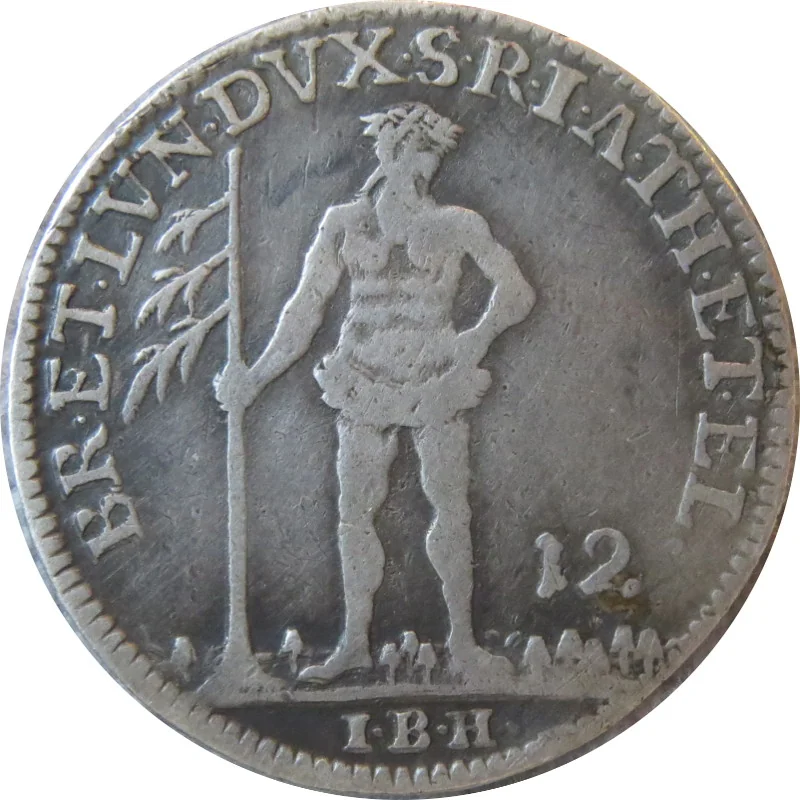
Wildman holding a tree, with "12" opposite. Legend begins at 7 o'clock. Mint mark below.
Inscription:
BR·ET·LVN·DVX·S·R·I·A·TH·ET·EL
12
I B H
12
I B H
Script: Latin
Edge
Mints
| Name | Mark |
|---|---|
| Zellerfeld | — |
Mintings
| Year | Mint Mark | Mintage | Quality | Collection |
|---|---|---|---|---|
| 1737 | — | — | ||
| 1738 | — | — | ||
| 1739 | C | — | ||
| 1740 | — | — | ||
| 1741 | — | — | ||
| 1742 | — | — | ||
| 1743 | — | — | ||
| 1744 | — | — | ||
| 1746 | — | — | ||
| 1747 | — | — | ||
| 1748 | — | — | ||
| 1749 | — | — | ||
| 1750 | — | — | ||
| 1751 | — | — | ||
| 1752 | — | — | ||
| 1754 | — | — | ||
| 1755 | — | — | ||
| 1756 | — | — | ||
| 1758 | — | — | ||
| 1759 | — | — | ||
| 1760 | — | — |
Historical background
In 1737, the currency situation in the Duchy of Brunswick-Lüneburg, specifically the Principality of Calenberg (with its capital in Hanover), was characterized by significant complexity and instability. The region operated within the fragmented monetary system of the Holy Roman Empire, where numerous states issued their own coinage. Hanover itself circulated a variety of coins, including its own Thalers, Gute Groschen, and Mariengroschen, alongside the currencies of neighbouring Brunswick-Wolfenbüttel and other German states. This proliferation of coins of varying intrinsic values, weights, and denominations created chronic confusion for trade and daily commerce.
The core problem was a severe shortage of high-value, full-weight silver coinage (Kurantgeld), as older, good coins were often hoarded or melted down for their bullion value. This led to a circulation dominated by debased, lightweight, and often foreign small change (Scheidemünze), causing inflation and loss of public trust. The situation was exacerbated by the monetary policies of Elector George II Augustus, who was also King of Great Britain; his need for funds for both Hanoverian administration and British geopolitical ambitions, including subsidies for continental allies, sometimes pressured the treasury and influenced monetary policy.
Consequently, the year 1737 fell within a period of ongoing but struggling monetary reforms. Authorities attempted to fix exchange rates between the myriad coins and to control the influx of inferior money through mandates, but these measures were often ineffective. The fundamental issues would persist until more centralized reforms later in the century, leaving the currency landscape of 1737 as one of cumbersome multiplicity and economic challenge for both the state and its subjects.
The core problem was a severe shortage of high-value, full-weight silver coinage (Kurantgeld), as older, good coins were often hoarded or melted down for their bullion value. This led to a circulation dominated by debased, lightweight, and often foreign small change (Scheidemünze), causing inflation and loss of public trust. The situation was exacerbated by the monetary policies of Elector George II Augustus, who was also King of Great Britain; his need for funds for both Hanoverian administration and British geopolitical ambitions, including subsidies for continental allies, sometimes pressured the treasury and influenced monetary policy.
Consequently, the year 1737 fell within a period of ongoing but struggling monetary reforms. Authorities attempted to fix exchange rates between the myriad coins and to control the influx of inferior money through mandates, but these measures were often ineffective. The fundamental issues would persist until more centralized reforms later in the century, leaving the currency landscape of 1737 as one of cumbersome multiplicity and economic challenge for both the state and its subjects.
✨ Legendary