

10 réis – Brazil
Add to wishlist
Brazil
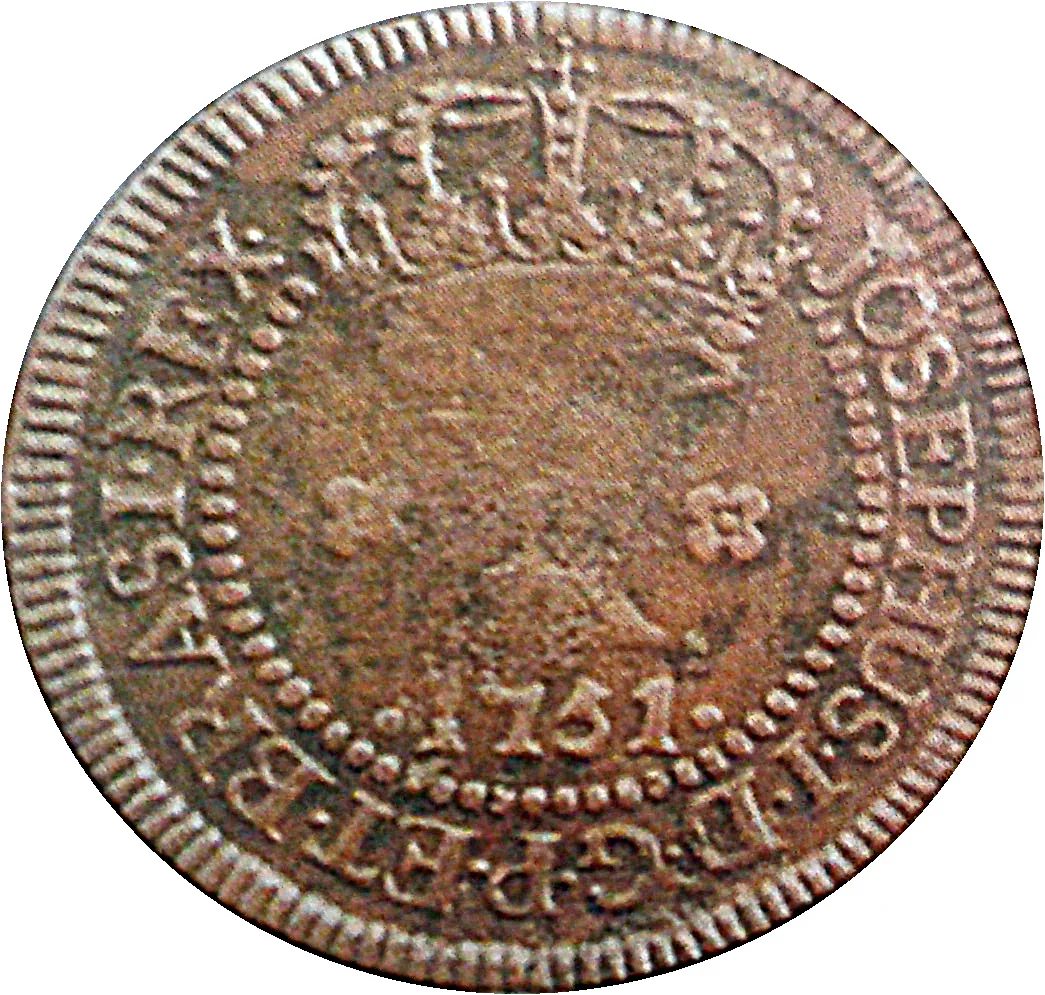
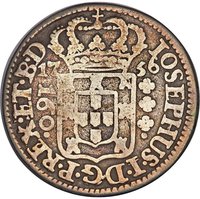
Obverse
Description:
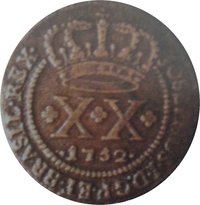
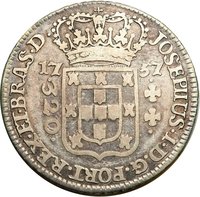
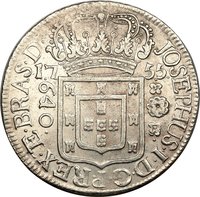
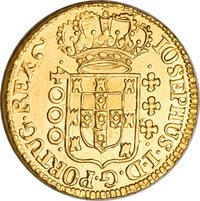
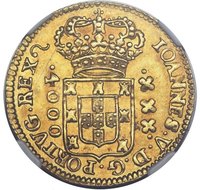
Flowers and date flanking value X, encircled by pearls and crowned.
Inscription:
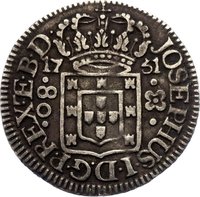
JOSEPHUS.I.D.G.P.ET.BRASIL.REX
Script: Latin
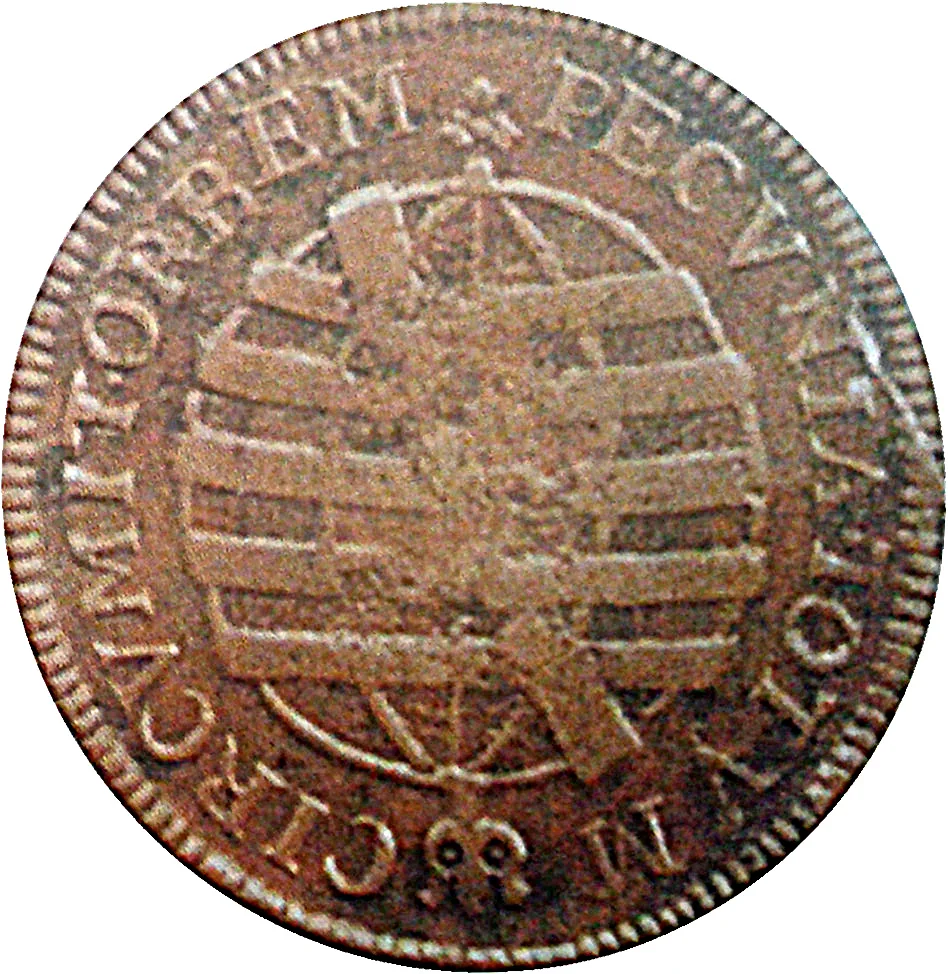
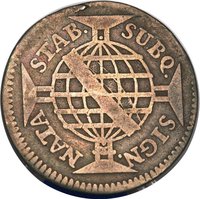
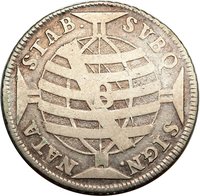
Reverse
Edge
Plain
Mints
| Name | Mark |
|---|---|
| Casa da Moeda do Brasil | — |
| Bahia | B |
Mintings
| Year | Mint Mark | Mintage | Quality | Collection |
|---|---|---|---|---|
| 1751 | — | — | ||
| 1762 | B | — |
Historical background
In 1751, Brazil's currency situation was a complex and strained system under Portuguese colonial rule. The primary circulating coin was the réis (plural: réis), with values denoted in mil-réis (1,000 réis). However, the colony suffered from a severe and chronic shortage of official minted coinage. This scarcity was a direct result of mercantilist policies, as Portugal drained wealth from Brazil—primarily gold from Minas Gerais—to benefit the metropole, while also running a significant trade deficit with other European nations, further exporting coinage. The lack of sufficient official currency severely hampered internal trade and economic development.
To cope with this scarcity, a chaotic and unreliable system of alternative currencies emerged. Within the colony, commodities like sugar, tobacco, and cacao were often used as barter for local transactions. More problematically, a vast array of foreign coins, especially Spanish-American pesos (pieces of eight) and their cut fractions, circulated widely at fluctuating values. The Portuguese crown attempted to regulate this by periodically setting official exchange rates for these foreign coins through provisões (decrees), but their real value in the marketplace was often very different. This created a confusing and inefficient monetary environment where the value of money was highly localized and unstable.
The year 1751 falls within the broader administrative reforms of the Marquis of Pombal, who was appointed Secretary of State that year. While his most direct monetary reforms for Brazil, such as the creation of local mint houses, would come later, the currency problems of 1751 set the stage for those changes. The gold boom was past its peak, and the crown was increasingly concerned with fiscal control and combating widespread smuggling and tax evasion. The dysfunctional currency system was therefore not just an economic nuisance but a central governance issue, hindering tax collection and the full extraction of colonial wealth, prompting the need for the more centralized monetary policies that Pombal would soon pursue.
To cope with this scarcity, a chaotic and unreliable system of alternative currencies emerged. Within the colony, commodities like sugar, tobacco, and cacao were often used as barter for local transactions. More problematically, a vast array of foreign coins, especially Spanish-American pesos (pieces of eight) and their cut fractions, circulated widely at fluctuating values. The Portuguese crown attempted to regulate this by periodically setting official exchange rates for these foreign coins through provisões (decrees), but their real value in the marketplace was often very different. This created a confusing and inefficient monetary environment where the value of money was highly localized and unstable.
The year 1751 falls within the broader administrative reforms of the Marquis of Pombal, who was appointed Secretary of State that year. While his most direct monetary reforms for Brazil, such as the creation of local mint houses, would come later, the currency problems of 1751 set the stage for those changes. The gold boom was past its peak, and the crown was increasingly concerned with fiscal control and combating widespread smuggling and tax evasion. The dysfunctional currency system was therefore not just an economic nuisance but a central governance issue, hindering tax collection and the full extraction of colonial wealth, prompting the need for the more centralized monetary policies that Pombal would soon pursue.
Series: 1751 Brazil circulation coins
💎 Extremely Rare