


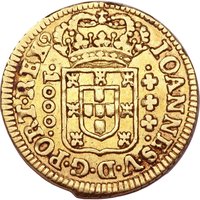
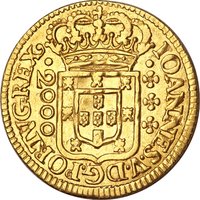
Obverse
Description:
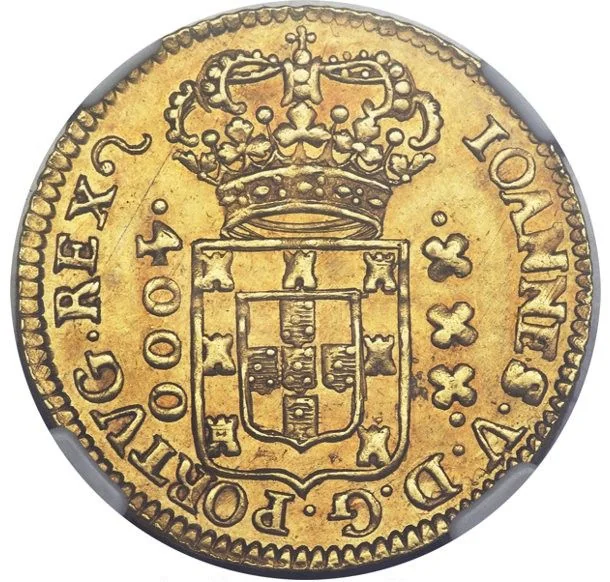
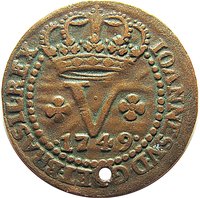
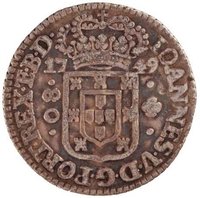
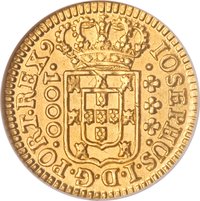
Crowned coat of arms, 4000 value, three flowers.
Inscription:
IOANNES. V. D. G. PORTVG. REX.
Script: Latin
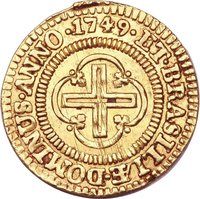
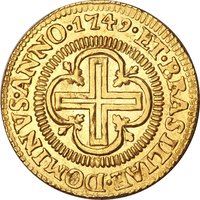
Reverse
Description:
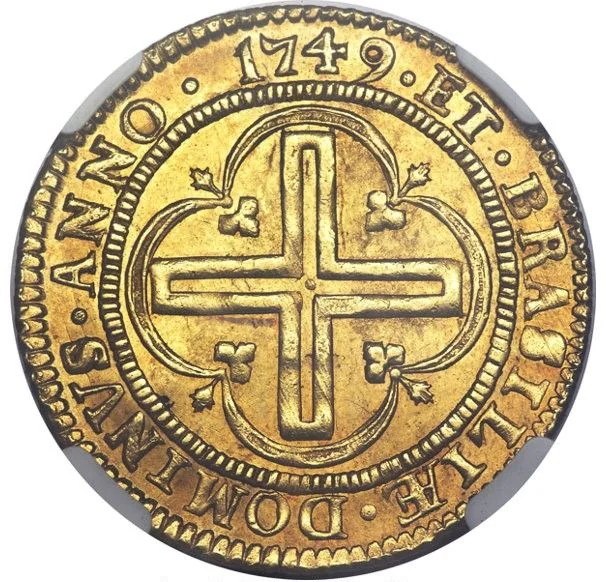
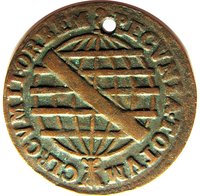
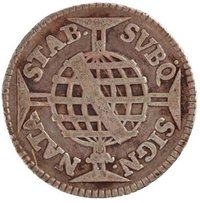
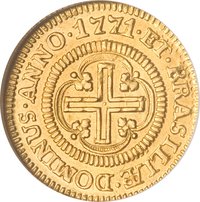
Saint George's cross with ornaments and date.
Inscription:
ET. BRASILIAE. DOMINVS. ANNO 1749
Script: Latin
Edge
Reeded.
Categories
| Symbols> Coat of Arms |
| Symbol> Cross |
Mints
| Name | Mark |
|---|---|
| Imprensa Nacional - Casa da Moeda | — |
Mintings
| Year | Mint Mark | Mintage | Quality | Collection |
|---|---|---|---|---|
| 1749 | — | — |
Historical background
In 1749, Brazil's currency situation was characterized by profound scarcity and administrative disarray, a direct legacy of its colonial status under the Portuguese Crown. The primary circulating medium was the Portuguese real (plural: réis), but the colony suffered from a chronic shortage of official coinage. This forced widespread reliance on a chaotic mix of alternative means of exchange: crude locally minted copper coins (often crudely counterfeited), commodity money like sugar and tobacco (which were official tax units), and even foreign coins, particularly Spanish-American pieces of eight, which circulated illicitly. The Portuguese monarchy, fearing loss of fiscal control and the growth of a autonomous colonial economy, strictly prohibited local minting, creating a monetary environment that stifled internal trade and complicated everyday transactions.
The root of the crisis lay in Portugal's mercantilist policy, which systematically drained wealth from Brazil. Gold from the booming mines of Minas Gerais was largely shipped to Lisbon in bullion form or as crude, irregular "gold dust" (ouro em pó), leaving little to be minted into coin for the local economy. Furthermore, much of the gold that remained was quickly exported to pay for manufactured goods from Portugal and other European nations, as the colony was forbidden from developing its own industries. This created a vicious cycle of extraction without reinvestment, leaving the domestic economy perpetually starved of a reliable and sufficient monetary base.
Recognizing the untenable situation, the Portuguese Crown under King João V had, just two years prior in 1747, taken a significant step by authorizing the establishment of Brazil's first official mint, the Casa da Moeda do Brasil, in Rio de Janeiro. Therefore, in 1749, the colony stood on the cusp of a major monetary reform. The mint was in its early operational stages, beginning to strike gold coins (the 6,400, 3,200, and 1,600 réis denominations) from local ore. This promised to gradually alleviate the chronic shortage, centralize control, and standardize the currency, marking the beginning of a more formalized financial system, though the full effects would take years to permeate the vast and fragmented colony.
The root of the crisis lay in Portugal's mercantilist policy, which systematically drained wealth from Brazil. Gold from the booming mines of Minas Gerais was largely shipped to Lisbon in bullion form or as crude, irregular "gold dust" (ouro em pó), leaving little to be minted into coin for the local economy. Furthermore, much of the gold that remained was quickly exported to pay for manufactured goods from Portugal and other European nations, as the colony was forbidden from developing its own industries. This created a vicious cycle of extraction without reinvestment, leaving the domestic economy perpetually starved of a reliable and sufficient monetary base.
Recognizing the untenable situation, the Portuguese Crown under King João V had, just two years prior in 1747, taken a significant step by authorizing the establishment of Brazil's first official mint, the Casa da Moeda do Brasil, in Rio de Janeiro. Therefore, in 1749, the colony stood on the cusp of a major monetary reform. The mint was in its early operational stages, beginning to strike gold coins (the 6,400, 3,200, and 1,600 réis denominations) from local ore. This promised to gradually alleviate the chronic shortage, centralize control, and standardize the currency, marking the beginning of a more formalized financial system, though the full effects would take years to permeate the vast and fragmented colony.
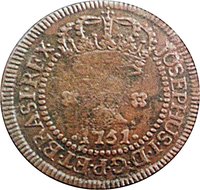
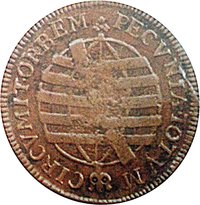
Series: 1749 Brazil circulation coins
✨ Legendary