

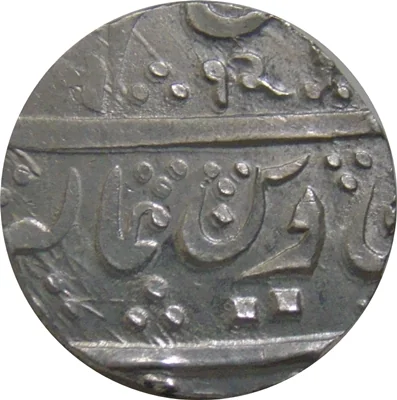
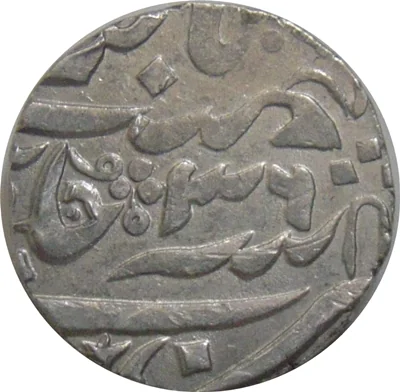

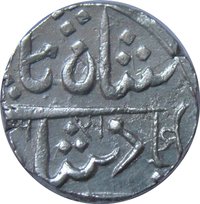
Obverse
Description:
Lettering: 92
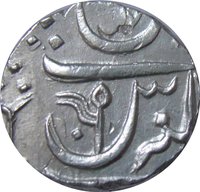
Reverse
Edge
Mintings
| Year | Mint Mark | Mintage | Quality | Collection |
|---|---|---|---|---|
| 1791 | — | — | ||
| 1794 | — | — | ||
| 1795 | — | — |
Historical background
By 1791, the Maratha Empire's currency system reflected its complex political and economic landscape. The empire was not a centralized state but a confederacy under the Peshwa's nominal leadership, with powerful sardars like the Scindias, Holkars, and Bhonsles minting their own coins in their respective territories. The primary silver coin was the rupee, but its weight, purity, and design varied significantly between mints in Pune, Satara, Indore, Gwalior, and Nagpur. Alongside these, a plethora of copper coins (paisa, daboo) and gold coins (mohur, hons) circulated, creating a heterogeneous and often confusing monetary environment for trade and revenue collection.
This period was one of intense military and financial pressure, directly impacting currency stability. The Marathas were engaged in a costly war against Tipu Sultan of Mysore (the Third Anglo-Mysore War, 1790-1792) and were also facing rising British influence. To finance massive army upkeep and warfare, regional Maratha leaders often resorted to debasement—reducing the silver content in rupees to produce more coins from the same bullion reserves. This led to inflationary pressures and a loss of public confidence in the currency, as coins from different mints traded at varying discounts depending on their perceived intrinsic value.
Furthermore, the monetary system was under strain from competing currencies. Older Mughal rupees, particularly the widely trusted Namoona Sicca rupee, still circulated strongly alongside Maratha issues, especially in northern territories. Simultaneously, European colonial currencies, like the Portuguese xerafim in coastal areas and the British East India Company's rupees in Bengal, were making inroads. Thus, in 1791, the Maratha currency situation was characterized by fragmentation, wartime debasement, and competition from external coins, undermining the economic cohesion of the empire at a critical juncture in its history.
This period was one of intense military and financial pressure, directly impacting currency stability. The Marathas were engaged in a costly war against Tipu Sultan of Mysore (the Third Anglo-Mysore War, 1790-1792) and were also facing rising British influence. To finance massive army upkeep and warfare, regional Maratha leaders often resorted to debasement—reducing the silver content in rupees to produce more coins from the same bullion reserves. This led to inflationary pressures and a loss of public confidence in the currency, as coins from different mints traded at varying discounts depending on their perceived intrinsic value.
Furthermore, the monetary system was under strain from competing currencies. Older Mughal rupees, particularly the widely trusted Namoona Sicca rupee, still circulated strongly alongside Maratha issues, especially in northern territories. Simultaneously, European colonial currencies, like the Portuguese xerafim in coastal areas and the British East India Company's rupees in Bengal, were making inroads. Thus, in 1791, the Maratha currency situation was characterized by fragmentation, wartime debasement, and competition from external coins, undermining the economic cohesion of the empire at a critical juncture in its history.
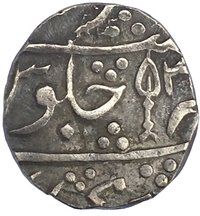
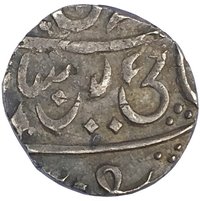
💎 Extremely Rare